Umm Suqeim: How Dubai's Last Authentic Beach Neighbourhood Became the Emirate's Most Coveted Coastal Address
March 19, 2026 · 15 min read
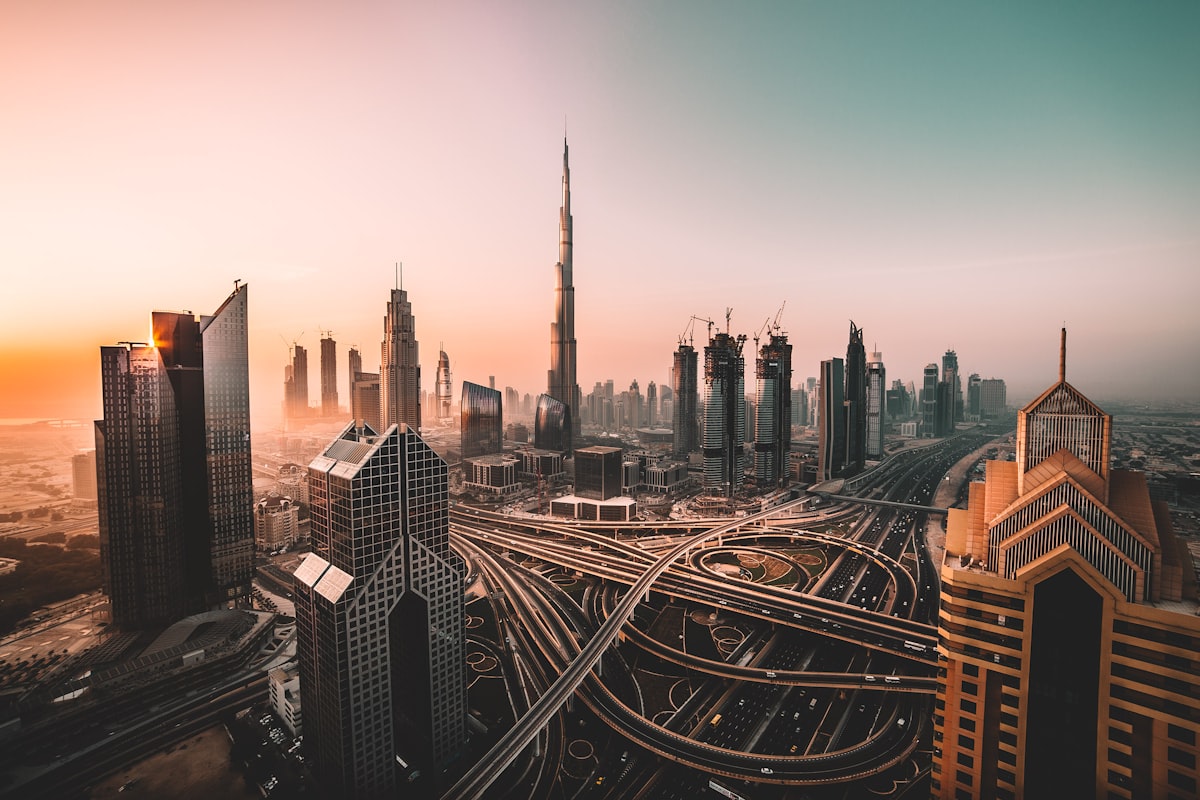
In a city that has spent three decades building its identity on vertical spectacle — towers that pierce clouds, islands shaped like continents, malls large enough to contain ski slopes — Umm Suqeim persists as a quiet anomaly. This slender coastal strip between Jumeirah Road and the Arabian Gulf, stretching from the Madinat Jumeirah complex south to the borders of Al Sufouh, has achieved something approaching the miraculous in Dubai's real estate landscape: it has remained, fundamentally, a neighbourhood of houses. Not compounds hidden behind fortress walls like Zabeel, not manicured theme-park estates like Emirates Hills, but actual houses — two and three storeys of rendered concrete and mature gardens, set on plots generous enough to accommodate swimming pools, date palms, and the kind of outdoor living space that Dubai's climate permits for six months of the year and demands for the other six.
The Geography of Scarcity
Umm Suqeim's value proposition begins — and, some would argue, ends — with geography. The neighbourhood occupies approximately 4.2 kilometres of uninterrupted coastline, anchored at its northern terminus by the iconic sail silhouette of the Burj Al Arab and at its southern edge by the emerging cultural district of Al Quoz. Critically, this is natural coastline: no reclamation, no breakwaters, no artificial lagoons. The sand is the sand that has always been here, sculpted by the same currents that have shaped this stretch of coast for millennia. In a market where "beachfront" often means a view of an engineered lagoon or a proximity to imported sand deposited on a steel-and-concrete armature, Umm Suqeim's authenticity is a distinction that carries genuine premium.
That premium has escalated dramatically. In 2020, a beachfront villa in Umm Suqeim 3 — the most desirable sub-district, directly behind Kite Beach — could be acquired for AED 15-25 million. By early 2026, the same properties command AED 60-80 million, with exceptional plots breaking AED 100 million. The mathematics are straightforward: there are approximately 340 villas in Umm Suqeim 3, of which perhaps 40 enjoy direct or near-direct beach access. At any given time, no more than three or four are available for purchase. This is not a market that responds to interest rate adjustments or visa policy changes; it is a market governed by the simple physics of finite supply meeting expanding demand from a global ultra-high-net-worth cohort that has collectively decided Dubai is a primary residence, not just a winter escape.
Kite Beach: The Accidental Amenity
Kite Beach's transformation from a scrubby, undeveloped stretch of public shoreline into one of Dubai's most vibrant community spaces has been Umm Suqeim's defining catalytic event. The beach's activation — beginning around 2014 with food trucks, outdoor fitness stations, and a relaxed regulatory attitude toward small-format F&B — created something Dubai had conspicuously lacked: a genuinely public, genuinely casual beachfront gathering space. No hotel access required. No minimum spend. No dress code beyond basic decency. The result was a cultural shift that saw Kite Beach become a focal point for Dubai's younger, more cosmopolitan resident population — the creative directors, tech founders, fitness entrepreneurs, and young Emirati families who represent the emirate's demographic future rather than its transactional present.
For Umm Suqeim's property market, the effect was transformative. The neighbourhood evolved from a pleasant but unremarkable residential zone into a lifestyle destination — the rare Dubai address where you could walk to the beach, walk to a café, walk to a yoga class, and walk home. In a city engineered almost exclusively for automotive circulation, pedestrian liveability became Umm Suqeim's most radical amenity. The families who had held villas here for decades — many of them Emirati families who had acquired plots in the 1990s at prices that now seem absurd — suddenly found themselves sitting on assets whose value had multiplied not through any improvement they had made, but through the organic development of community infrastructure around them.
The Architectural Paradox
Umm Suqeim's built environment is, by any conventional measure, architecturally undistinguished. The original villa stock — built primarily between 1990 and 2005 — reflects the generic Gulf residential vernacular of its era: beige rendered facades, flat roofs, arched windows that gesture vaguely toward Arabian heritage without committing to any particular stylistic vocabulary. Interior layouts tend toward the generous but inefficient: vast entrance halls that serve no purpose beyond announcing that the house is large, bedrooms distributed without particular logic, kitchens that were clearly designed by someone who had never cooked.
And yet this architectural mediocrity has become, perversely, one of the neighbourhood's attractions. Because the existing structures are so devoid of distinctive character, buyers approach them as sites rather than buildings — purchasing AED 60 million of land and construction for the privilege of demolishing everything above the foundation and starting over. The result is a neighbourhood in constant aesthetic flux, where original 1990s villas sit alongside radical contemporary interventions by firms like OMA, Tadao Ando Architect & Associates, and Dubai-based practices like X Architects and Anarchitect. The contrast is jarring but energising: a neighbourhood that contains both unremarkable suburban normality and some of the most ambitious residential architecture currently being built anywhere in the Gulf.
The Surf Culture Factor
Dubai is not, by any stretch, a surf destination. The Arabian Gulf's warm, shallow waters produce nothing that would excite anyone accustomed to North Shore Oahu or J-Bay. But Umm Suqeim — and specifically the stretch of beach near the Burj Al Arab — has become the epicentre of a small but passionate surf community that has, over the past decade, carved out a genuine subculture. Surf House Dubai, located directly on the beach in Umm Suqeim 1, operates as the scene's informal headquarters: part café, part board rental, part social club for a community that includes Emirati nationals, European expats, South African transplants, and a growing contingent of professional wave riders who spend their Gulf winters here before following the swell to Indonesia or Portugal.
This surf-adjacent identity — casual, outdoor-oriented, health-conscious, resolutely unpretentious — has become part of Umm Suqeim's brand proposition. It attracts a buyer profile distinct from the typical Dubai luxury purchaser: younger, more lifestyle-driven, less interested in branded residences and more attracted to the idea of living in a genuine community with a genuine identity. The fact that the surf itself is mediocre is almost beside the point; what matters is the culture it has fostered and the type of resident it attracts.
Madinat Jumeirah: The Northern Anchor
At Umm Suqeim's northern boundary, Madinat Jumeirah — the 40-hectare resort complex operated by Jumeirah Group — functions as both neighbour and amenity. The resort's reconstruction of a traditional Arab souk, with its waterways navigable by abra, its 50-plus restaurants and bars, and its proximity to the Burj Al Arab, provides Umm Suqeim residents with a hospitality infrastructure that would be the envy of any residential neighbourhood on earth. The Talise Spa, Pierchic (the over-water seafood restaurant that remains one of Dubai's most iconic dining experiences), and the resort's private beach club are all within walking or short driving distance of most Umm Suqeim addresses.
But Madinat Jumeirah's most significant contribution to the neighbourhood is not its amenities but its scale: the complex effectively functions as a 40-hectare buffer zone that prevents development from encroaching on Umm Suqeim from the north. This buffer, combined with the Jumeirah Beach Hotel and Wild Wadi waterpark to the northwest, creates a protective perimeter of hospitality and public space that ensures the neighbourhood's low-rise residential character will not be overwhelmed by the towers that have consumed adjacent stretches of the Dubai coastline.
The Quiet Conviction
Umm Suqeim's trajectory offers a lesson that Dubai — a city constitutionally inclined toward the grandiose — is still learning to absorb: that the most enduring luxury is not spectacle but authenticity, not scale but intimacy, not the ability to astonish but the capacity to sustain. The neighbourhood's residents are not here because Umm Suqeim offers the tallest, the largest, or the most. They are here because it offers something that Dubai's relentless development machine cannot manufacture: a coastline that was never reclaimed, a community that evolved rather than being master-planned, and streets where the sound of the surf, on quiet mornings, is louder than the construction cranes.
In a city that has proven it can build anything, Umm Suqeim's value lies in being the one neighbourhood that had the wisdom to build very little — and let the ocean do the rest.
In Dubai's endless competition for the superlative, Umm Suqeim wins by refusing to compete — proving that the Gulf's most valuable coastal address is the one that was never engineered.