Zabeel: How Dubai's Royal District Became the Emirates' Most Prestigious Ultra-Luxury Enclave
March 18, 2026 · 16 min read
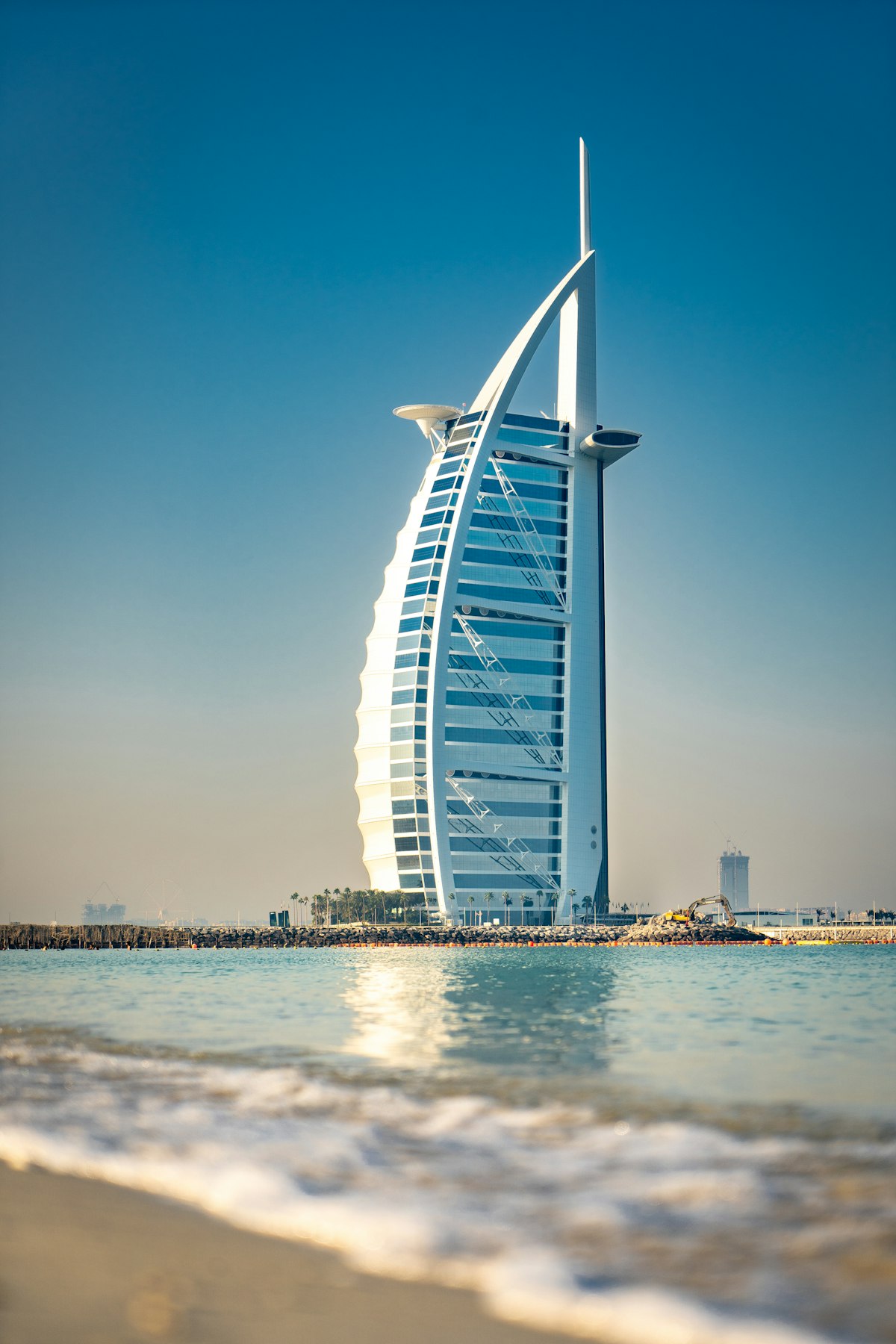
In a city that has made spectacle its defining export — the tallest tower, the largest mall, the most audacious artificial island — Zabeel operates on an entirely different register. This is the neighbourhood that doesn't need to announce itself. Tucked between Sheikh Zayed Road and the historic Dubai Creek corridor, bounded by the vast emerald expanse of Zabeel Park to its south and the palatial compounds of the ruling Al Maktoum family to its north, Zabeel is where Dubai's actual power resides. Not the performative power of branded penthouses and Instagram-ready infinity pools, but the structural power of dynastic wealth, sovereign capital, and families whose relationship with this land predates the emirate's modern incarnation by generations.
The Royal Footprint
Zabeel's identity is inseparable from the Al Maktoum family. The Zabeel Palace complex — a sprawling compound that has served as one of the ruling family's primary residences since the 1960s — occupies a vast tract of land that anchors the district's northern boundary. Its presence does more than lend prestige; it establishes a security perimeter, a maintenance standard, and an aesthetic expectation that radiates outward through the entire neighbourhood. Streets are wider, landscaping more mature, traffic lighter. The subtle infrastructure of privilege — the unmistakable hum of well-maintained public space — pervades every corner.
Adjacent to the palace grounds, the Zabeel Saray on Palm Jumeirah may carry the neighbourhood's name to a global luxury audience, but the real Zabeel estate market operates in near-total opacity. Transactions here rarely appear on public portals. Properties change hands through private introductions, family networks, and a handful of ultra-high-net-worth advisory firms that specialise in what the industry euphemistically calls "off-market opportunities." When a compound in Zabeel 1 traded for AED 235 million in late 2025 — one of the highest residential transactions in Dubai's history — it generated no press release, no social media post, no celebratory Instagram reel. That discretion is the point. That discretion is the product.
Zabeel Park: 47 Hectares of Strategic Green
The 47-hectare Zabeel Park, which bisects the district, is one of Dubai's largest and oldest public green spaces — and its role in the neighbourhood's real estate dynamics cannot be overstated. In a city where climate necessitates air conditioning for eight months of the year, permanent green space represents an almost paradoxical luxury: land that generates no revenue, that exists purely for the pleasure of proximity. The park's jogging circuits, lakes, and botanical gardens create a microclimate measurably cooler than the surrounding built environment, and properties along its perimeter command premiums of 25-40% over equivalent square footage even two streets removed.
The park's Dubai Frame — the 150-metre picture-frame structure that has become an iconic city landmark — draws over two million visitors annually, but the park itself remains remarkably uncrowded. On weekday mornings, it is possible to walk its looping paths for thirty minutes without encountering another soul. This paradox — a public space that functions with the exclusivity of a private garden — perfectly encapsulates the Zabeel proposition: accessibility in theory, exclusivity in practice.
One Za'abeel: The Vertical Pivot
If old Zabeel is defined by horizontal luxury — sprawling compounds behind high walls — then the district's future is being written in the vertical language of One Za'abeel. This AED 8 billion mixed-use development by Ithra Dubai (the investment arm of the Investment Corporation of Dubai, itself controlled by the ruler's office) comprises twin towers connected by a 226-metre cantilever known as "The Link" — the longest cantilevered building in the world. It is a structure so extreme that it required the development of new construction methodologies and the importation of specialised engineering teams from five countries.
The residential component — managed by Dorchester Collection under the One&Only brand — offers 113 residences ranging from two-bedroom apartments at AED 12 million to full-floor penthouses that have traded privately for figures north of AED 150 million. The finishes are what one expects at this price point: Statuario marble, hand-stitched leather panels, Gaggenau appliances, floor-to-ceiling glazing with views that span from the Burj Khalifa to the historic Creek. But the true selling proposition is the address itself. One Za'abeel doesn't borrow prestige from a branded hotel operator or a celebrity architect; it derives its status from its position within a neighbourhood that has been synonymous with Emirati ruling-family authority for half a century.
The Corporate Corridor
Zabeel's commercial fabric distinguishes it from Dubai's other ultra-luxury residential districts. While Emirates Hills is purely residential and Downtown is dominated by hospitality and retail, Zabeel accommodates the headquarters of entities that shape the regional economy. The Dubai World Trade Centre — the emirate's first skyscraper, completed in 1979 and once the tallest building in the Middle East — occupies the district's western edge. DEWA (Dubai Electricity and Water Authority), the Roads and Transport Authority, and several federal government ministries maintain significant presences. This concentration of institutional power means that Zabeel's residential market draws a disproportionate share of C-suite executives, senior government officials, and diplomatic personnel — a buyer cohort that prioritises security, discretion, and commute proximity over lifestyle amenities.
The result is a neighbourhood demographic fundamentally different from that of Dubai's newer luxury districts. Where Palm Jumeirah skews toward international investors and short-term residents, and Downtown attracts young professionals and tourists, Zabeel's population is older, wealthier, and more deeply rooted. Resident turnover rates are among the lowest in the city. Families who settled here in the 1990s — Emirati, Indian, Pakistani, and Levantine Arabs — remain, their children now inheriting or expanding the family compound. This stability creates a social fabric that is rare in Dubai: a neighbourhood where people know their neighbours, where the security guard recognises every car, where the rhythms of daily life have a predictability that borders on the suburban.
The Gastronomy of Discretion
Zabeel's dining scene reflects its residents' preference for substance over spectacle. The Jumeirah Emirates Towers Boulevard — technically at Zabeel's western edge — houses some of Dubai's most enduring fine-dining establishments: The Rib Room, a steakhouse that has served the city's business elite since 2000; Alta Badia, an Italian institution whose regulars include a significant contingent of the UAE's decision-making class. These are not restaurants that chase Michelin stars or Instagram trends; they are restaurants that understand that their clientele values consistency, discretion, and the ability to conduct a conversation without shouting over electronic music.
Within the residential heart of Zabeel itself, the dining options are intentionally modest: a handful of bakeries, shawarma joints, and Indian restaurants that have served the neighbourhood for decades. The message is clear: Zabeel residents don't dine in Zabeel. They dine wherever they choose, arrive by private car, and return to a neighbourhood that asks nothing of them except the discipline of understatement.
Investment Architecture
The investment case for Zabeel rests on three structural pillars. First, land scarcity: the district is fully built out, with no significant undeveloped parcels remaining. Unlike Dubai's expanding southern and eastern frontiers, where new supply constantly resets pricing, Zabeel's market is a closed system. Every transaction is a zero-sum game; every new buyer displaces an existing owner. This supply constraint, combined with the institutional demand generated by the district's government and corporate tenants, creates a price floor that has proven remarkably resilient through multiple market cycles.
Second, infrastructure maturity. Zabeel benefits from the most complete transport connectivity in Dubai: three Metro stations (World Trade Centre, Emirates Towers, and Financial Centre) within walking distance, direct access to both Sheikh Zayed Road and Al Khail Road, and proximity to both Dubai International Airport (fifteen minutes) and the planned Al Maktoum International expansion (thirty minutes via the E311). This connectivity premium is permanent and compounding: as Dubai grows and traffic worsens, central locations become exponentially more valuable.
Third, generational demand. Zabeel is one of the few neighbourhoods in Dubai where Emirati families hold significant residential stock — and Emirati families, unlike international investors, do not sell on market cycles. They hold, they expand, they pass properties to the next generation. This creates a demand base that is structurally patient, fundamentally insensitive to interest rate fluctuations, and unlikely to liquidate holdings in response to global economic turbulence. It is the closest thing to "old money" that a city barely fifty years old can produce.
Knight Frank's 2025 Dubai Wealth Report identified Zabeel as the emirate's highest-appreciation district over a ten-year horizon, with compound annual growth of 11.3% — outperforming Downtown (9.7%), Palm Jumeirah (8.4%), and Emirates Hills (10.1%). The report noted that Zabeel's outperformance was driven not by speculative capital but by "structural scarcity and institutional anchoring" — precisely the factors that insulate a neighbourhood from the volatility that characterises Dubai's more speculative markets.
The Quiet Conviction
Zabeel will never be Dubai's most famous neighbourhood. It will never appear on listicles of "hottest new addresses" or feature in the backdrop of influencer content. It lacks the visual drama of the Palm, the vertical excitement of Downtown, the boutique charm of Al Quoz. And that is precisely its power. In a city addicted to the new, Zabeel offers the rarest luxury of all: the luxury of not needing to prove anything. The palace grounds don't need your Instagram likes. The mature gardens don't need a branded hashtag. The compound walls, sun-bleached and solid, have witnessed the transformation of a fishing village into a global city — and they remain, impassive and enduring, the quietest testament to the fact that real power never needs to raise its voice.
In Dubai's relentless pursuit of the extraordinary, Zabeel's genius is its refusal to perform — proving that the city's most powerful address is the one that never needed to advertise.