Hatta: How Dubai's Mountain Enclave Became the Emirates' Most Unexpected Luxury Retreat
March 18, 2026 · 15 min read
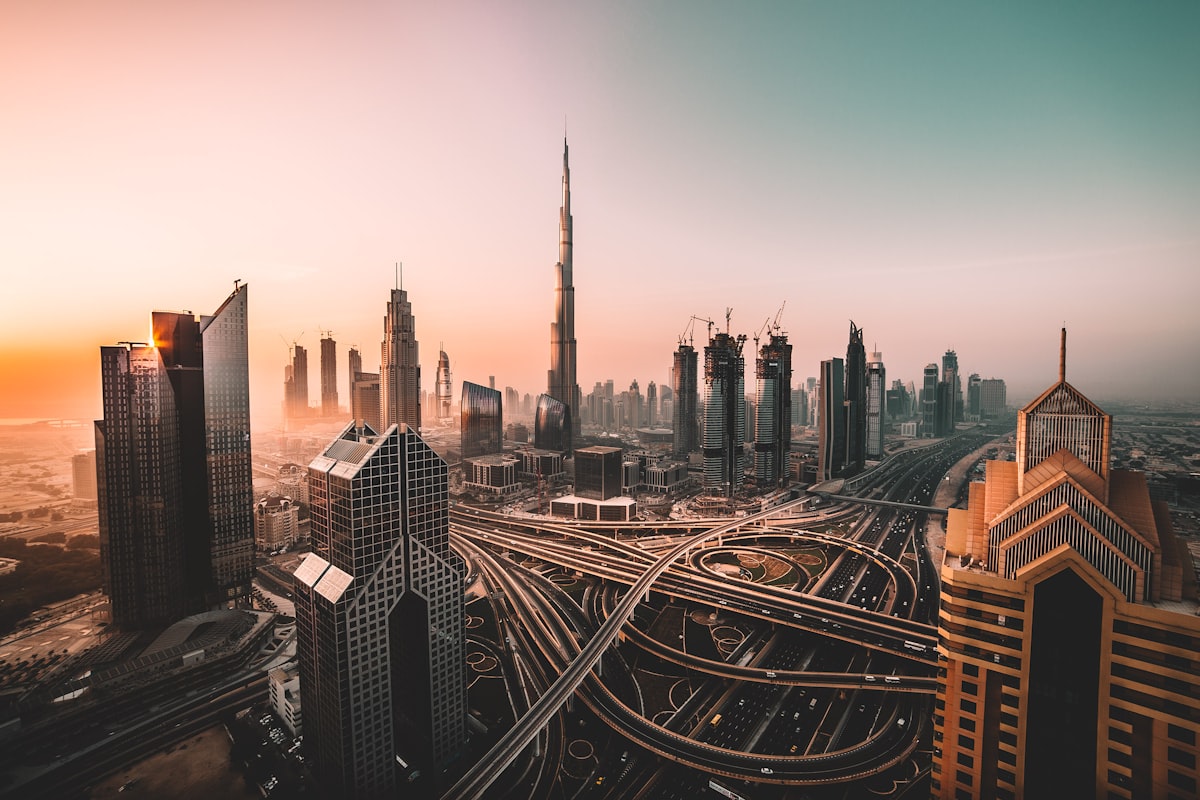
Drive 130 kilometres east from the Burj Khalifa and something extraordinary happens: Dubai disappears. The glass towers dissolve into desert, the desert yields to gravel plains, and then — suddenly, dramatically — the Hajar Mountains erupt from the earth like a geological reprimand to everything flat and manufactured that came before. This is Hatta, a Dubai exclave that shares no visual, cultural, or atmospheric DNA with the coastal metropolis that governs it. And it is, against all reasonable expectation, becoming one of the Gulf's most compelling luxury addresses.
The AED 1.3 Billion Reinvention
Sheikh Mohammed bin Rashid Al Maktoum's 2021 Hatta Master Development Plan committed AED 1.3 billion to transforming this sleepy mountain town into a world-class sustainable tourism destination. The ambition was audacious: to create an eco-luxury proposition that could compete with Aspen, Queenstown, and the Swiss Engadine — not through imitation, but through a distinctly Emirati interpretation of mountain luxury. Five years on, the results are beginning to crystallise into something remarkable.
The plan's centrepiece is the Hatta Sustainable Waterfall — an 80-metre cascade integrated into a hydroelectric pumped-storage facility that generates 250MW of clean energy. It is a feat of engineering that manages to be simultaneously pragmatic and poetic: renewable energy infrastructure that doubles as the UAE's most dramatic landscape feature. Below it, the Hatta Dam lake — its waters an improbable turquoise against the ochre mountains — has been reimagined as a premium water sports destination with kayaking, paddleboarding, and a floating restaurant whose terrace commands views that make every Dubai brunch venue feel inadequate.
The Heritage Village: Luxury's Archaeological Foundation
Hatta's heritage village — a collection of restored stone and mud-brick buildings dating to the 16th century — provides something that Dubai's coastal developments cannot manufacture at any price: authenticity. The watchtowers, the falaj irrigation channels, the narrow passages between buildings designed to funnel mountain breezes through living spaces — these are not developer amenities. They are the genuine article, the material evidence of a community that has inhabited these mountains for five centuries. The Dubai government's restoration, conducted in partnership with UNESCO consultants, has been exemplary: structurally sound, historically accurate, and mercifully free of the theme-park impulse that afflicts so many heritage preservation projects in the Gulf.
Adjacent to the heritage village, a new generation of luxury lodges has emerged. The Hatta Sedr Trailers — premium glamping pods positioned on elevated platforms overlooking the dam — were the first iteration, booking out months in advance despite rates that compete with five-star Dubai hotels. But the more significant development is the Hatta Resorts masterplan: a collection of forty ultra-premium mountain villas, each designed by regional architectural practices, each achieving net-zero energy certification, each commanding a minimum price of AED 15 million. The waiting list, as of early 2026, exceeds 200 names.
Temperature as Luxury
In a region where summer temperatures routinely exceed 45°C at sea level, Hatta's elevation — approximately 300 metres above sea level, with surrounding peaks reaching 1,300 metres — represents a thermal luxury that no amount of air conditioning can replicate. Winter nights drop to 8°C, cool enough for fireplaces, blankets, and the simple pleasure of opening a window. Summer peaks at 38°C — still warm, but a full seven degrees cooler than coastal Dubai, with significantly lower humidity. This temperature differential is not a marginal amenity; it is a fundamental redefinition of what outdoor living means in the Gulf.
The implications for lifestyle are profound. Hatta residents hike year-round. Mountain biking trails — 52 kilometres of professionally graded single-track through the Hajar range — are rideable ten months of the year. The wadi pools that punctuate the mountain landscape offer natural swimming in water that stays cool through convective circulation. Outdoor dining, that most basic of human pleasures that coastal Dubai restricts to a five-month window, is possible in Hatta for nine months. These are not abstract quality-of-life metrics; they are the reason that a growing cohort of Dubai's ultra-high-net-worth residents are acquiring Hatta properties not as weekend retreats, but as primary residences.
The Connectivity Paradox
Hatta's greatest luxury is also its greatest challenge: remoteness. The 90-minute drive from Dubai Marina traverses some of the most monotonous highway in the Emirates — a flat, straight, desert corridor that offers little visual reward until the mountains appear. The planned Etihad Rail connection, expected to reduce travel time to 45 minutes by 2028, will fundamentally alter the accessibility equation. But for now, the journey functions as a filter: it selects for residents and visitors who are intentional about their escape, who value destination over convenience, who understand that the effort of arrival is itself a luxury in a world of frictionless access.
Within Hatta itself, a different kind of connectivity is being engineered. The Dubai government has deployed full 5G coverage across the exclave, installed a fibre-optic backbone that delivers gigabit internet to every address, and established a dedicated co-working facility — Hatta Hub — that enables remote work in an environment of mountain air and birdsong rather than fluorescent lighting and recycled air. The message is clear: Hatta is not asking you to disconnect from the modern economy. It is asking you to reconnect with landscape, climate, and the physical world while remaining fully operational in the digital one.
Adventure Tourism: The Vertical Integration
Hatta's adventure tourism infrastructure has been developed with a sophistication that belies the rustic setting. The mountain bike park — designed by IMBA-certified trail builders from New Zealand — includes downhill runs, cross-country loops, and a skills park that hosts UCI-sanctioned events. The Hatta Wadi Hub offers canyoning, rock climbing, and guided via ferrata routes through the Hajar's most dramatic cliff faces. Kayaking on the dam is complemented by a new open-water swimming programme that has attracted competitive athletes from across the region.
But the truly premium offering is the guided wilderness experience: multi-day hiking expeditions through the Hajar range, sleeping in architect-designed mountain shelters, eating meals prepared by chefs who trek in with portable kitchens. These experiences — priced at AED 15,000 per person for a three-day expedition — are booked out six months in advance and have attracted coverage in Condé Nast Traveller, Wallpaper*, and Monocle. They represent a new category of Gulf luxury: one that derives its value not from material excess but from physical engagement, natural beauty, and the radical simplicity of sleeping under a desert sky at 1,200 metres.
The Sustainability Premium
Hatta's development has been conceived from inception as a sustainability showcase — and this is not greenwashing. The pumped-storage hydroelectric facility provides genuine renewable energy. The solar farm on the plateau above the town generates enough power to make the exclave net energy-positive. Water recycling systems recover 85% of grey water for irrigation. Construction mandates require local stone, recycled materials, and passive cooling design. The result is a development that can credibly claim carbon neutrality — a proposition that is increasingly valuable to the ultra-high-net-worth buyer cohort that dominates this market.
A 2025 Savills report identified "genuine sustainability credentials" as the fastest-growing priority among UHNW property buyers globally, with 67% of respondents indicating willingness to pay a 15-25% premium for properties with verified environmental performance. In Hatta, that premium is being realised: the net-zero mountain villas command per-square-metre prices 30% above equivalent non-certified properties. The sustainability story is not a marketing overlay; it is a value driver.
The Cultural Inflection
Perhaps most significantly, Hatta represents a cultural inflection in Dubai's relationship with luxury. For three decades, Dubai luxury has been defined by addition: more height, more gold, more square footage, more branded amenities. Hatta proposes the opposite: luxury through subtraction. Fewer walls, more sky. Fewer amenities, more landscape. Fewer brands, more craft. It is a proposition that aligns with global shifts in luxury consumption — the movement from conspicuous to conscientious, from acquisition to experience, from display to discretion — while remaining authentically rooted in Emirati geography and heritage.
The Hatta Honey Farm, which produces some of the Gulf's most prized sidr honey — selling for AED 1,200 per kilogramme — captures this ethos perfectly. Here is a product that is genuinely rare, genuinely local, genuinely excellent, and genuinely understated. No branded packaging, no celebrity endorsement, no influencer campaign. Just bees, flowers, mountains, and the patient craft of extraction. It is, in miniature, the entire Hatta proposition: luxury that earns its price through substance rather than spectacle.
In a city that built its legend on defying nature, Hatta's genius is its surrender to it — proving that Dubai's most radical luxury proposition was always hiding in the mountains it forgot to market.