Dubai Creek Harbour: How the Emirate's Historic Waterway Became the Gulf's Most Ambitious Urban Waterfront Renaissance
March 21, 2026 · 16 min read
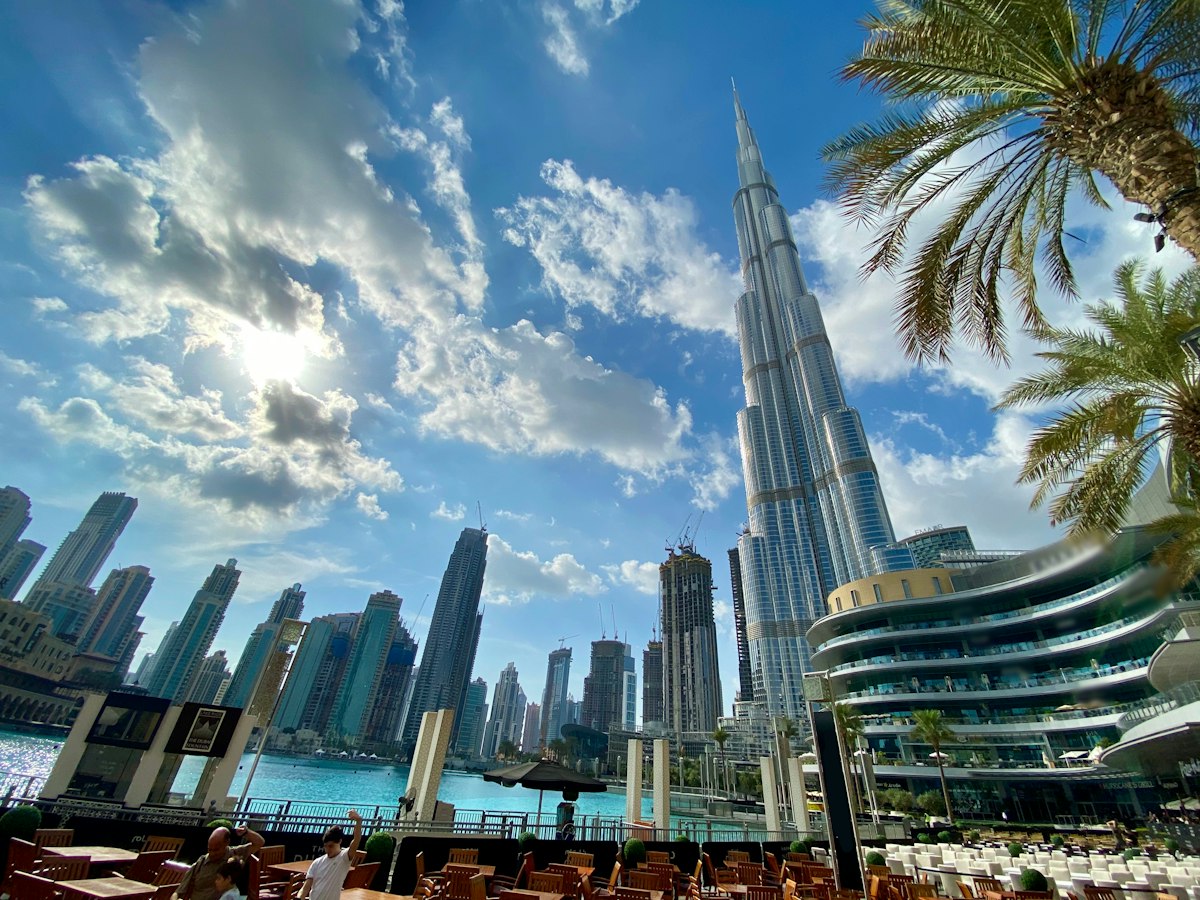
Dubai Creek — the narrow tidal inlet that bisects old Dubai into Deira and Bur Dubai — is the reason the city exists. Before the skyscrapers, before the palm islands, before the brand-name architecture that turned the emirate into a global proper noun, there was this waterway: a sheltered anchorage where Bedouin pearl divers and Persian merchants conducted the modest commerce that sustained a coastal settlement of perhaps fifteen thousand people through the early twentieth century. The Creek's dhow wharves, its gold souks, its abra water taxis — these are not heritage attractions created for tourists. They are the living remnants of the trading culture that Dubai's founding families still identify as the authentic core of a city that the rest of the world knows primarily for its capacity for reinvention.
The Master Plan: History Meets Hyperscale
Dubai Creek Harbour, the AED 25 billion joint venture between Emaar Properties and Dubai Holding, represents what may be the most financially significant attempt in modern urban history to reconnect a city with its founding geography. The project occupies approximately six square kilometres of land adjacent to the Ras Al Khor Wildlife Sanctuary — a protected flamingo habitat that provides the improbable backdrop of thousands of pink birds visible from the balconies of buildings that cost, per square metre, more than most European prime addresses. The master plan calls for a mixed-use district of approximately 39,000 residential units, commercial space, cultural facilities, and — most dramatically — Dubai Creek Tower, designed by Santiago Calatrava as the world's tallest observation structure, whose completion will establish a new anchor point on Dubai's evolving skyline.
The strategic logic of Creek Harbour is distinct from that of Dubai's other mega-developments. Where Palm Jumeirah created new land, and Downtown Dubai created a new centre, Creek Harbour returns to the original centre — the geographic and historical point of origin that the city's explosive growth had, by the early 2000s, effectively marginalized. The investment thesis is that the Creek, having spent half a century as Dubai's forgotten waterfront, is positioned for the kind of heritage-driven revaluation that transformed London's Docklands, Hamburg's HafenCity, and Shanghai's Bund from post-industrial afterthoughts into their respective cities' most coveted addresses.
The Residential Architecture: Vertical Living on Ancient Water
The residential towers of Creek Harbour — Creek Palace, Creek Rise, Creek Gate, Harbour Views, and the flagship Address Harbour Point — have established a design language that distinguishes the district from Dubai's other tower clusters. Where the Marina towers compete for individual attention with competing geometries and cladding systems, Creek Harbour's residential buildings adopt a more cohesive vocabulary: curved forms that echo the waterway's natural geometry, extensive use of glass to maximize Creek and sanctuary views, and a material palette that favours warm tones — champagne, bronze, sandstone — over the cool blues and silvers that dominate the Marina and JBR skylines.
Pricing in Creek Harbour has followed a trajectory that illustrates the market's confidence in the district's long-term positioning. Early-phase apartments launched at AED 1,200-1,800 per square foot; comparable units in completed buildings now transact at AED 2,200-3,500 per square foot, with premium waterfront-facing units achieving AED 4,000+. This appreciation, which exceeds the performance of most Dubai submarkets over the same period, reflects not merely construction progress but the emergence of a lifestyle infrastructure — restaurants, a yacht marina, landscaped waterfront promenades, a district cooling system — that transforms Creek Harbour from a construction site into a neighbourhood.
The Flamingo Paradox: Nature as Ultra-Luxury Amenity
The Ras Al Khor Wildlife Sanctuary, which shares Creek Harbour's eastern boundary, presents a marketing proposition that no developer could have invented. Approximately 20,000 greater flamingos winter in the sanctuary's protected mudflats, creating a visual spectacle that is — in the context of Dubai's built environment — genuinely surreal. From the upper floors of Creek Harbour's residential towers, residents observe a scene that juxtaposes the hyper-engineered landscape of a twenty-first-century megaproject with one of the oldest migratory patterns in the avian world. The flamingos were here before Dubai. They will, if conservation measures hold, be here after whatever comes next.
This proximity to a protected natural habitat has created a premium layer within Creek Harbour's pricing structure. Units with direct sanctuary views — particularly in the Creek Palace and Harbour Gate towers — command premiums of 15-25% over comparable units facing the city or the Creek itself. The calculus is straightforward: ocean views are available throughout Dubai's coastline, city views are available in any tower district, but flamingo views — genuine, daily, unmediated proximity to a wild flamingo population — are available in precisely one location in the entire emirates, and the conservation status of the sanctuary ensures that no competing development can replicate the amenity.
The Cultural Infrastructure: Beyond Residential Value
Creek Harbour's master plan allocates significant area to cultural and civic facilities that distinguish it from the primarily commercial orientation of districts like Business Bay or the primarily residential character of communities like Arabian Ranches. The Creek Marina, designed to accommodate both modern yachts and traditional dhows, deliberately references the maritime heritage that defines the area's historical identity. The waterfront retail district, anchored by a souk-inspired market hall rather than a conventional shopping mall, signals an intention to create spaces of cultural specificity rather than generic commercial efficiency.
The most ambitious cultural element, however, is the proposed Dubai Creek Tower precinct — a public realm project that, if completed to specification, would create one of the Middle East's most significant cultural destinations. The tower's observation deck, designed by Calatrava to offer 360-degree views from a height exceeding the Burj Khalifa's observation level, would function not merely as a tourist attraction but as a geographic statement: a new point from which to comprehend Dubai's scale, its relationship to the Creek, and the extraordinary speed of its transformation from trading settlement to global city.
The Connectivity Advantage: Old Dubai, New Access
Creek Harbour's location solves a problem that has long constrained Old Dubai's competitiveness in the luxury market: access. The district's position on the eastern bank of the Creek, adjacent to the Ras Al Khor Road interchange, provides connectivity to both Dubai International Airport (15 minutes) and Al Maktoum International (25 minutes) that is superior to most of New Dubai's prime addresses. The planned extension of the Dubai Metro — with a dedicated Creek Harbour station — will add public transport access that further distinguishes the district from car-dependent communities like Palm Jumeirah or Emirates Hills.
This dual-airport proximity is not merely a convenience; it is a commercial advantage that Creek Harbour's developers have identified as a differentiator for the district's growing population of international business travellers and corporate executives. In a city where commute times have become a significant quality-of-life concern — particularly for residents of the popular but increasingly congested Marina and JBR districts — Creek Harbour's central-east positioning offers a time advantage that compounds daily into a lifestyle distinction.
The Investment Horizon: Where Heritage and Future Converge
The financial case for Creek Harbour rests on a convergence of factors that is, by Dubai standards, unusual: historical significance, natural amenity, infrastructure investment, and — perhaps most importantly — the scarcity of undeveloped waterfront land in a city that has exhausted most of its coastal development potential. The Creek itself, as a natural waterway with protected habitat on one bank and heritage districts on the other, cannot be replicated. Palm Jumeirah proved that Dubai can create new coastline; Creek Harbour suggests that the more compelling investment may be in the coastline that was always there.
For the buyer considering Creek Harbour in 2026, the question is not whether the district will achieve maturity — the weight of capital and infrastructure committed makes some version of the master plan's vision essentially inevitable — but whether the current pricing cycle reflects the district's potential or merely its progress. The completion of Dubai Creek Tower, the opening of the Metro station, and the continued buildout of retail and cultural amenities represent catalysts that are, by the standards of Dubai's development timeline, imminent rather than speculative. Early buyers in Creek Harbour have already captured significant appreciation; the question for current entrants is whether the district's second phase of growth will deliver returns comparable to the first.
Dubai Creek Harbour — Key Market Data
- 🌊 Master plan: AED 25B, 6 sq km, 39,000 residential units
- 💰 Current pricing: AED 2,200–4,000+ per sq ft
- 🦩 Natural amenity: Ras Al Khor Wildlife Sanctuary (20,000 flamingos)
- 🗼 Landmark: Dubai Creek Tower (Santiago Calatrava, world's tallest observation)
- ✈️ Access: DXB 15 min, DWC 25 min, future Metro station
- 📈 Appreciation: 60-80% from launch to current completed units
Dubai Creek Harbour is, in the end, a bet on the proposition that the most valuable thing a city can do with its history is not preserve it as a museum but use it as a foundation. The Creek made Dubai. Creek Harbour is making it again — this time with the capital, the ambition, and the flamingos to prove that the oldest address in the emirates may also be its most forward-looking.