Jumeirah Bay Island: How Dubai's Seahorse-Shaped Atoll Became Billionaire Row
March 16, 2026 · 12 min read
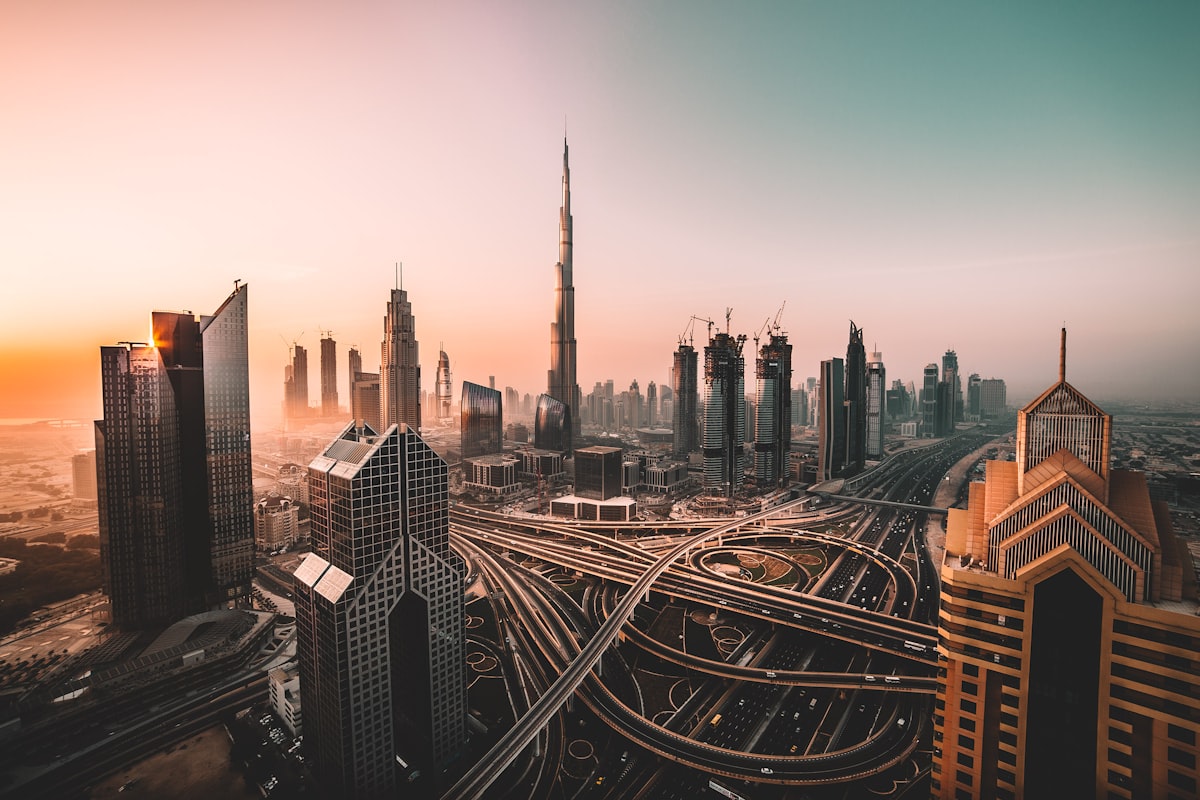
Seen from above, Jumeirah Bay Island looks like a deliberate provocation — a 6.3 million-square-foot seahorse sculpted from reclaimed seabed, connected to the mainland by a single, security-controlled bridge. It sits just off the Jumeirah coastline, equidistant between the Burj Al Arab and downtown Dubai, occupying a stretch of turquoise water so improbably clear that first-time visitors assume the colour has been digitally enhanced. It has not. The island was engineered with a sophisticated breakwater system that creates a perpetual lagoon effect, filtering the water into Caribbean-grade transparency. Nothing about Jumeirah Bay is accidental. Everything — from the curvature of its coastline to the species of coral planted on its foundations — was designed.
The Anatomy of an Artificial Eden
The island was completed in 2014, but for years it remained largely empty — a speculative canvas awaiting the right moment. That moment arrived in 2017 with the opening of the Bulgari Resort & Residences, a 101-key hotel and 165-apartment complex that instantly established the island's tonal register: Italian craftsmanship, absolute discretion, and a price point that filtered all but the most committed buyers. The Bulgari Lighthouse, a 12-suite standalone structure modelled on an Italian lighthouse, offers Dubai's most expensive hotel accommodation — suites beginning at AED 40,000 per night — and has become the unofficial symbol of the island's aspirations.
Around the Bulgari, a residential community has crystallised. The island's 83 private villa plots, each spanning 12,000 to 30,000 square feet, have become the most contested real estate in the Gulf. In 2025, a single plot — undeveloped, without structure — traded for AED 120 million. The completed mansions, designed by firms including Foster + Partners, OMA, and SAOTA, routinely exceed AED 200 million. Three transactions in the past 18 months surpassed AED 300 million, making Jumeirah Bay the most expensive residential address in the Middle East and one of the top five globally.
Who Lives on the Seahorse?
The island's resident profile is a case study in global capital migration. Indian industrialists. Russian technology entrepreneurs. European family offices. Saudi royals maintaining discreet pied-à-terre. The common denominator is not nationality but net worth — residents are uniformly in the nine-figure category — and a shared preference for what one island architect calls "visible invisibility": homes of extraordinary scale and finish that reveal almost nothing to the street. Perimeter walls reach four metres. Gardens are layered to block sightlines. Security details operate from dedicated rooms within each compound. The island has no public beach, no public restaurant, no public space of any kind beyond the Bulgari. It is, functionally, a gated nation-state.
This privacy premium has attracted a specific type of buyer: those for whom the Palm Jumeirah — once Dubai's most prestigious address — has become too public, too photographed, too accessible. Jumeirah Bay's single-bridge access creates a natural chokepoint that renders unannounced visits impossible. There is no tourist traffic. No ride-share drop-offs. No construction tours for prospective buyers in other developments. The island is as close to a private city as Dubai's property market has produced.
The Bulgari Effect
The Bulgari Resort has done for Jumeirah Bay what the Aman did for Amanpuri's surrounding property market: it has established a lifestyle infrastructure that transforms raw real estate into a curated experience. The resort's Il Ristorante – Niko Romito operates the only Michelin-starred Italian restaurant in the Gulf. The Bulgari Yacht Club maintains a fleet of custom-built Riva tenders for guests. The spa — 1,700 square metres of Vicenza stone and hand-laid mosaic — has become a destination in itself, attracting residents from across Dubai for weekend treatments.
But the Bulgari's most significant contribution is atmospheric. The resort imports a Mediterranean sensibility — unhurried meals, low-volume conversations, an aesthetic vocabulary rooted in stone and wood rather than glass and gold — that has become the island's dominant cultural register. This is not the Dubai of nightclubs and Instagram spectacles. Jumeirah Bay's social life revolves around private dinners, yacht excursions, and the kind of studied discretion that characterises Portofino or Cap Ferrat. The island has, perhaps unconsciously, modelled itself on the European Riviera tradition: immense wealth, deliberately understated.
Architecture Without Restraint
The villas on Jumeirah Bay represent arguably the most ambitious concentration of private residential architecture in the world. Freed from the height restrictions and stylistic conformity that govern most gated communities, owners have commissioned structures of breathtaking ambition. A Foster + Partners villa completed in 2025 features a cantilevered infinity pool extending 15 metres beyond the building's footprint, suspended above the beach. An OMA-designed compound incorporates a full-size underground cinema, a temperature-controlled wine vault holding 8,000 bottles, and a basement art gallery with museum-grade climate control and lighting.
The most talked-about residence — completed in late 2025 but never publicly photographed — was designed by Jean Nouvel and reportedly cost AED 180 million to construct, excluding the plot. The structure features a perforated metal facade inspired by traditional mashrabiya screens, creating shifting patterns of light and shadow throughout the interior. At night, the facade becomes translucent, transforming the building into an enormous lantern visible from the mainland. It is the island's only building that announces itself — a fitting exception that proves the rule of discretion.
The Market Mechanics
Jumeirah Bay Island's market operates differently from any other segment of Dubai real estate. There is no developer price list, no off-plan speculation, no broker-driven open days. Transactions occur privately, often between parties who have never met, intermediated by family offices and private banks. The last three record-breaking sales were completed without the property being formally listed. In one case, the buyer's representative viewed the villa via a 45-minute FaceTime call from Geneva. The deposit — AED 30 million — was wired within the hour.
This opacity makes reliable valuation difficult, but the trajectory is unambiguous. Land values have appreciated approximately 340% since 2020. Completed mansions have appreciated at an even steeper rate, driven by the irreplaceable nature of the product: there are only 83 plots, the island cannot be expanded, and the Bulgari Resort has created an amenity ecosystem that no competing development can replicate without spending a decade and a billion dollars.
For the global ultra-high-net-worth buyer — the family seeking a tax-efficient, geographically central, climate-consistent base from which to manage assets across Asia, Europe, and Africa — Jumeirah Bay Island has become the default answer. It is not the largest island Dubai has built, nor the most famous. But it may be, per square metre, the most valuable piece of artificial land ever created. The seahorse, once a curiosity visible only from aircraft windows, has become the shape of twenty-first-century wealth.