Al Mamzar: How Dubai's Northern Waterfront Became the Emirates' Most Authentically Coastal Luxury Address
March 30, 2026 · 14 min read
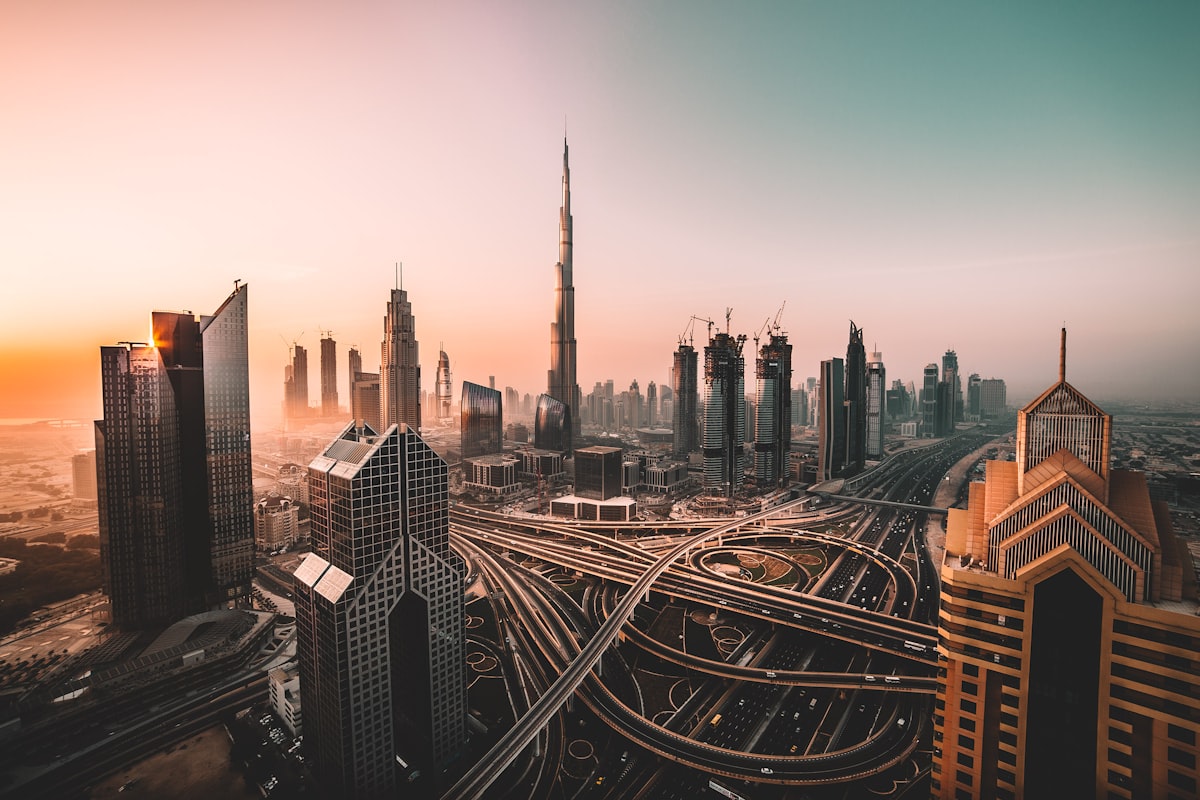
There is a particular quality to morning light on the Al Mamzar corniche that Dubai's newer waterfront developments — for all their engineering brilliance and imported sand — have never managed to replicate. It arrives at an angle sharpened by the narrow strait separating Dubai from Sharjah, bouncing off waters that carry the faintest trace of the Arabian Gulf's northern currents, and it illuminates a neighbourhood that has quietly refused every invitation to reinvent itself. Al Mamzar does not need reinvention. It has something far more valuable: continuity.
The Park That Anchors Everything
Al Mamzar Beach Park — 106 hectares of manicured green space and five distinct beaches stretching along the district's eastern edge — is not merely a neighbourhood amenity. It is, in the truest sense, the neighbourhood's reason for existing. Opened in 1994, when Dubai's population was barely 700,000 and the Burj Al Arab existed only in concept drawings, the park established a civic standard that subsequent development has been forced to respect. Its four swimming beaches face Sharjah across the Mamzar Lagoon, while a fifth faces the open Gulf — a geographical peculiarity that grants residents the rare luxury of choosing between sheltered lagoon swimming and open-ocean waves within a five-minute walk.
The park's influence on surrounding property values is structural rather than speculative. Unlike the artificial beaches of Palm Jumeirah or JBR, which exist because a developer willed them into being, Al Mamzar's coastline is natural — a geological fact that no economic cycle can erode. Properties overlooking the park trade at premiums of 30-45% over comparable units even two blocks inland, and this premium has remained remarkably consistent through every market correction since 2008. Nature, it turns out, is the most reliable luxury asset.
The Demographic Exception
Walk through Al Mamzar on a Thursday evening and you encounter something almost extinct in modern Dubai: a neighbourhood operating at human scale. Families stroll the corniche with no destination in mind. Children play in parks that aren't attached to a branded residential development. Shopkeepers — many of whom have occupied the same units for fifteen or twenty years — greet regulars by name. The grocery stores stock Keralan spices alongside Arabic bread alongside Filipino condiments, and the restaurant scene — unpretentious, generous, authentically diverse — reflects a residential population that chose this neighbourhood not for its investment potential but for the quality of its daily life.
This demographic reality distinguishes Al Mamzar from virtually every other waterfront district in Dubai. While Dubai Marina's population turns over at rates exceeding 35% annually and JBR functions primarily as a short-term rental market, Al Mamzar's tenant retention rates are among the highest in the emirate. Families who settled here in the early 2000s remain. The Indian businessman who runs the textile shop near the corniche has watched three generations of his neighbours' children grow up. The Egyptian dentist on the second floor of the commercial building near the park entrance has served the same patients for eighteen years. This is not the transient Dubai of global media coverage. This is the other Dubai — the one that actually lives here.
The Sharjah Paradox
Al Mamzar's position at Dubai's northeastern border, directly facing Sharjah across the Mamzar Lagoon, has historically been viewed by market analysts as a liability — proximity to a more conservative, less internationally branded emirate supposedly depressing premium potential. The reality is precisely inverted. The Sharjah border grants Al Mamzar something no amount of master planning can manufacture: visual depth. Where JBR residents look out at the open sea (magnificent but monotonous), and Downtown residents face an ever-changing skyline (impressive but relentless), Al Mamzar's waterfront views encompass an entire second city — Sharjah's Al Majaz district, with its illuminated fountains, cultural buildings, and evening promenade. The view is alive, populated, human. It changes with the hour. It tells a story that extends beyond Dubai's borders.
Moreover, the border position means Al Mamzar benefits from Sharjah's considerable cultural infrastructure — the Sharjah Art Foundation, the Museum of Islamic Civilization, the Sharjah Biennial — without bearing the costs of Sharjah's more restrictive regulatory environment. Residents enjoy Dubai's liberal social landscape while accessing Sharjah's cultural offerings in under ten minutes. It is a geographical arbitrage that the market has persistently undervalued.
The Architectural Integrity
Al Mamzar's built environment possesses a quality increasingly rare in Dubai: consistency. The district was substantially developed during a fifteen-year window between 1990 and 2005, and the resulting architectural language — mid-rise residential buildings (six to twelve storeys), generous setbacks, ground-floor retail, and balconies oriented toward the water — creates a streetscape with a coherence that Dubai's more piecemeal luxury districts conspicuously lack. There are no 80-storey towers casting afternoon shadows over neighbouring four-storey villas. There are no construction cranes perpetually redefining the skyline. The neighbourhood is, in a word, finished — and that completeness is itself a luxury.
The building stock, while not flashy by Dubai standards, is structurally sound and generously proportioned. Two-bedroom apartments regularly exceed 1,400 square feet — a figure that would be considered three-bedroom territory in newer developments. Ceiling heights of 3.2 metres are standard rather than exceptional. Parking ratios are generous. These are buildings designed during a period when Dubai's developers were still building for residents rather than investors, and the difference in spatial generosity is immediately apparent to anyone who has toured the increasingly compressed floor plates of the city's post-2015 towers.
The Connectivity Premium
Al Mamzar's transport connectivity has improved dramatically with the completion of Route 2020 enhancements and the extension of bus rapid transit services along the Al Ittihad Road corridor. Dubai International Airport — the world's busiest for international passengers — sits just twelve minutes south via the Al Ittihad Road or Sheikh Rashid Road. The Dubai Metro's Green Line, with stations at Al Qiyadah and Abu Hail, provides direct connections to Deira, Bur Dubai, and the Creek. For a district often dismissed as "too far north," Al Mamzar is in fact more centrally connected than many of Dubai's southern expansion zones that command significantly higher price points.
The upcoming Dubai-Sharjah Metro link, currently in advanced planning stages, is expected to include a station within Al Mamzar's catchment area — a development that would transform the district's accessibility profile and create a genuine cross-emirate transit hub. Real estate analysts at JLL estimate that confirmed metro proximity could catalyse a 15-25% appreciation in district-wide values over a three-to-five-year horizon. For current owners, this represents the rare convergence of an affordable entry point and a structural catalyst.
The Investment Thesis
Al Mamzar's investment case is built on a logic that the Dubai market has historically struggled to price correctly: the premium of authenticity. In a city where "luxury" has become synonymous with branded residences, infinity pools, and celebrity architect signatures, Al Mamzar offers a counter-proposition. Its luxury is the luxury of genuine community, of natural coastline, of spatial generosity, of a neighbourhood that has earned its identity through three decades of lived experience rather than three years of marketing spend.
Current pricing — AED 700-1,100 per square foot for quality waterfront-adjacent stock — represents a discount of 60-70% to comparable waterfront exposure in JBR, Dubai Marina, or Palm Jumeirah. Rental yields, driven by the district's strong tenant retention and limited new supply, consistently outperform citywide averages at 7.2-8.5%. For investors weary of Dubai's speculative extremes, Al Mamzar offers something precious: predictable, income-generating waterfront real estate in a mature neighbourhood with identifiable catalysts and limited downside risk.
The smart money, as always, is quiet. Over the past eighteen months, transaction volumes in Al Mamzar have increased by 34% while average prices have risen just 12% — a gap that suggests accumulation rather than speculation. Several regional family offices have begun assembling portfolios of full-floor units, anticipating the metro-driven revaluation that institutional models increasingly treat as inevitable. The neighbourhood's transformation from "affordable waterfront" to "undervalued waterfront" is well underway. The question is not whether the market will recognise Al Mamzar's structural advantages, but when — and by then, the entry window will have closed.
The Enduring Shore
There is a particular moment, just after sunset, when the lights of Sharjah begin to shimmer across the Mamzar Lagoon and the park's walking paths fill with families emerging from the heat of the day, that Al Mamzar reveals its deepest truth. This is not a neighbourhood waiting to become something. It is not a "emerging luxury destination" or a "district in transition." It is, simply and completely, a place where people live — where the rhythms of daily existence have been refined over three decades into something approaching that rarest of urban commodities: a genuine sense of home. In Dubai's ceaseless reinvention of itself, Al Mamzar's refusal to change may prove to be its most revolutionary act.
In a city that builds futures from sand, Al Mamzar's genius is its devotion to the present — proving that Dubai's most valuable waterfront is the one that never needed to be manufactured.