Downtown Dubai's Opera District: How Culture Became the Gulf's Most Powerful Luxury Anchor
March 17, 2026 · 14 min read
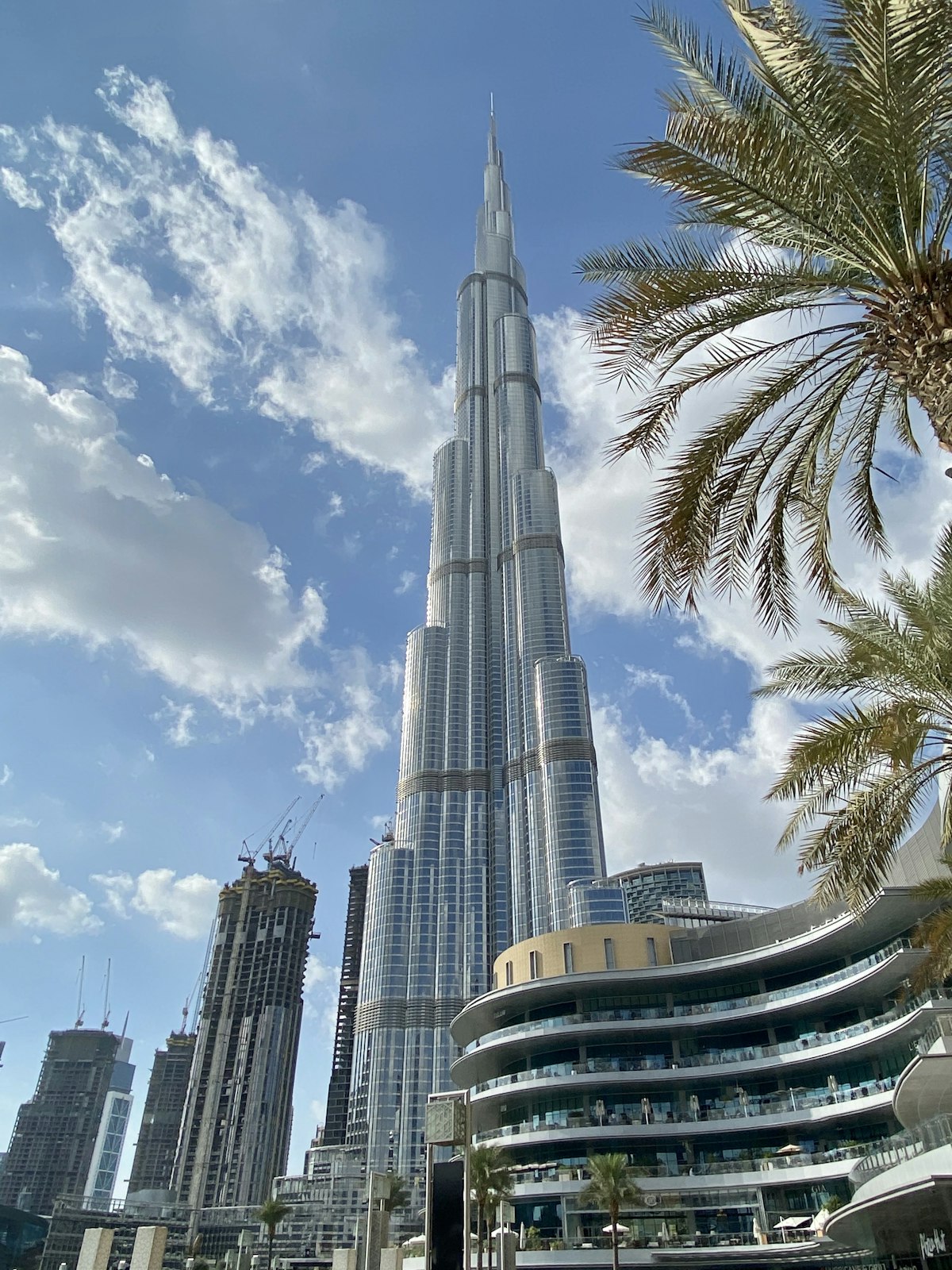
Every great city has a moment when it decides to stop being merely prosperous and start being cultured. For Paris, it was the construction of the Opéra Garnier in 1875. For Sydney, it was Jørn Utzon's impossible shells rising from Bennelong Point. For Dubai, that moment arrived on August 31, 2016, when the 2,000-seat dhow-shaped performing arts centre designed by Janus Rostock opened its doors in the heart of Downtown — and in doing so, triggered the most concentrated luxury real estate appreciation event the Gulf has ever seen.
The Dhow That Launched a Thousand Penthouses
Dubai Opera was always more than a building. It was a thesis: that culture, properly staged, could do what shopping malls, artificial islands, and the world's tallest tower had not — create the kind of emotional attachment to place that makes people not just visit but stay. The thesis has proven spectacularly correct. Properties within 500 metres of Dubai Opera now command a 35-40% premium over equivalent units just a kilometre away. The "Opera District" — a term that did not exist before 2018 and now appears on every major brokerage's listings — has become the single most expensive residential micro-market in the UAE, with penthouse transactions regularly exceeding AED 5,000 per square foot.
The mechanics of this premium are instructive. Opera proximity is not merely about convenience — though the ability to walk to a world-class performance venue in evening dress, without negotiating traffic or parking, is a luxury that residents cite consistently. It is about what urban economists call the "cultural amenity effect": the way that high-quality cultural institutions elevate the perceived sophistication of an entire neighbourhood, attracting the kind of residents whose presence further elevates it. The Opera District has become Dubai's version of Lincoln Center's surrounding blocks in Manhattan — a place where wealth and culture intersect visibly, where the audience spilling out of a Cecilia Bartoli recital mingles with residents returning from dinner at Zuma, and where the street-level experience is one of effortless, cosmopolitan refinement.
The Programme That Proved the Sceptics Wrong
When Dubai Opera was announced, the question every cultural commentator asked was the same: who would come? Dubai in 2014 was a city of transient wealth, of short-stay visitors and expat professionals whose cultural consumption happened elsewhere — in London, Mumbai, Sydney, wherever home was. The idea that a city with no classical music tradition, no indigenous opera culture, and a population where 90% are foreign nationals could sustain a world-class performing arts programme seemed, to many, implausible.
A decade of programming has silenced every sceptic. Dubai Opera's 2025-26 season featured the Vienna Philharmonic (three sold-out nights), a new Akram Khan dance production commissioned specifically for the venue, a month-long Arabic music festival that drew performers from Beirut to Baghdad, a run of The Phantom of the Opera that was the highest-grossing non-Broadway production in history, and a series of intimate jazz evenings in the venue's rooftop sky garden that became the city's most coveted social invitation. Annual attendance now exceeds 450,000 — higher per seat than the Royal Opera House in London.
The programming's genius lies in its eclecticism. Dubai Opera does not attempt to be a European opera house transplanted to the Gulf. It is something new: a multicultural performance space whose programme reflects the demographics of its audience. A typical month might include a classical concert, an Arabic poetry evening, a Bollywood spectacular, a stand-up comedy night, and a fashion show. This promiscuity is not a weakness but a strategy — one that ensures the venue is relevant to Dubai's polyglot population rather than to a narrow cultural elite.
The Architectural Effect
Dubai Opera's design — a glass-and-steel form that evokes a traditional wooden dhow with its prow pointed toward Dubai Creek — has become the district's visual anchor in a way that even the Burj Khalifa, for all its vertical drama, has not. The reason is scale. The Burj Khalifa is a spectacle best appreciated from a distance; Dubai Opera is an experience best appreciated from the plaza that surrounds it. The opera's forecourt, with its cascading water features and date palm grove, has become Downtown's de facto public square — a gathering place for pre-show drinks, weekend strollers, and the kind of spontaneous social interaction that Dubai's car-oriented urbanism rarely permits.
The buildings that have risen around the Opera since 2018 have responded to its presence with increasing architectural ambition. The Address Opera, a 65-storey residential tower by Emaar whose curved glass façade mirrors the Opera's dhow form, sold out within 48 hours of launch at prices that set Downtown records. IL Primo, the ultra-luxury residences above the Opera itself, achieved AED 7,200 per square foot — a number that would have been considered delusional when the Opera was first announced. Foster + Partners' residential tower on the Opera's eastern flank, completed in 2025, introduced a new typology to Dubai: the culture-adjacent residence, where floor-to-ceiling windows are oriented not toward the sea or the Burj Khalifa but toward the Opera's illuminated roofline.
The Restaurant Constellation
The Opera District's dining scene has evolved into Dubai's most sophisticated culinary cluster. The catalyst was Sean Connolly at Dubai Opera — the New Zealand chef's fire-grill restaurant that occupies the Opera's top floor and whose terrace, overlooking the Dubai Fountain and the Burj Khalifa, is possibly the most spectacular dining view in the Middle East. But it was the independent restaurants that followed, drawn by the Opera's foot traffic and the neighbourhood's affluent, culture-conscious demographics, that created critical mass.
La Petite Maison, the Niçoise institution that has become the unofficial canteen of Dubai's francophone elite, relocated its flagship to the Opera District in 2024. Tresind Studio, already crowned with two Michelin stars, opened a more casual sibling concept, Tresind Social, within walking distance. The Japanese fine-dining restaurant Kinoya, the contemporary Lebanese concept Em Sherif, and the Italian institution Roberto's all cluster within the same six-block radius, creating a restaurant density that rivals the 8th arrondissement in Paris — except that here, every table has a view of the world's tallest building lit up against the desert sky.
The Demographic Shift
Perhaps the most significant impact of the Opera District has been demographic. The neighbourhood has attracted a resident profile that is markedly different from Dubai's traditional luxury buyer: older, more culturally engaged, more likely to hold multiple citizenships, and — crucially — more likely to be a permanent resident rather than an investor holding a unit for rental yield. Real estate agents in the district report that over 60% of buyers in the AED 15 million+ segment are end-users rather than investors, a ratio that inverts the Dubai average.
These residents have, in turn, shaped the neighbourhood's commercial ecosystem. The Opera District now has three independent bookshops (a species nearly extinct elsewhere in Dubai), two galleries representing emerging Middle Eastern artists, a vinyl record shop, and a members' club whose programming focuses on literary salons and wine tastings rather than the bottle-service nightlife that characterises Dubai's other luxury districts. The neighbourhood is becoming, in a way that would have seemed impossible a decade ago, genuinely bohemian — or at least as bohemian as a neighbourhood where the average apartment costs AED 8 million can plausibly be.
The Investment Case
For investors, the Opera District presents a compelling thesis: cultural infrastructure is the most durable form of real estate value creation. Unlike beach access (which can be replicated), height (which will be surpassed), or novelty (which fades), a world-class cultural institution appreciates in value over time as its programme deepens, its reputation builds, and its social ecosystem matures. The Sydney Opera House precinct has appreciated at 2.3x the Sydney average over 50 years. Lincoln Center's surrounding blocks have outperformed Manhattan as a whole for four decades. The evidence is clear: culture pays.
The Opera District's current yields — 5.8% gross for luxury apartments, 7.2% for short-stay units — are modest by Dubai standards but compensated by capital appreciation that has averaged 12% annually since 2020. The forward pipeline is limited by geography: the district is bounded by the Dubai Fountain to the north, Sheikh Mohammed bin Rashid Boulevard to the east, and existing development on all other sides. Supply constraints, combined with growing demand from the permanent-resident demographic, suggest continued price appreciation at rates above the Downtown average.
Dubai spent decades proving that money could build a city. The Opera District is proving something more important: that culture can build a home. In the dhow-shaped hall where Placido Domingo once sang to a half-empty room, the future of Gulf luxury — sophisticated, rooted, genuinely cosmopolitan — is being performed every night to standing ovations.