Business Bay: How a Desert Channel Became Dubai's Most Dynamic Mixed-Use Luxury Address
March 17, 2026 · 14 min read
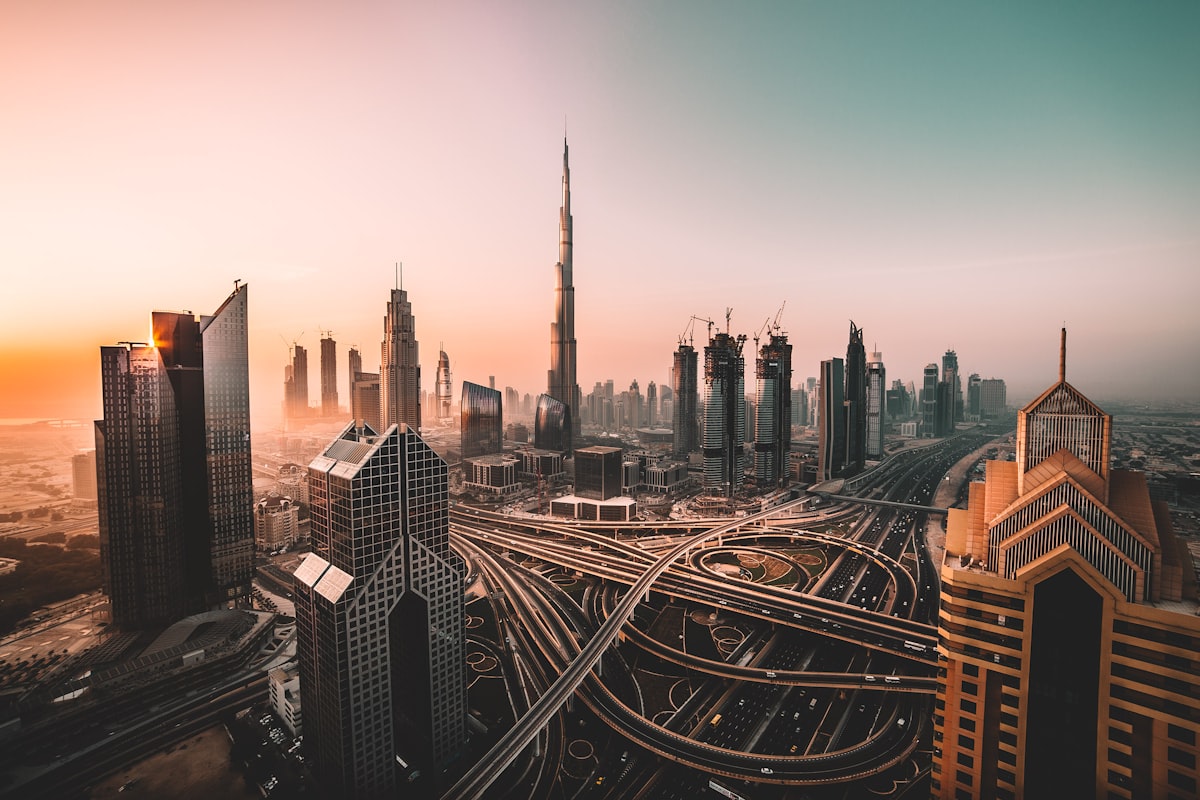
There is a particular species of urban alchemy that occurs when a district designed for one purpose discovers its destiny is another entirely. Canary Wharf was meant to be warehouses. SoHo was supposed to stay industrial. And Business Bay — the 64-million-square-foot canal district that unfurls south of Downtown Dubai like a silk ribbon dropped between skyscrapers — was conceived in 2003 as Dubai's answer to Manhattan's Midtown: a corporate nerve centre of glass towers and boardroom views. What it has become, two decades and several billion dirhams later, is something far more interesting: the most liveable, walkable, and gastronomically sophisticated luxury neighbourhood in the Gulf.
The Canal That Changed Everything
The story of Business Bay is inseparable from the Dubai Water Canal — the 3.2-kilometre artificial waterway that connects Dubai Creek to the Arabian Gulf via a route that slices through the heart of the city. Announced in 2013 and completed in 2016 at a cost of AED 2.7 billion, the canal transformed Business Bay from a landlocked cluster of corporate towers into a waterfront district with 6.4 kilometres of promenade, three pedestrian bridges (one of which, designed by Santiago Calatrava's studio, has become an architectural landmark in its own right), and a marine transit system that connects the neighbourhood to Jumeirah, Downtown, and Dubai Creek via water taxi.
The canal's impact on property values was immediate and dramatic. Waterfront-facing units in Business Bay appreciated 45% in the eighteen months following the canal's completion — a premium that has proven durable, with canal-view properties consistently commanding 25-30% more per square foot than their inland-facing equivalents. But the canal's true gift to Business Bay was not financial. It was experiential. The presence of water — its reflections at sunset, the gentle sound of it against seawalls, the visual relief it provides between towers — transformed the district's urban texture from corporate monotone to something layered, sensory, and genuinely pleasant to inhabit.
The Residential Pivot
Business Bay's original masterplan allocated roughly 70% of its floor area to commercial use. By 2025, the ratio had inverted: residential developments now account for 65% of the district's built stock, and the trend is accelerating. The pivot began during the 2009 financial crisis, when developers holding commercial permits discovered that the market for Grade A office space had collapsed while residential demand — driven by a new generation of knowledge workers, digital nomads, and young Gulf families — remained robust. Permits were amended, designs were revised, and Business Bay began its metamorphosis from corporate district to urban village.
The residential product that emerged was distinctly different from what Dubai's luxury market had previously offered. Where Palm Jumeirah sold space and exclusivity, and Downtown sold spectacle and proximity to the Burj Khalifa, Business Bay sold urbanity — the pleasure of stepping out of your building and finding, within a five-minute walk, a specialty coffee roaster, a contemporary art gallery, a Michelin-recommended restaurant, a canal-side running track, and a metro station. This is a value proposition that barely existed in Dubai before 2020, and Business Bay essentially invented it.
The Tower Typology
Business Bay's skyline is a catalogue of twenty-first-century residential tower typology. The Dorchester Collection's first Dubai property — a 75-storey tower by Foster + Partners sheathed in parametric façades that shift from champagne to pewter depending on the angle of sunlight — anchors the district's western edge. SLS Dubai, the Accor-managed hotel-residence hybrid designed by Aedas with interiors by Paul Bishop, occupies what may be the most photogenic tower in the city: a bent, twisting form that appears to lean toward the Burj Khalifa in permanent genuflection. One at Palm Jumeirah gets the headlines, but the architectural density of Business Bay — where forty towers of genuine design ambition stand within a fifteen-minute walk of each other — is unmatched anywhere in the Gulf.
The latest generation of towers pushes further. The Bugatti Residences by Binghatti, completed in late 2025, introduced the concept of the "Riviera Mansion" — duplex penthouses with private plunge pools on cantilevered terraces that protrude from the building's façade like jewelled balconies. Prices for the top-floor units exceeded AED 120 million, making them among the most expensive apartments ever sold in Dubai. Yet they sold. They sold because Business Bay has achieved something that price alone cannot explain: critical mass. The district has passed the threshold where amenity density, residential quality, and cultural programming create a self-reinforcing cycle of desirability.
Gastronomy on the Canal
Business Bay's culinary scene has evolved from hotel-lobby dining to one of the most diverse and chef-driven food cultures in the Middle East. The catalyst was the opening of BOCA, the modern Mediterranean restaurant by Michelin-starred chef Greg Malouf, whose canal-side terrace became the neighbourhood's de facto living room. BOCA proved that Business Bay could attract destination dining — that people would cross the city to eat here, not merely settle for whatever was available near their apartment.
The pipeline that followed was extraordinary. Trèsind Studio, Himanshu Saini's tasting-menu restaurant that reimagines Indian cuisine through a fine-dining lens, earned two Michelin stars from its Business Bay location. Ristorante Luca Fantin, the first Middle Eastern outpost of the Tokyo-based Italian chef, chose Business Bay over Downtown and DIFC. Fi'lia, Akira Back, and Clap — restaurants that would be headline openings in any global city — clustered along the canal within months of each other, creating a restaurant density that rivals London's Mayfair or New York's West Village.
The street-level food culture is equally compelling. Specialty coffee — a reliable indicator of neighbourhood maturation in any global city — has reached extraordinary density in Business Bay. Mokha 1450, RAW Coffee Company, % Arabica, and Nightjar operate within blocks of each other, each with a distinct proposition and a loyal following. The evening economy along Marasi Drive, the canal-front promenade, now rivals JBR Walk in foot traffic but with a sophistication and demographic diversity that the beachfront strip cannot match.
The Art District Within the District
Business Bay's cultural infrastructure has grown organically rather than by masterplan — and is arguably more authentic for it. The district now hosts over twenty commercial art galleries, concentrated along Al Khail Road and the canal's southern bank. Firetti Contemporary, which represents emerging Gulf and South Asian artists, relocated from DIFC to Business Bay in 2024, citing lower rents and a more "serious" collector base. Carbon 12, the gallery specialising in politically engaged art from the Middle East and North Africa, followed. The presence of these galleries, combined with the street art that now covers several of the district's pedestrian underpasses — commissioned works by regional artists, not graffiti — has given Business Bay a creative texture that its corporate origins would never have predicted.
The Infrastructure Advantage
Business Bay's connectivity is arguably the best in Dubai. The district is served by two metro stations (Business Bay and Marasi, the latter opened in 2025), with direct Red Line access to Dubai Mall, DIFC, the airport, and Jebel Ali. The canal's water taxi network provides marine transit to eleven destinations. Sheikh Zayed Road and Al Khail Road bracket the district east and west, providing arterial access to every corner of the emirate. And the Dubai Mall — the world's most-visited retail and entertainment destination — is a seven-minute walk from the district's northern edge.
For the business traveller, this connectivity is decisive. A Business Bay resident can reach Dubai International Airport in eighteen minutes outside peak hours, DIFC in four minutes by metro, and the Expo City district (now Dubai's second CBD) in twenty-two minutes via Al Khail Road. No other residential neighbourhood in Dubai can match this combination of airport proximity, CBD access, and waterfront living.
The Numbers
Business Bay's market performance in 2025 was exceptional even by Dubai's overheated standards. Average transaction prices reached AED 2,150 per square foot for secondary market sales — a 22% year-on-year increase that outperformed both Downtown (19%) and Dubai Marina (16%). More significantly, the volume of transactions above AED 10 million — the threshold that defines the ultra-luxury segment — increased 67% year-on-year, indicating that Business Bay is no longer perceived as a "value" alternative to Dubai's established luxury districts but as a luxury district in its own right.
Rental yields remain compelling: 7.1% gross for apartments, among the highest of any prime Dubai district, driven by the short-stay market (where canal-view units command AED 1,200-2,500 per night) and the corporate long-stay market (where multinational firms increasingly house senior executives in Business Bay rather than Downtown, citing superior walkability and dining options).
The forward pipeline is robust but measured. Unlike the mid-2000s, when Business Bay's development pipeline threatened to overwhelm demand, the current construction cycle is characterised by larger, higher-quality projects with longer delivery timelines. The district's planning authority has also implemented stricter design guidelines, including minimum setbacks from the canal, mandatory ground-floor retail activation, and height limits that protect canal-side sightlines. The result is a district that is still growing but growing intelligently — adding density without sacrificing the urban quality that has made it desirable.
Living in Business Bay
The daily rhythm of Business Bay is unlike anywhere else in Dubai. Morning begins with runners on the canal promenade — a 6.4-kilometre loop that has become the city's most popular urban running route, displacing even the Kite Beach boardwalk. The specialty coffee shops open at six, and by seven their terraces are full of freelancers, founders, and finance professionals whose offices are a five-minute walk away. The work day unfolds with a pedestrian fluency that is rare in a city built for cars: meetings happen on foot, lunches happen at restaurants you can see from your office window, and the afternoon commute is often a canal-side walk rather than a traffic-snarled drive.
Evening transforms the district. The canal's LED-illuminated bridges create a light show that is best experienced from the water taxis that cruise the waterway after dark. Restaurants open their terraces, and the promenade fills with a demographic diversity — Emirati families, European expats, South Asian professionals, African entrepreneurs — that reflects Dubai's actual population rather than the monocultural luxury bubble that characterises some of the city's older wealthy enclaves. This diversity is Business Bay's secret weapon. It creates the cultural friction, the unexpected encounters, the sense of urban vitality that no masterplan can engineer but that every great city district eventually develops.
Business Bay was designed to be Dubai's Midtown. It became something better: Dubai's first real neighbourhood — the place where the city learned that luxury isn't just about height and spectacle, but about the pleasure of a life lived at street level.