Dubai Creek Harbour: How a €25 Billion Waterfront Is Rewriting the City's Luxury Map
March 16, 2026 · 10 min read
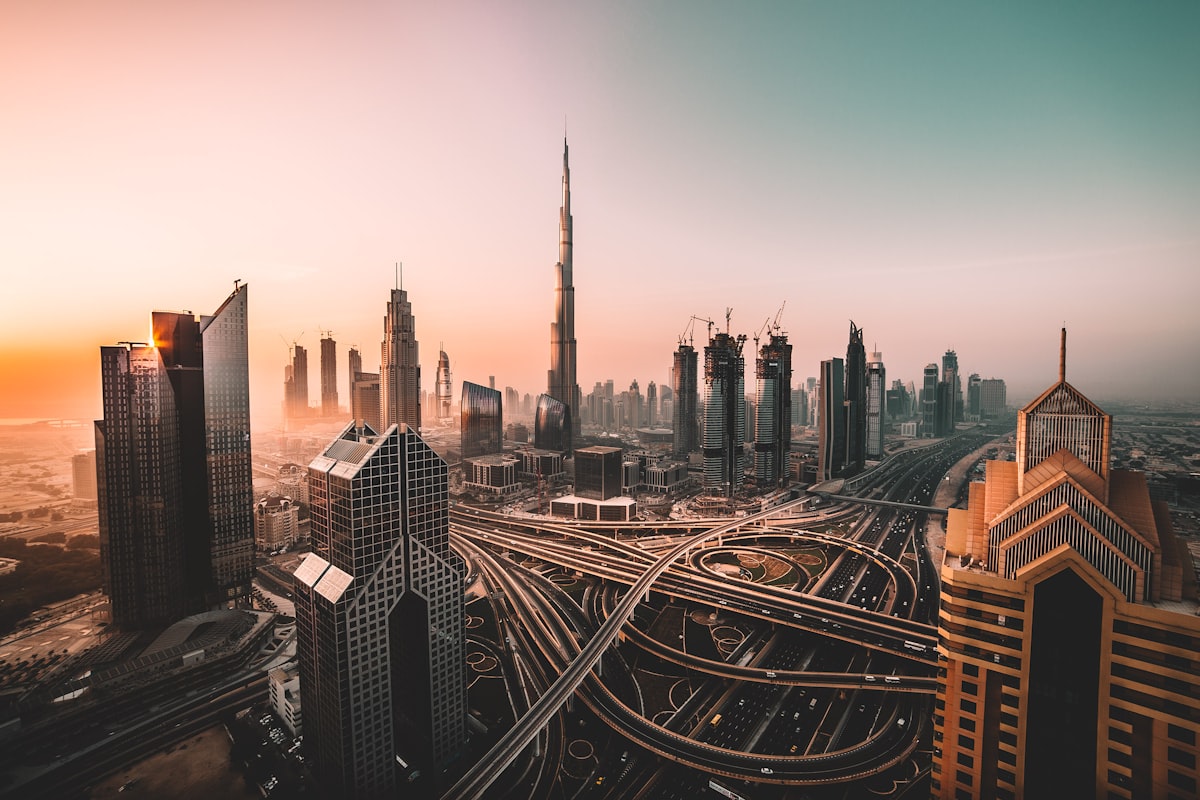
For two decades, Dubai's luxury geography has been defined by a single axis: Sheikh Zayed Road, running south from the Creek through Downtown, past the Burj Khalifa, and terminating at the Marina and Palm Jumeirah. Every landmark address — Emirates Towers, DIFC, City Walk, Bluewaters — sits along or adjacent to this corridor. Dubai Creek Harbour is the first development ambitious enough to create a second axis entirely.
Spanning 6 square kilometres on the eastern bank of the historic Dubai Creek, the masterplan is a joint venture between Emaar Properties and Dubai Holding. The numbers are staggering: 45,000 residential units at full build-out, a wildlife sanctuary, a 4.5-kilometre waterfront promenade, and at its centre, Dubai Creek Tower — designed by Santiago Calatrava to surpass the Burj Khalifa as the world's tallest structure.
The Return to the Creek
Dubai Creek is where the city began. Before oil, before aviation, before Sheikh Zayed Road, there was the Creek — a natural saltwater inlet that sustained the pearl diving and trading communities of Deira and Bur Dubai for centuries. The decision to build Dubai's next luxury megaproject on the Creek is not merely geographical. It is narrative. It connects the city's future to its origin.
The Creek's eastern bank had remained largely undeveloped, occupied by the Ras Al Khor Wildlife Sanctuary — a 6.2 square kilometre wetland that hosts 27,000 migratory birds, including a resident colony of greater flamingos. The masterplan preserves the sanctuary entirely, creating a development that is bordered on one side by the Creek's historic waters and on the other by a protected ecosystem. No other ultra-luxury address on Earth offers this juxtaposition.
The Tower
Dubai Creek Tower, when completed, will redefine the city's skyline. Calatrava's design draws on the form of a lily — a slender, tapering structure supported by cable stays that evoke petals. The observation deck, at over 800 metres, will offer views across the entire emirate: the Arabian Gulf to the west, the Hajar Mountains to the east, Abu Dhabi's skyline to the south.
But the tower is not the development. It is the symbol. The real value of Dubai Creek Harbour lies in its masterplanning — the integration of residential towers, townhouses, retail precincts, parks, marinas, and cultural facilities into a coherent urban district. This is not a collection of buildings. It is a city within a city, designed from scratch with the lessons of Dubai's previous developments embedded in its DNA.
The Residential Proposition
Emaar's flagship within the development is The Grand — a series of towers with residences starting at AED 2 million and penthouse collections exceeding AED 30 million. The positioning is deliberate: accessible enough to attract young professionals and families (a demographic Dubai Marina once served), while offering ultra-luxury products that compete directly with Palm Jumeirah and Al Barari.
What differentiates Creek Harbour from earlier developments is density management. Downtown Dubai, for all its success, suffers from traffic congestion and a pedestrian environment dominated by highways. Creek Harbour's masterplan prioritises walkability: residential towers are clustered around a central park, connected by ground-level retail and canal-side promenades. The car is present but not dominant.
The Investment Case
Capital appreciation in Dubai Creek Harbour has outpaced the wider Dubai market since 2023. Off-plan units purchased in 2020 at AED 1,200 per square foot have resold at AED 2,400 — a 100% return in five years. The driver is completion risk elimination: as each phase delivers, the masterplan's viability becomes more tangible, and prices reflect the diminishing gap between promise and reality.
For international investors, Creek Harbour offers something Palm Jumeirah cannot: scale. The development will accommodate a permanent population of over 200,000 — larger than Monaco. This scale supports the infrastructure (metro stations, schools, hospitals, retail) that transforms a development from a speculative play into a functioning community. And functioning communities, in Dubai's real estate history, are where long-term value is created.
The Creek as Destination
Perhaps the most compelling element of Dubai Creek Harbour is its relationship with water. The Creek itself — dredged and expanded over decades — provides a navigable waterway that connects the development to Deira, the Gold Souk, and the traditional dhow wharfage. Water taxis already link Creek Harbour to the heritage districts, creating a journey that traverses Dubai's entire timeline in 20 minutes.
The marina, when complete, will accommodate 200+ vessels, positioning Creek Harbour as Dubai's second major yachting destination after the Marina. Combined with the wildlife sanctuary, the Calatrava tower, and the Creek's historical resonance, the development offers a narrative that no amount of architectural ambition on reclaimed sand can replicate.
Dubai Creek Harbour is not just the city's next luxury address. It is the argument that Dubai's second act will be built not on spectacle, but on substance.
Published by Latitudes Media · More from Dubai Latitudes →