Umm Suqeim: How Dubai's Most Authentically Beachfront Neighbourhood Became the Emirates' Most Residentially Distinguished Coastal Address
April 3, 2026 · 15 min read
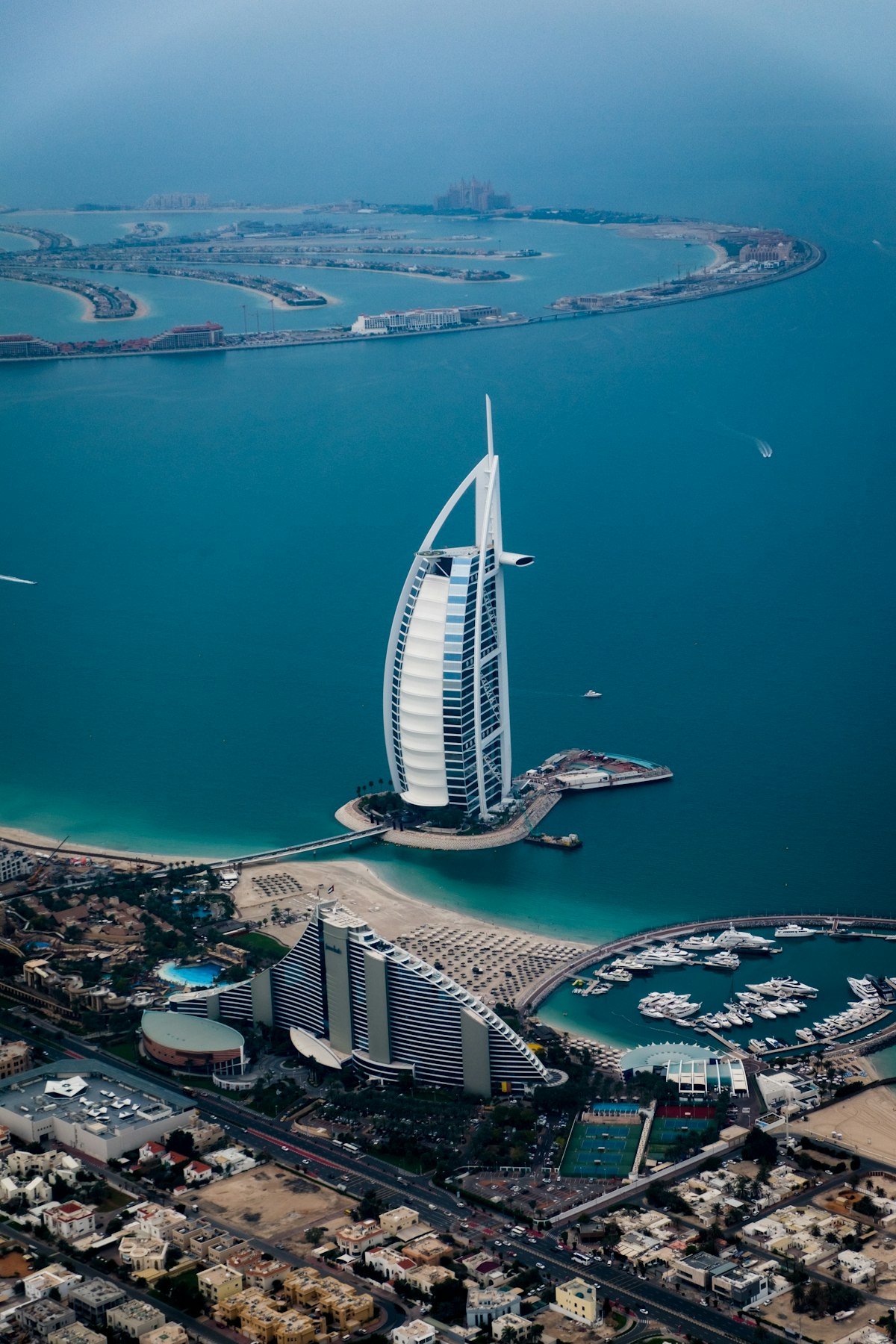
There is a particular quality of light along the Umm Suqeim coastline at approximately 5:47 PM on a January afternoon — a molten, amber-inflected luminosity that transforms the Burj Al Arab from an architectural statement into something approaching a religious experience — that explains, more persuasively than any broker's pitch deck, why this stretch of shoreline commands the prices it does. Umm Suqeim is not Dubai's most expensive neighbourhood. It is not its most architecturally ambitious. What it is, in a city that has spent five decades building forward with almost pathological urgency, is something far more valuable: it is the neighbourhood that remembers.
Before the Skyline
The Umm Suqeim of the 1970s bore almost no resemblance to the Dubai that now surrounds it. This was a fishing and pearl-diving settlement, a strip of low-slung coral-stone houses where Emirati families maintained a direct, unmediated relationship with the Arabian Gulf. The beach was not an amenity; it was an economic resource — a launching point for dhows, a drying ground for nets, a social space where the day's catch was sorted and distributed. The compounds that line Umm Suqeim's internal streets today are, in many cases, expansions and renovations of those original family holdings. Plots that were allocated by the ruling family in the 1960s and 1970s remain in the same families, now valued at AED 30-60 million for the land alone.
This genealogical continuity distinguishes Umm Suqeim from every other coastal neighbourhood in Dubai. Jumeirah Beach Residence was built from reclaimed sand in the 2000s. Palm Jumeirah is an artificial island. Bluewaters is a theme-park-adjacent development on a man-made peninsula. Umm Suqeim is the only beachfront neighbourhood in the emirate where the relationship between land, family, and sea predates the modern state. And that authenticity — impossible to manufacture, impossible to replicate — is the neighbourhood's defining luxury.
The Three Umm Suqeims
The neighbourhood is formally divided into three sub-districts — Umm Suqeim 1, 2, and 3 — each with a distinct character. Umm Suqeim 1, closest to Jumeirah and bounded by Al Wasl Road, is the most residentially dense, with a mix of older Emirati villas and newer luxury builds. It is here that the neighbourhood's transformation is most visible: architectural firms specialising in tropical modernism have begun replacing 1980s concrete boxes with glass-and-stone villas that open onto private gardens, infinity pools, and — for the beachfront plots — direct sand access.
Umm Suqeim 2 occupies the middle ground, both geographically and in terms of market positioning. Its streets are wider, its compounds larger, its commercial presence limited to a handful of boutique galleries and wellness studios that cater to a clientele that views consumption as curation rather than accumulation. The Madinat Jumeirah complex — a sprawling resort-retail development built to evoke a traditional Arabian souk — anchors the district's southern edge and generates significant pedestrian traffic, but its impact on the residential streets behind remains mercifully minimal.
Umm Suqeim 3 is the neighbourhood's crown jewel. This is where the Burj Al Arab sits, where the beach is at its widest, and where the remaining beachfront compounds — perhaps forty to fifty in total — represent some of the most intrinsically valuable residential real estate in the Gulf. These are not properties that trade on public markets. They move through family networks, inheritance settlements, and private negotiations that can take months or years. A beachfront compound in Umm Suqeim 3, when one becomes available, will attract interest from sovereign wealth offices, ruling-family-adjacent investors, and the small community of ultra-high-net-worth expatriates who have earned sufficient social capital to be considered acceptable neighbours.
The Burj Al Arab Effect
It is impossible to discuss Umm Suqeim without addressing the 321-metre elephant in the room. The Burj Al Arab, completed in 1999 on an artificial island 280 metres offshore, was designed by Tom Wright of WS Atkins to be "the world's most luxurious hotel" — a brief so unambiguous that it obviated the need for subtlety. Its sail-shaped silhouette, visible from virtually every point in Umm Suqeim, has become the neighbourhood's defining visual signature and its most powerful branding asset.
For Umm Suqeim residents, the Burj Al Arab's proximity is a double-edged scimitar. On one hand, it provides an iconic anchor point that ensures the neighbourhood's permanent presence in the global luxury consciousness. On the other, it generates tourist traffic — beach-goers seeking the Instagram shot, hotel guests patronising the beach club — that can, during peak season, compromise the residential tranquillity that the neighbourhood otherwise maintains. The local response has been characteristically pragmatic: a system of beach-access gates, resident-priority parking, and the quiet enforcement of noise ordinances that ensures Umm Suqeim's public beach retains a quality of relative calm that belies its proximity to one of the world's most photographed buildings.
The Culinary Ecosystem
Umm Suqeim's dining landscape is a study in the economics of residential demand. Unlike Downtown or DIFC, where restaurants compete for tourist footfall and corporate expense accounts, Umm Suqeim's establishments exist primarily to serve their neighbours. The result is a restaurant ecology that prioritises consistency over novelty — places that have earned their regulars through years of reliable quality rather than months of social media hype.
Bu Qtair, a beachside fish shack that has operated from the same location near the fishing harbour for over two decades, serves what many consider the finest seafood in Dubai. Its menu is limited to three preparations — fried, grilled, or curry — and its prices are a fraction of what comparable quality commands in the city's hotel restaurants. The queue, which can stretch to forty-five minutes on weekend evenings, is one of the most socioeconomically diverse gatherings in Dubai: Emirati families in white kanduras beside European expatriates in linen, construction workers alongside hedge fund managers, all waiting with equal patience for the same plate of hammour.
Further along the coast, the transformation of Kite Beach into a curated food-truck-and-fitness destination has added a layer of casual gastronomy — artisanal burgers, craft coffee, cold-pressed juice — that serves the neighbourhood's growing population of health-conscious young professionals. But the heart of Umm Suqeim's food culture remains in its cafeterias and neighbourhood restaurants: Pakistani grills, Yemeni bread houses, and Emirati breakfast spots that have served the same families for generations.
Sunset Economics
The investment thesis for Umm Suqeim is elegantly simple: they're not making any more of it. In a city that has spent half a century manufacturing land — reclaiming islands, extending coastlines, building artificial peninsulas — Umm Suqeim represents natural beachfront on the Arabian Gulf's western shore. The westward orientation is critical: it means unobstructed sunsets over open water, a view line that no future development can compromise. In real estate terms, this is the definition of a permanent amenity.
The numbers confirm the narrative. According to Luxhabitat's 2025 Beachfront Report, Umm Suqeim villa prices appreciated 14.2% year-on-year — the strongest performance of any established villa community in Dubai, outpacing both Emirates Hills (11.8%) and Palm Jumeirah (9.6%). Rental yields, at 4.1-4.8%, remain compressed by regional standards, but this is a feature rather than a bug: it reflects an owner-occupier market where the majority of properties are held for personal use rather than investment return. When capital appreciation is double-digit and the holding motivation is lifestyle rather than yield, compressed returns simply indicate a market of genuine end-users — the most stable demand base in real estate.
The Dubai 2040 Urban Master Plan has designated Umm Suqeim as a "heritage-sensitive" development zone, imposing height restrictions and density limits that further constrain future supply. New construction is limited to villa-scale developments on existing plots, and planning permissions require design review by the Dubai Municipality's heritage committee. These restrictions — which would be onerous in a speculative market — are precisely what Umm Suqeim's residents want. They are not buying into a neighbourhood that promises transformation; they are buying into a neighbourhood that promises to remain, as far as urban development permits, exactly what it is.
The Quiet Assertion
What Umm Suqeim offers — and what makes it irreplaceable in Dubai's luxury landscape — is something that no amount of capital can construct: temporal depth. The mature trees that line its internal streets were planted when the Dubai World Trade Centre was the tallest building on the horizon. The families that occupy its compounds remember a coastline unmarked by towers. The beach itself — wide, clean, and west-facing — has been in continuous recreational use for longer than most Dubai residents have been alive.
In a city that reinvents itself with metronomic regularity, Umm Suqeim's refusal to reinvent is its most radical act. It is the neighbourhood that proves Dubai is not only about the future — that somewhere, between the Burj Al Arab and the fishing harbour, the city remembers its relationship with the sea. And in that remembering, it offers something that no amount of artificial intelligence, master-planned ambition, or sovereign capital can replicate: the luxury of continuity.
About Dubai Latitudes
Dubai Latitudes is a premium digital publication exploring the intersection of luxury, architecture, and investment across the Emirates. Part of the Latitudes Media network.