The World Islands: How Dubai's Offshore Archipelago Became the Gulf's Most Patiently Audacious Ultra-Luxury Proposition
March 2026 · 17 min read
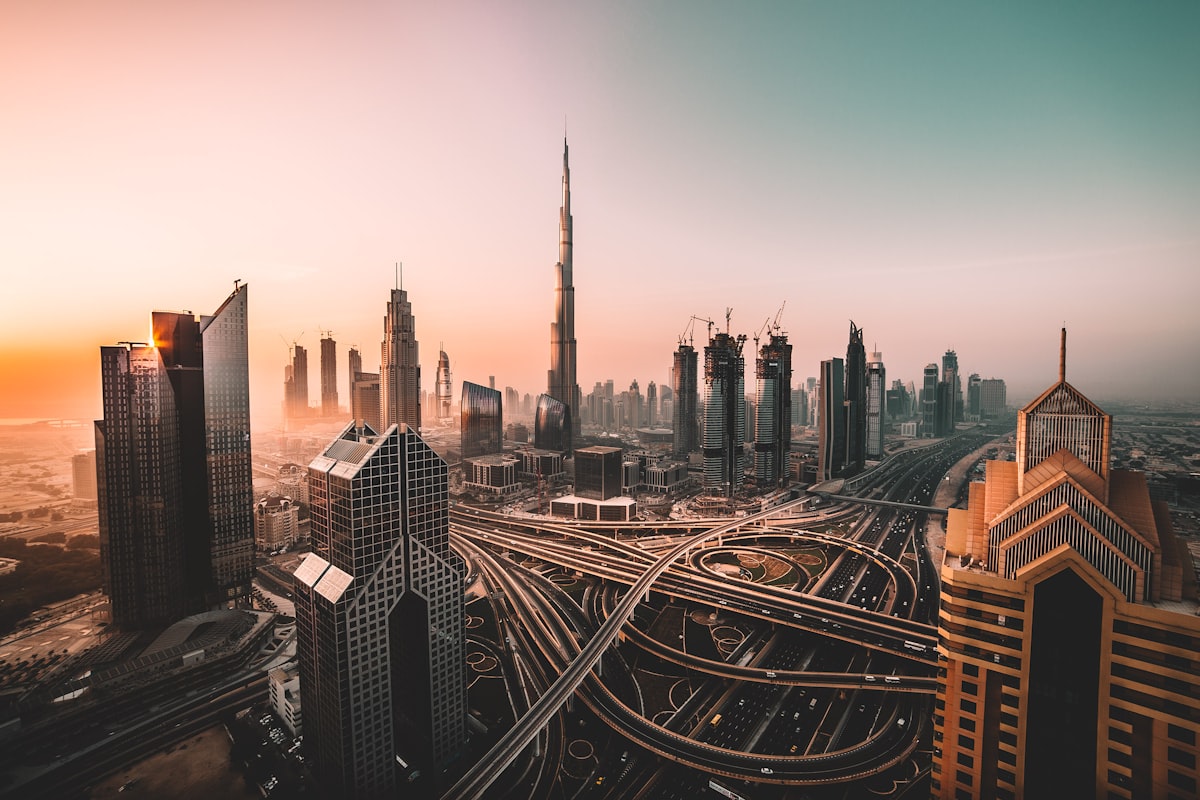
From the observation deck of the Burj Khalifa, on days when the Gulf haze lifts sufficiently, you can see them: approximately 300 islands arranged in the unmistakable shape of a world map, sitting four kilometres off the Jumeirah coastline in water that transitions from turquoise to deep blue. The World Islands — conceived in 2003, dredged from the seabed between 2004 and 2008, and subjected to a development timeline that has tested the patience of every investor, analyst, and critic who has ever pronounced upon them — represent the most ambitious piece of speculative real estate engineering in human history. They are also, in 2026, finally beginning to justify the ambition.
The concept was pure Dubai: take 321 million cubic metres of sand, dredge it from the Gulf floor, arrange it into an archipelago that replicates the world's continents, surround the formation with a nine-kilometre oval breakwater, and sell individual islands to buyers who would develop them into private estates, boutique resorts, and exclusive residential communities. The total cost of dredging and infrastructure exceeded $14 billion. The first islands were delivered in 2008, six months before the global financial crisis made the project's premises — unlimited capital, infinite demand, perpetual price appreciation — appear not merely optimistic but delusional.
The Crisis and the Patience
The 2008-2012 period was brutal. Island values declined by 50-70%. Several high-profile buyers defaulted. The narrative, widely and gleefully circulated in international media, was that the islands were sinking — a claim based on satellite imagery that actually showed natural sediment redistribution rather than structural failure, but that achieved the status of accepted fact through repetition. Nakheel, the developer, was restructured. The project entered a period of dormancy that lasted, in various forms, until 2014.
What the crisis narrative missed — and what has become apparent only in the past five years — is that the islands themselves were always the least risky part of the proposition. The engineering was sound: granite breakwaters, sand compacted to densities that exceed natural island formation, foundations capable of supporting multi-storey structures. The risk was entirely in timing and demand, and both of these, in Dubai, have a history of resolving in favour of the audacious.
The Heart of Europe: Proof of Concept
The development that transformed The World Islands from speculative curiosity to credible luxury proposition is The Heart of Europe — a cluster of six islands on the archipelago's western edge, developed by the Kleindienst Group into a resort complex that includes the Côte d'Azur Hotel, the Sweden Beach Palace, the Germany Island, and the Floating Seahorse villas: partially submerged structures whose lower levels sit beneath the waterline, with bedrooms that offer views directly into the Gulf's marine environment through floor-to-ceiling underwater windows.
The Floating Seahorse concept — essentially a luxury villa with a submerged lower deck — was initially dismissed as a novelty. It has proven, instead, to be a genuine product innovation: a residential typology that cannot exist anywhere except offshore, in warm, clear water, with the engineering budget to make submersion habitable rather than merely survivable. The villas sell for $3.5-15 million depending on configuration, and the waiting list, as of early 2026, extends beyond two years. For a project that was written off as Dubai's most expensive folly, this represents a rehabilitation that even the project's original promoters could not have scripted.
Private Islands: The Ultimate Luxury Asset
Beyond The Heart of Europe, individual World Islands are available for private acquisition and development at prices that range from $7 million for a smaller, undeveloped island to $50 million or more for larger plots with approved development plans. The buyer profile is specific: ultra-high-net-worth individuals and family offices, predominantly from the GCC, the Indian subcontinent, and Russia, who are purchasing not merely real estate but sovereignty — the ability to design and control an entire island environment, from architecture to landscaping to access protocols.
The appeal is not difficult to understand. A private island in The World offers something that no address in Palm Jumeirah, no penthouse in Downtown Dubai, and no estate in Emirates Hills can provide: genuine physical separation from the mainland, surrounded by water on all sides, accessible only by boat or helicopter, yet located four kilometres from one of the world's most connected cities. It is privacy without remoteness — the billionaire's perennial challenge solved by engineering rather than geography.
The Marine Environment
An unexpected consequence of The World Islands' construction has been the creation of an artificial reef system of significant ecological value. The breakwaters and island foundations have been colonised by coral, fish populations, and marine invertebrates that have transformed the archipelago's waters into one of the Gulf's most biodiverse marine environments. Dive operators now offer excursions around The World Islands that rival the natural reef systems of Fujairah, and the presence of whale sharks, turtles, and reef sharks in the archipelago's channels has added an ecological dimension to the project that was entirely unintended but has proven commercially and culturally valuable.
For island owners, the marine environment is an asset — private coral gardens visible from underwater rooms, fishing within the breakwater's protected waters, and a snorkelling and diving environment accessible from the island's own shoreline. Several owners have invested in artificial reef structures designed to attract specific species, creating bespoke marine environments as carefully curated as their landscaped gardens above the waterline.
Infrastructure: The Invisible Challenge
The practical challenge of living four kilometres offshore on a man-made island is substantial, and its resolution is the least visible but most critical component of The World Islands' luxury proposition. Each developed island requires independent power generation or submarine cable connection, desalination capacity for fresh water, sewage treatment, telecommunications infrastructure, and marine transport connectivity. The Heart of Europe addresses these requirements through a centralised utility network serving the cluster; private island owners must engineer solutions independently or connect to emerging shared infrastructure.
Marine transport — the 20-minute boat journey to and from the mainland — remains the project's most significant lifestyle constraint and, paradoxically, its most significant luxury asset. The constraint is obvious: you cannot step out of your front door and hail a taxi. The luxury is equally obvious: neither can anyone else. The journey across the Gulf, watching the Dubai skyline resolve from abstract glitter to architectural specificity, functions as a daily transition between the connected world and the private one — a decompression chamber between the city's intensity and the island's calm.
The Investment Case
The World Islands' investment thesis has evolved from speculative land banking to a more nuanced proposition. Developed islands and Floating Seahorse villas now generate rental yields of 6-8% through the luxury short-stay market — a figure that compares favourably with prime Dubai mainland property. Island values have recovered to and, in many cases, exceeded their 2008 peaks, with compound annual appreciation of 12-15% over the past five years. The supply constraint is absolute: no new islands will be added to the archipelago, and the developed inventory is expanding only gradually. For investors who can tolerate the illiquidity inherent in an offshore island asset, the risk-reward profile has shifted decisively from speculative to compelling.
The comparison with natural private islands — in the Caribbean, the Maldives, or the South Pacific — is instructive. A private island in the Bahamas or the British Virgin Islands offers natural beauty but limited infrastructure, hurricane risk, and connectivity that requires multi-leg air travel. A World Island offers engineered beauty, robust infrastructure, zero weather risk (the Gulf's enclosed geography eliminates cyclone exposure), and a 20-minute boat ride to a city with two international airports, the world's busiest luxury retail market, and a business environment with zero income tax. The comparison is not between natural and artificial; it is between remote and connected.
The Verdict
The World Islands have spent two decades being underestimated — first by a boom that assumed they would sell themselves, then by a crisis that assumed they would disappear, and finally by a recovery that assumed they would remain peripheral to Dubai's development narrative. None of these assumptions has proven correct. What The World Islands represent, in 2026, is something that Dubai does better than any other city on earth: the conversion of imagination into real estate, given enough engineering, enough capital, and enough patience. The world map visible from the Burj Khalifa is no longer a curiosity or a cautionary tale. It is an address — 300 of them, in fact — and the most patiently audacious investment proposition the Gulf has ever produced.
Dubai Latitudes — Premium intelligence on Dubai's ultra-luxury destinations. Request private access →