Palm Jebel Ali: How Dubai's Second Archipelago Became the Gulf's Most Ambitiously Reimagined Luxury Masterplan
March 26, 2026 · 13 min read
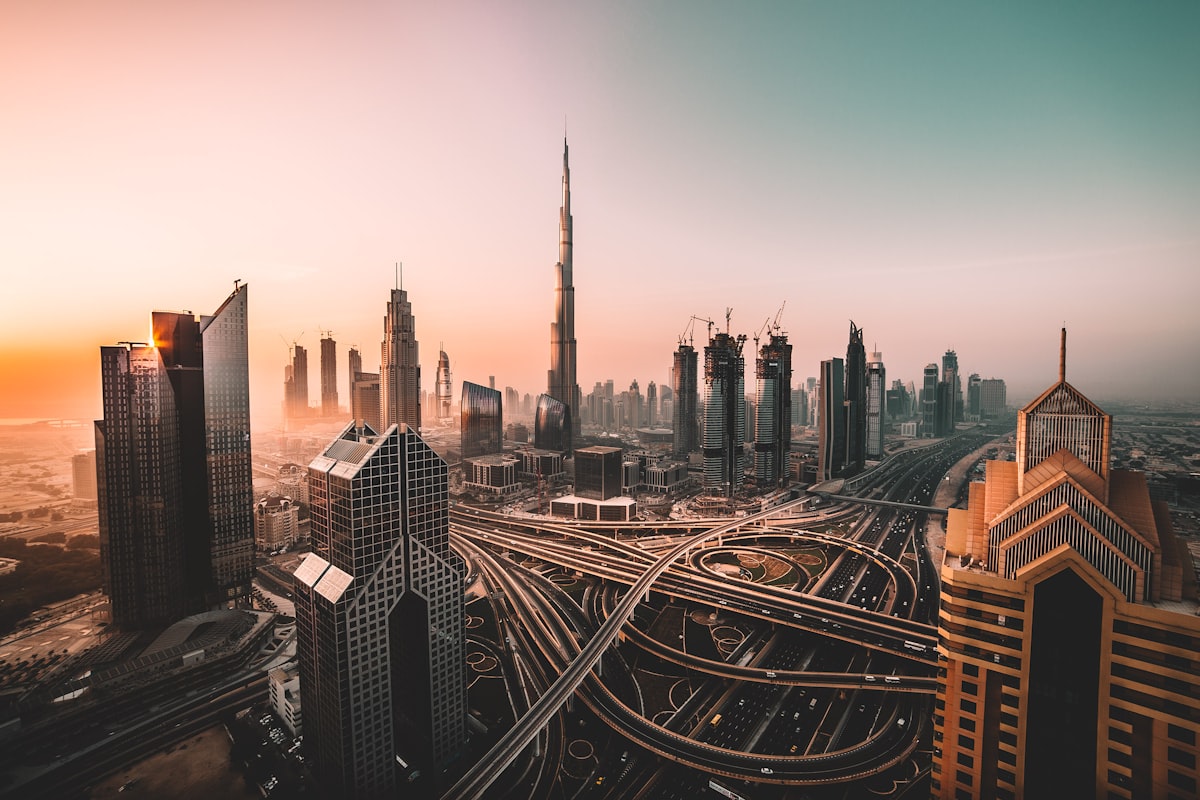
When Nakheel announced the revival of Palm Jebel Ali in 2023 — nearly two decades after the project's original pause during the global financial crisis — the real estate world reacted with a mixture of excitement and scepticism familiar to anyone who follows Dubai's development trajectory. The original Palm Jebel Ali, conceived in 2002 as a larger sibling to Palm Jumeirah, had been partially reclaimed from the sea before construction stalled in 2008, its artificial archipelago visible on satellite imagery as a ghostly outline of what might have been. The revived masterplan, however, bears almost no resemblance to the original. Where the 2002 scheme proposed residential density on artificial fronds, the 2023 vision — now in advanced stages of delivery — reimagines the entire concept of island luxury for a generation whose expectations have been transformed by two decades of technological, environmental, and social change.
The Scale: Twice the Ambition
Palm Jebel Ali's dimensions remain staggering even by Dubai's standards. At approximately 13.4 square kilometres of reclaimed land — roughly twice the area of Palm Jumeirah — it constitutes the largest single development project currently under construction in the Gulf region. The masterplan encompasses over 80 kilometres of new beachfront, a figure that transforms Jebel Ali from a development into a geography: a new coastline, complete with bays, headlands, and waterways, where nothing existed before but open sea.
The organisational logic differs fundamentally from Palm Jumeirah's radial frond pattern. While the iconic palm shape has been retained at a macro level — it remains visible from space, a requirement as much of brand identity as of urban design — the internal structure has been reorganised around a series of distinct districts, each with its own character, density, and relationship to the water. The trunk functions as a mixed-use urban boulevard; the crescent houses the resort and hospitality zone; the fronds alternate between ultra-low-density villa communities and higher-density apartment clusters, creating a gradient from complete privacy to social intensity that residents can navigate according to temperament.
The Villas: Waterfront Redefined
The residential proposition centres on approximately 3,500 waterfront villas distributed across the fronds — a density roughly half that of Palm Jumeirah's equivalent plots, reflecting a post-pandemic recalibration of what waterfront luxury means. Each villa sits on a plot with direct beach access and private marine berthing, but the plots themselves are substantially larger than their Jumeirah counterparts: the smallest exceeds 600 square metres, with premium plots reaching 1,500 square metres, creating the spatial generosity that Palm Jumeirah's early buyers discovered they lacked.
The architectural guidelines have been crafted with an intelligence that reflects lessons learned from Palm Jumeirah's aesthetic inconsistency. While individual villas are designed by their owners' chosen architects, a design code governs height limits, setbacks, material palettes, and landscaping standards with sufficient rigour to prevent the visual cacophony that characterises parts of the original palm. The result, as the first completed villa clusters demonstrate, is a visual coherence — contemporary Mediterranean in spirit, with white and sand-toned facades, generous terracing, and indoor-outdoor living as a default rather than an option — that the original palm never achieved.
Infrastructure: The Invisible Luxury
If Palm Jumeirah taught Dubai's developers any single lesson, it was that luxury without infrastructure is merely expensive inconvenience. Palm Jebel Ali's masterplan addresses this with a transportation and utilities framework that treats connectivity as a fundamental luxury amenity rather than an afterthought. A dedicated metro extension connects the trunk to Dubai's red line, providing direct service to JBR, Dubai Marina, and Downtown Dubai. A network of water taxis — electric-powered, designed by the same studio responsible for Dubai's Museum of the Future — provides marine transit between fronds, the crescent, and the mainland marina. The road network, designed from inception to accommodate autonomous vehicles, features intelligent traffic management systems that eliminate the congestion bottlenecks that plague Palm Jumeirah's single trunk road during peak hours.
The Crescent: Hospitality as Destination
The crescent — that dramatic breakwater arc that defines the palm's seaward edge — has been conceived as a hospitality and leisure destination of a scale that surpasses even Dubai's existing resort inventory. Anchored by a cluster of ultra-luxury hotels (Aman, Rosewood, and an as-yet-unannounced brand that industry sources suggest is a new Four Seasons concept), the crescent also houses a marine research centre, an international sailing academy, and a performing arts complex designed by Zaha Hadid Architects that cantilevers over the water like a geometric wave frozen in concrete. The ambition is explicit: to create a destination that rivals not merely Palm Jumeirah's Atlantis but the Maldives, the Seychelles, and Bora Bora as a global reference for island luxury — achieved not through natural beauty but through the absolute application of design intelligence to reclaimed land.
Sustainability: The Necessary Revolution
The most significant departure from the original Palm Jebel Ali concept — and from Palm Jumeirah's reality — is the centrality of environmental performance in the revised masterplan. The project targets LEED Neighbourhood Development Gold certification, with specific commitments to solar-powered desalination for irrigation, district cooling fed by seawater thermal exchange, waste-to-energy processing, and the restoration of marine habitats along the crescent's inner coastline. A dedicated marine ecology team is cultivating artificial reef structures along the breakwater, seeding them with coral species selected for their resilience to warming waters — an acknowledgment that the long-term value of waterfront real estate depends on the health of the water it fronts.
Whether Palm Jebel Ali achieves its sustainability ambitions remains to be proven over decades. What is already clear, however, is that the discourse has shifted: a development that would have been marketed entirely on size, spectacle, and exclusivity in 2002 now leads with environmental credentials, recognising that the ultra-luxury buyer of 2026 evaluates a property not merely by its views and finishes but by its relationship to the ecological systems that sustain those views.
The Market: Conviction Capital
Palm Jebel Ali's sales trajectory has confirmed Dubai's continued ability to attract what the industry terms "conviction capital" — investment motivated not by speculative return but by belief in a city's trajectory. Launch prices for beachfront villas ranged from AED 15 million to AED 85 million ($4-23 million), with the most desirable plots — those on the outer fronds with unobstructed sea views — commanding premiums of 40-60% over inner-frond equivalents. The buyer profile is distinctly international: approximately 40% Gulf nationals, 25% South Asian industrialists, 20% European and British, and a growing 15% from East Asia — a distribution that reflects Dubai's evolution from a regional luxury market to a global one.
The secondary market, already active for plots in advanced construction phases, is pricing in the premium that proximity to completion invariably commands in Dubai: resale prices for desirable positions have appreciated 20-35% from launch, a trajectory that validates early buyers' conviction while raising questions about the long-term affordability of a development that was, nominally, positioned as a more accessible alternative to the emirate's most expensive addresses.
The Proposition
Palm Jebel Ali's ultimate proposition is not an island but a thesis: that luxury, in the third decade of the twenty-first century, must be simultaneously spectacular and sustainable, exclusive and connected, privately generous and publicly responsible. Whether the thesis proves correct — whether an artificial archipelago in the Arabian Gulf can genuinely reconcile development ambition with environmental stewardship — will be tested over the decades ahead. What is already certain is that the attempt itself, at this scale and with this level of design intelligence, constitutes the most significant statement about the future of waterfront luxury currently under construction anywhere in the world.
Part of the Latitudes Media network