Jumeirah Bay Island: How Dubai's Seahorse-Shaped Atoll Became the Gulf's Most Exclusive Residential Address
March 25, 2026 · 11 min read
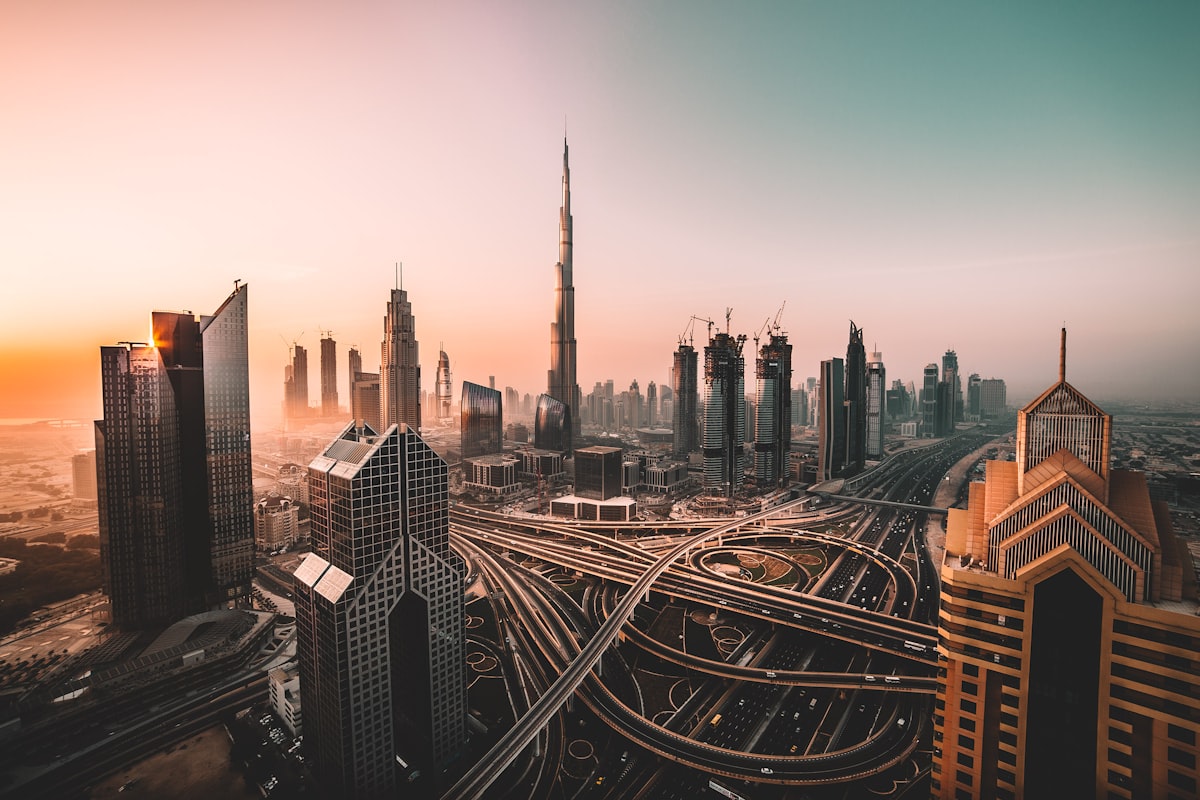
From the air, Jumeirah Bay Island looks like a biological improbability — a seahorse-shaped landmass floating in the Persian Gulf, connected to the mainland by a 300-metre bridge that serves as both infrastructure and social filter. This 6 million-square-foot man-made island, positioned between Jumeirah Beach and the Dubai Canal, represents something the emirate has never quite achieved before: true exclusivity. Not the performative exclusivity of a velvet rope, but the structural exclusivity of geography — an address that is, by physical design, inaccessible to anyone who does not belong.
The Bulgari Anchor
The island's centrepiece is the Bulgari Resort & Residences — the Italian maison's most ambitious hospitality project globally. The resort, designed by Antonio Citterio Patricia Viel, occupies the seahorse's head with 101 hotel rooms, 20 hotel villas, and a private marina capable of berthing yachts up to 40 metres. But it is the residential component that has rewritten Dubai's ultra-prime playbook: 173 apartments and 15 mansions, each finished to a standard that required Bulgari to import artisans from Italy to execute the terrazzo, marble inlay, and bronze detailing that the brand's aesthetic demands.
The mansions — ranging from 15,000 to 30,000 square feet, each with private beach access and dedicated berths — have traded at prices that shattered Dubai records. In late 2025, a mansion on the island's southern tip sold for AED 230 million (approximately $62.6 million), making it one of the most expensive residential transactions in the emirate's history. The buyer, a European industrial family, reportedly spent an additional AED 40 million on interior customisation, bringing the total investment to a figure that would buy a significant château in the Loire Valley or a palazzo on the Grand Canal.
The Meraas Masterplan
Jumeirah Bay Island is a Meraas development — the Dubai-based holding company chaired by Abdulla Al Habbai whose portfolio includes City Walk, Bluewaters Island, and La Mer. But where those projects pursued accessibility and foot traffic, Jumeirah Bay was conceived from inception as an island of restraint. The masterplan allocates over 60% of the total area to landscaping, promenades, and beach — a ratio that sacrifices enormous development revenue in favour of spatial generosity.
The island's infrastructure reflects this philosophy. Roads are deliberately narrow, discouraging through-traffic and high speeds. The retail component is minimal — a curated selection of galleries, boutiques, and dining concepts rather than the mega-mall approach that characterises most Dubai developments. Even the bridge connecting the island to the mainland functions as a psychological barrier: the act of crossing water, however brief, creates a sense of arrival that reinforces the island's separateness from the city that surrounds it.
The New Wave: Beyond Bulgari
While the Bulgari properties anchored Jumeirah Bay's reputation, the island's second phase — launched in 2025 — has expanded its residential vocabulary. A collection of 48 independent villas, designed by a rotating roster of international architects, occupies the seahorse's tail section. Each villa is individually designed, avoiding the cookie-cutter repetition that plagues even the most expensive gated communities. Plots range from 8,000 to 25,000 square feet, with prices starting at AED 45 million for land alone.
The architectural diversity is intentional. One villa, designed by a Tokyo-based practice, channels Japanese minimalism through concrete and water. Its neighbour, by a London firm, reinterprets the traditional Arabian courtyard house at a monumental scale. A third, designed by a São Paulo studio, uses tropical landscaping and perforated screens to create a Brazilian modernist compound transplanted to the Gulf. The result is an island that reads not as a uniform development but as a curated collection — an architectural exhibition permanently installed on the Persian Gulf.
The Marina Culture
Jumeirah Bay's 163-berth marina has catalysed a new chapter in Dubai's yachting culture. Unlike the emirate's larger marinas — Dubai Marina and Port Rashid, which function primarily as parking infrastructure — Jumeirah Bay's marina was designed as a social space. The quay is lined with restaurants whose terraces face the water. A yacht club, housed in a structure that cantilevers over the harbour, offers membership only to island residents and a small number of external applicants vetted by committee.
The marina's positioning — sheltered by the island's form but open to the Gulf — creates ideal conditions for superyacht boarding. During the winter season, when the Gulf's waters achieve their crystalline best, the marina hosts a rotating population of vessels that includes some of the world's most recognisable hulls. The proximity to Dubai's entertainment infrastructure means that owners can transit from a morning meeting in DIFC to an afternoon at sea in under twenty minutes — a convenience that has made Jumeirah Bay the preferred berth for Gulf-based yacht owners who previously kept their vessels in Mediterranean ports.
Investment Thesis
Jumeirah Bay Island's investment case rests on a single irreducible fact: they will never make more island. Dubai's coastline has been extensively developed, and the regulatory and environmental barriers to new offshore construction have grown substantially since the island was permitted. This finite supply, combined with the island's emerging reputation as Dubai's most prestigious address, has created a pricing dynamic that trends only upward.
Resale data supports this thesis emphatically. Bulgari Residences apartments that traded at AED 3,500 per square foot at launch now command AED 6,800–8,200 per square foot — a near-doubling in four years. The mansions, of which only 15 exist, have appreciated at an even steeper trajectory, with current asking prices 120–150% above original purchase levels. Rental yields, for those few owners who lease their properties, range from 4.5–6% net — competitive with global ultra-prime benchmarks and significantly above the yields achieved in comparable Monaco or London properties.
Jumeirah Bay Island is not Dubai's biggest development, its tallest, or its most technologically advanced. It is something the city has historically struggled to produce: a place where less is unmistakably more, where the luxury is not in what has been built but in what has been deliberately left unbuilt. In a city of infinite ambition, that restraint may be the most valuable commodity of all.
Explore the Latitudes network: Monaco · Riviera · Portugal · Italy · Spain · Saint-Barth · Maison
← Back to Dubai Latitudes