Jumeirah Al Naseem: How Dubai's Turtle Sanctuary Hotel Became the Gulf's Most Conscientiously Luxurious Beachfront Address
March 27, 2026 · 13 min read
The turtle arrives, as they always do, in a state of distress. Entangled in discarded fishing line, or weakened by the ingestion of plastic debris, or disoriented by the coastal light pollution that confuses the ancient navigational instincts of a species that has been crossing the Arabian Gulf for seventy million years. It is brought to the Dubai Turtle Rehabilitation Project — housed within the grounds of the Jumeirah Al Naseem hotel, visible from the pool terrace and the beachfront suites — where a team of marine veterinarians will assess, treat, and eventually release it back into the waters from which it came. That this programme — the largest and most successful sea turtle rehabilitation facility in the region, having treated and released over 2,000 turtles since its founding in 2004 — operates not in a marine research institute or a government conservation centre but within a five-star luxury hotel, says something essential about what Dubai luxury has become in the twenty-first century: not merely opulent, but purposeful.
The Madinat Complex: A City Within a City
Jumeirah Al Naseem — "the breeze" in Arabic — is the newest and most contemporary addition to the Madinat Jumeirah resort complex, a forty-acre beachfront development on the Jumeirah coast that constitutes the most architecturally ambitious hospitality project in Dubai's history. The Madinat — which also includes the Al Qasr, Mina A'Salam, and Dar Al Masyaf hotels, along with the Souk Madinat Jumeirah, conference facilities, and the Talise Spa — was conceived as a modern reinterpretation of a traditional Arabian town: a network of buildings connected by waterways, courtyards, wind towers, and covered walkways that evoke the architectural vocabulary of pre-oil Arabia while delivering the infrastructure of twenty-first-century luxury.
Al Naseem, which opened in 2016, was designed as the complex's contemporary counterpoint — a building that honours the Madinat's Arabian architectural language while introducing a design sensibility more aligned with the expectations of the global luxury traveller. The lobbies are vast but not overwhelming, furnished with a restrained palette of marble, dark wood, and brushed metal that reads as international luxury with Arabian inflections rather than Arabian pastiche. The rooms — 430 of them, including 18 suites and a Royal Penthouse — are the most spacious in the Madinat, with floor-to-ceiling windows framing views of the Arabian Gulf and, from the premium categories, the iconic silhouette of the Burj Al Arab, which stands approximately 400 metres to the south like an architectural exclamation mark against the sky.
The Beach: Dubai's Finest Sand
Al Naseem's private beach is, by informed consensus, the finest hotel beach in Dubai — a judgement that rests not merely on the quality of the sand (fine, white, impeccably maintained) or the clarity of the water (the Jumeirah coast benefits from the cleanest currents in the city), but on the composition of the beachscape as a whole. The Burj Al Arab, viewed from the Al Naseem beach, achieves its most photogenic angle — the sail-shaped profile framed by the curved shoreline, with the gulf waters providing a foreground of shifting blues and greens that change character with the light throughout the day.
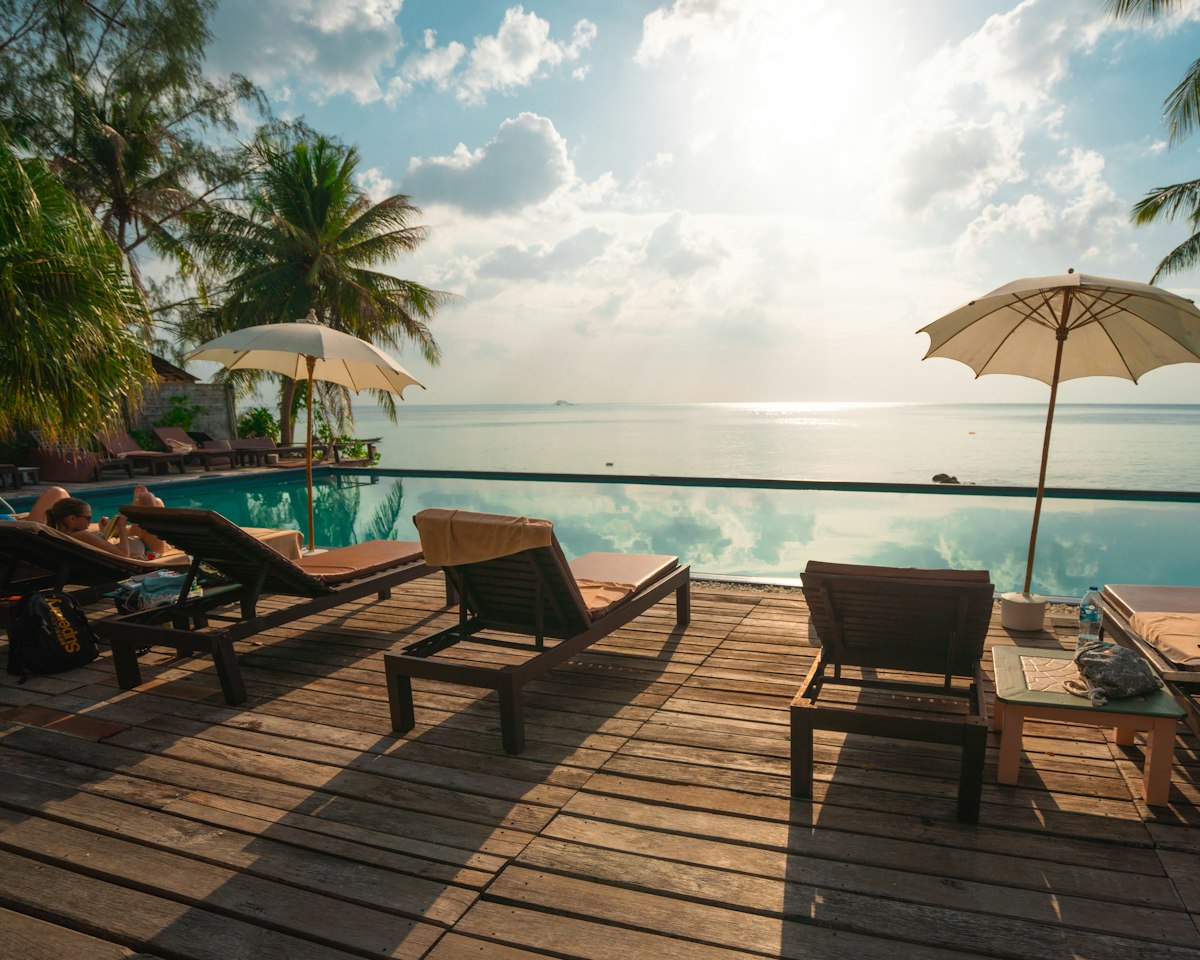
The beach operation — managed with the meticulous attention to service that distinguishes the Jumeirah brand — provides the full spectrum of Gulf beachfront luxury: shaded cabanas, attentive waiter service, cold towels on demand, and a water sports centre offering everything from paddle boarding to parasailing. But it is the beach's relationship to the turtle sanctuary that gives it a character unique among Dubai's hotel beaches: in nesting season (April to July), sections of the beach are cordoned off to protect the nests of hawksbill and green turtles, and guests are invited to attend supervised releases of rehabilitated turtles — an experience that provides a counterpoint to the beach's conventional pleasures that no infinity pool or champagne service can replicate.
The Dubai Turtle Rehabilitation Project: Conservation as Luxury Amenity
The DTRP, established in 2004 as a collaboration between the Jumeirah Group, Dubai's Municipality, and the Emirates Marine Environmental Group, occupies a purpose-built facility within the Al Naseem grounds that is open to hotel guests and the public. The project focuses primarily on the critically endangered hawksbill turtle (Eretmochelys imbricata) and the endangered green turtle (Chelonia mydas), both of which use the warm, shallow waters of the Arabian Gulf as feeding and breeding habitat.
The rehabilitation process — which can take from a few weeks to several months depending on the severity of the turtle's condition — involves medical treatment, dietary supplementation, and the gradual restoration of the animal's fitness for release. Guests who visit the facility can observe turtles at various stages of rehabilitation, from newly arrived patients in the medical unit to fully recovered animals in the large outdoor pools awaiting release. The educational programme that accompanies the visit — conducted by marine biologists rather than hospitality staff — provides information about Gulf marine ecology, the threats facing turtle populations, and the specific conservation measures that Dubai has implemented.
The philosophical significance of the DTRP within the luxury hospitality context should not be underestimated. In a city that has historically been associated with conspicuous consumption and environmental indifference, the presence of a serious conservation programme at the heart of a five-star resort represents a recalibration of the luxury proposition. The message is clear: true luxury in the twenty-first century is not defined by gold leaf and marble alone, but by the capacity to coexist responsibly with the natural world — and to invite guests into that relationship.
Gastronomy: The Gulf's Most Diverse Table
The Madinat Jumeirah complex houses over fifty restaurants, bars, and cafés — a concentration of dining options that exceeds many European city centres — and Al Naseem contributes several of the most compelling. Flamingo Room by tashas, a South African-inspired all-day dining concept set among the hotel's flamingo-inhabited waterways, has established itself as one of Dubai's most consistently excellent restaurants, its menu navigating between Mediterranean, Middle Eastern, and Asian influences with a confidence that reflects the city's own culinary cosmopolitanism.
Rockfish, the hotel's seafood restaurant, occupies a position directly on the beach, its terrace offering what is arguably the city's finest outdoor dining view: the Burj Al Arab illuminated against the evening sky, reflected in the dark waters of the gulf, while the catch of the day — hammour, king crab, Omani lobster — arrives with a freshness that the proximity to the fishing boats of the Jumeirah coast guarantees. The Souk Madinat, accessible via a short walk along the waterways, adds dozens more options, from the theatrical Japanese cuisine of Pai Thai (reached by abra across the resort's canals) to the Lebanese mezze at Shimmers.
Talise Spa: Wellness at the Water's Edge
The Talise Spa, shared across the Madinat complex but most easily accessed from Al Naseem, is one of the largest and most comprehensively equipped hotel spas in the Middle East. The facility extends across multiple levels, incorporating treatment rooms, hydrotherapy circuits, a traditional hammam, fitness studios, and outdoor relaxation areas overlooking the waterways and the gulf. The treatment menu draws from Arabian, Asian, and European wellness traditions, with signature treatments incorporating regional ingredients — argan oil, frankincense, desert rose — that connect the spa experience to the geography and culture of the Gulf.
The Investment Perspective
The Jumeirah coast — the stretch of beachfront that extends from the Burj Al Arab south to the Dubai Canal — has established itself as Dubai's premier residential-resort address, with property values that reflect both the quality of the location and the limited supply of freehold beachfront in the emirate. The proximity to Al Naseem and the Madinat complex confers upon neighbouring residential developments — notably the Jumeirah Beach Residence towers and the emerging Jumeirah Central masterplan — a hospitality infrastructure that enhances property values in the same way that proximity to Central Park enhances real estate on Manhattan's Upper West Side.
For the buyer considering Dubai residential real estate, the Jumeirah coast offers the most complete lifestyle proposition in the city: beach, dining, culture (the Etihad Museum and the Dubai Design District are nearby), wellness, and — uniquely — the conservation dimension that the DTRP represents. In a market where luxury developments compete primarily on specifications (size, finishes, views), the Jumeirah coast competes on something harder to replicate: a sense of place.
Published by Dubai Latitudes · Part of the Latitudes Media network