Dubai Water Canal: How a 3.2-Kilometre Urban Waterway Became the City's Most Transformative Luxury Spine
March 21, 2026 · 13 min read
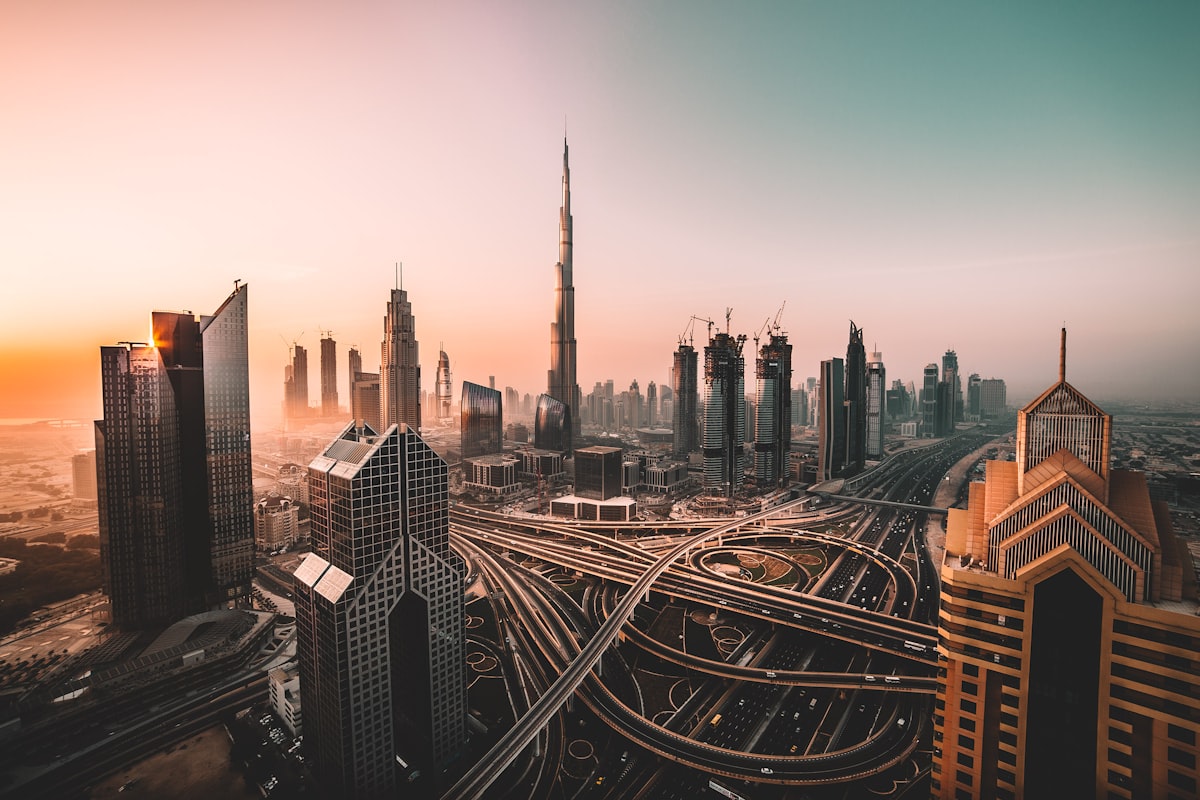
Dubai has always understood, with a clarity that sometimes alarms more cautious urban planners, that water creates value. The original Creek — the tidal inlet that split old Dubai into Bur Dubai and Deira — was the emirate's founding economic asset, a natural harbour that attracted Persian, Indian and East African traders centuries before oil was discovered beneath the surrounding desert. When Sheikh Rashid ordered the Creek dredged in the 1960s, deepening it from a shallow khour to a navigable waterway, he was making the same calculation that Venice, Amsterdam and London had made before him: that urban water does not merely facilitate commerce; it generates the property premiums that fund everything else.
The Dubai Water Canal, completed in 2016 and still reshaping the city's residential geography a decade later, represents the most audacious expression of this principle in modern urban history. A 3.2-kilometre waterway cut through the heart of the city — from Business Bay to the Arabian Gulf at Jumeirah — it created what did not previously exist: a continuous navigable connection between the Creek and the open sea, 6.4 kilometres of new waterfront, and a luxury residential corridor that has fundamentally altered where and how Dubai's wealthiest residents choose to live.
The Engineering Audacity
The scale of the canal's construction is difficult to overstate. To cut a navigable waterway through an established urban district — across Sheikh Zayed Road, the city's primary arterial; through Safa Park, one of its oldest green spaces; past established residential communities in Jumeirah — required the excavation of approximately 3.6 million cubic metres of earth, the construction of five pedestrian and vehicular bridges (three of them mechanical, opening to allow yacht passage), and the relocation of an extraordinary tangle of underground infrastructure: water mains, sewage lines, telecommunications cables, electricity networks, and the Dubai Metro's Red Line, which crosses the canal on a purpose-built elevated section.
The total investment exceeded AED 2.7 billion (approximately $735 million), making it one of the most expensive single infrastructure projects in the emirate's history that was not directly oil-related. But the return calculation was never about the canal itself. It was about the waterfront — specifically, about the transformation of previously landlocked urban land into waterfront property, with the 30 to 80 per cent valuation premium that Dubai's market consistently assigns to water-adjacent addresses.
The Safa Park Corridor
The canal's most transformative section cuts through the southern edge of Al Safa — a neighbourhood that was, before 2016, characterised by mature villa communities, relatively low density, and the kind of established, tree-lined streets that are rare in Dubai's predominantly post-2000 built environment. The canal did not merely add a water feature to this landscape. It created an entirely new typology: the canal-front villa, a property that combines Al Safa's residential maturity with the waterfront premiums previously available only on the Palm, the Marina, or the Creek.
Properties along the canal's Al Safa stretch now trade at AED 2,500 to 4,000 per square foot — a 50 to 100 per cent premium over comparable villas on streets just 200 metres inland. The most sought-after addresses are those with direct canal access: private jetties from which residents can, in theory, take a boat from their garden to the open Gulf in twenty minutes. Whether anyone actually does this regularly is beside the point. The possibility — the ownership of a navigable connection to the sea from a residential garden — is itself the luxury.
The Jumeirah Waterfront
Where the canal meets the Gulf at Jumeirah, a crescent-shaped marina and waterfront promenade has created what may be Dubai's most architecturally coherent new public space. The Canal Walk — a 2.8-kilometre pedestrian promenade with cycle lanes, restaurants, retail pavilions and landscaped gardens — connects the canal terminus to the Jumeirah Beach coastline, creating a continuous waterfront experience that rivals (and, some argue, surpasses) the Marina Walk in terms of design quality and pedestrian comfort.
The mechanical bridge at the canal mouth — an 80-metre structure that splits and rises to allow yacht passage — has become an unexpected landmark, its nightly illumination show (synchronised with the Dubai Fountain's schedule, two kilometres to the east) drawing spectators in numbers that have transformed an area of previously unremarkable Jumeirah beachfront into a genuine destination.
The Business Bay Connection
At its eastern terminus, the canal connects to Business Bay — itself an extension of the historic Creek, developed in the 2000s as a mixed-use waterfront district modelled loosely on London's Canary Wharf. The canal's completion transformed Business Bay's relationship with the rest of the city by providing something it had always lacked: a westward connection to the sea that did not require navigating back through the Creek's congested northern reaches and around the Palm Deira headland.
For the residential towers that line Business Bay's waterfront — developments by Damac, Omniyat, Meydan and others — the canal added a new dimension of value: the view. Where previously these towers overlooked a body of water that terminated in construction sites and highway interchanges, they now command views along a continuous waterway that stretches to the Gulf, with yacht traffic and illuminated bridges providing the kind of visual animation that transforms residential water views from static landscapes into living theatre.
The Omniyat-developed properties along this stretch — notably the One at Palm Jumeirah and the forthcoming Dorchester Collection residences — have leveraged the canal's visual corridor to command prices of AED 3,000 to 6,000 per square foot, positioning this section of Business Bay as a direct competitor to the Marina and Downtown for Dubai's most premium residential market.
The Yacht Economy
The canal supports vessels up to 100 feet in length — a specification that was deliberately chosen to accommodate the kind of yacht typically owned by Dubai's HNW residential population (40- to 80-foot motor yachts in the AED 3 to 30 million range) without attracting the superyacht traffic that would have required deeper dredging, larger bridge openings, and the political complexity of routing 200-foot vessels through residential neighbourhoods.
Three marinas along the canal's length — at Business Bay, Safa Park and Jumeirah — provide a combined 420 berths, and the waiting list for permanent moorings at the Jumeirah terminus marina currently exceeds 200 names. Marina fees of AED 50,000 to 150,000 annually are not merely a cost of boat ownership; they are, effectively, a membership fee for access to the canal's residential community — a waterborne network of neighbours connected by a private waterway that, while publicly accessible, functions in practice as one of Dubai's most exclusive addresses.
The Ripple Effect
The canal's most significant economic impact has been felt not along its banks but in the surrounding neighbourhoods. Al Wasl, a traditionally mid-market residential area between the canal and Sheikh Zayed Road, has experienced price increases of 25 to 40 per cent since the canal's completion — a premium driven not by direct water access (Al Wasl properties are 300 to 800 metres from the canal) but by the neighbourhood amenity effect: better restaurants, improved pedestrian infrastructure, and the general uplift in perceived quality that proximity to water generates in Dubai's market psychology.
Jumeirah 2 and 3, the villa communities along the coast west of the canal terminus, have seen similar appreciation. Properties here now benefit from dual water access — the beach to the north, the canal promenade to the south — and the concentration of new F&B and retail along the Canal Walk has addressed what was previously the area's primary weakness: a shortage of walkable lifestyle amenities.
The Next Chapter: Canal 2.0
Dubai's 2040 Urban Master Plan identifies the Water Canal corridor as a "primary urban growth axis" — a designation that signals significant additional development over the next fifteen years. Planned interventions include the extension of the canal promenade network, the creation of additional pedestrian bridges, the development of cultural and institutional buildings along the Safa Park section, and the densification of selected nodes along the waterway with mixed-use towers designed to international architectural competition standards.
For current canal-front property owners, this planned intensification represents both opportunity and risk — the promise of improved amenities and infrastructure weighed against the potential loss of the low-density character that currently distinguishes the canal corridor from Dubai's more vertically developed waterfront districts. The market, however, appears to have already priced in the optimistic scenario: canal-front land values have increased at a compound annual rate of 12 per cent since 2020, outperforming even the Palm Jumeirah's historically dominant appreciation trajectory.
What Dubai achieved with the Water Canal was not merely the construction of an urban waterway. It was the demonstration of a principle that the city has understood since Sheikh Rashid first ordered the Creek dredged: that in a desert, water is not an amenity. It is the most powerful value-creation instrument in the urban planner's arsenal. The canal's 3.2 kilometres of excavated earth have generated an estimated AED 75 billion in cumulative real estate value creation — a return on investment that makes the original $735 million construction cost look, in retrospect, like the most compelling infrastructure bet in modern urban history.