Nad Al Sheba: How Dubai's Equestrian Heartland Became the Emirates' Most Landed Ultra-Luxury Address
March 19, 2026 · 15 min read
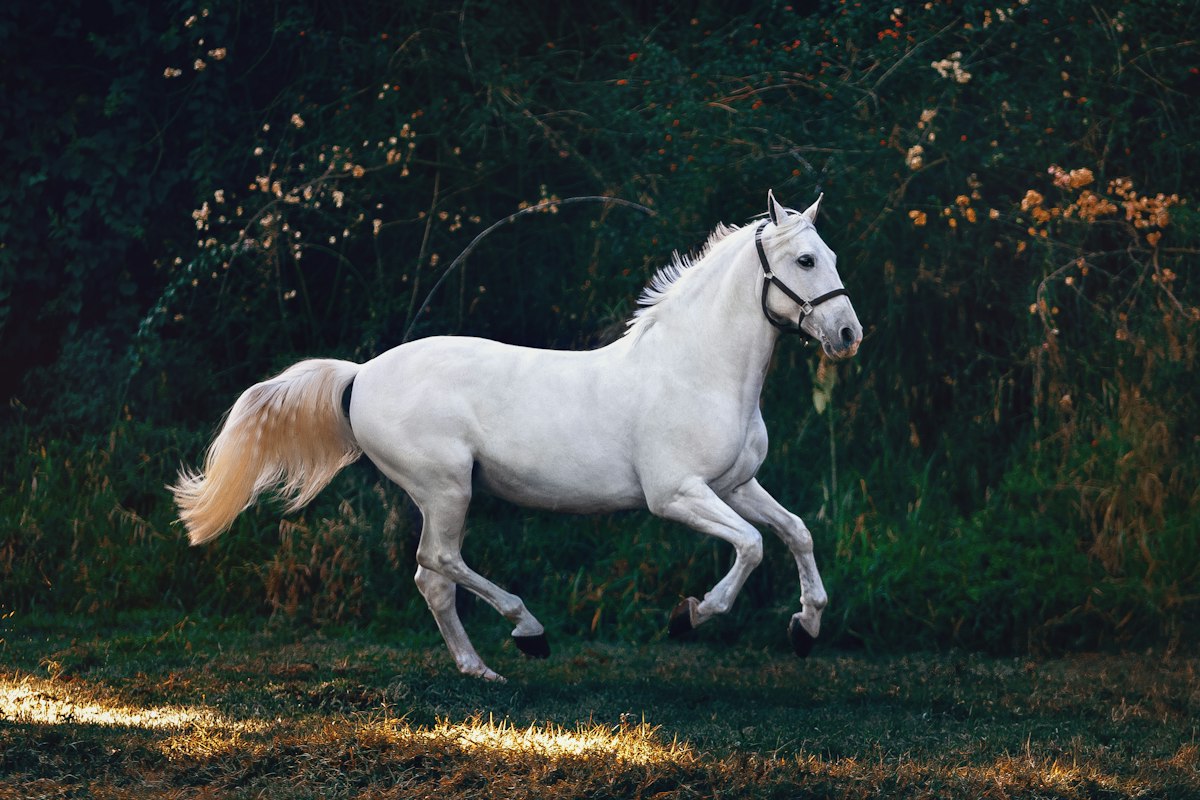
There is a Dubai that exists beyond the glass towers and reclaimed islands, beyond the branded residences and infinity-pool penthouses — a Dubai where the land itself is the luxury. Nad Al Sheba occupies this rarer register. Stretching across the southeastern quadrant of the city, bounded by the Meydan Racecourse to its north and the open desert to its south, this is where Dubai's most landed families have quietly assembled estates that would be more recognisable in the English Home Counties or the horse country of Lexington, Kentucky, than in the vertical metropolis most visitors know. Plots of 50,000 square feet and above are standard. Stables adjoin swimming pools. The morning soundtrack is hoofbeats on sand, not construction cranes.
The Racing Dynasty's Address
Nad Al Sheba's identity is inseparable from the horse. The original Nad Al Sheba Racecourse — predecessor to the current Meydan complex — operated here from 1986 until 2009, hosting the Dubai World Cup, the planet's richest horse race. When Meydan replaced it with a billion-dollar grandstand complex, the surrounding residential districts retained the equestrian DNA. The Godolphin stables — Sheikh Mohammed bin Rashid Al Maktoum's legendary thoroughbred operation — maintain a significant training presence in the area. The Endurance Village, where the Royal Family stages 120-kilometre desert races, operates from nearby Al Lisaili. The entire southeastern corridor of Dubai functions as the ruling family's sporting estate, and Nad Al Sheba sits at its residential heart.
This proximity to royalty has the same effect here as it does in Zabeel: infrastructure quality rises, security tightens, and the social contract becomes one of collective discretion. But where Zabeel offers urban gravitas — government ministries, trade centres, the apparatus of commercial power — Nad Al Sheba offers something rarer in Dubai: space. Raw, uncompromised, almost agrarian space. Villas here are not measured in square feet of built-up area alone; they are measured in the acreage of their plots, the capacity of their paddocks, the length of their private riding trails.
The Villa Typology
Nad Al Sheba's residential architecture defies the Dubai convention of branded, developer-built communities. The majority of properties are custom-built on freehold plots allocated to UAE nationals, resulting in a neighbourhood of staggering architectural diversity. Neo-Andalusian palaces neighbour minimalist concrete cubes. A villa inspired by Versailles sits two plots from a structure that channels Tadao Ando's austere geometry. The absence of a design committee — the kind that enforces aesthetic conformity in Emirates Hills or District One — produces a neighbourhood that feels more organically evolved than planned.
Typical specifications in Nad Al Sheba 1 and 3 include seven to twelve bedrooms, multiple majlis (reception halls), separate staff and driver quarters, private swimming pools of competition dimensions, and garages accommodating eight to fifteen vehicles. Many properties incorporate dedicated falconry rooms — temperature-controlled spaces for housing and training birds of prey, a nod to the Emirati tradition that UNESCO recognised as intangible cultural heritage. The most ambitious estates include private horse facilities: covered arenas, walker machines, veterinary suites, and paddocks that transition seamlessly into landscaped gardens.
Recent transactions paint a picture of a market that operates in the AED 30–180 million range, with the upper tier reserved for compounds that combine exceptional plot sizes (above 80,000 sq ft) with contemporary construction and equestrian infrastructure. A 2025 transaction in Nad Al Sheba 3 — an 85,000 sq ft plot with a newly built twelve-bedroom villa, eight-horse stable, and 60-metre private pool — closed at AED 165 million. The buyer, according to market sources, was a member of a prominent Abu Dhabi business family seeking what they described as "a weekend estate within a twenty-minute drive of DIFC."
Meydan: The Institutional Anchor
The Meydan Racecourse — a 1.6-kilometre grandstand that remains the world's longest single-structure sporting facility — anchors Nad Al Sheba's northern boundary and functions as the neighbourhood's institutional centre of gravity. On Dubai World Cup night, this AED 10 billion complex draws 100,000 spectators and a global television audience measured in hundreds of millions. But on the remaining 364 days of the year, Meydan operates as something more interesting: a mixed-use district that includes the Meydan Hotel (a 284-room five-star property integrated into the grandstand), the Meydan Golf Club (a nine-hole course managed by Track Meydan), and the emerging Meydan One Mall, which upon completion will house over 620 retail outlets and the world's longest indoor ski slope at one kilometre.
For Nad Al Sheba residents, Meydan represents the rare amenity cluster that does not compromise their neighbourhood's essential character. The facilities are world-class, the access is convenient, but the scale is contained. Unlike the sprawling mega-developments of Dubailand or Dubai South, Meydan does not flood the area with residential supply. Its commercial offerings service the existing community rather than attempting to create a new one. This restraint — unusual in a city that rarely met a masterplan it didn't want to quintuple — preserves the low-density character that is Nad Al Sheba's defining asset.
The Community of Cyclists and Runners
One of Nad Al Sheba's least documented but most significant amenities is its cycling and running infrastructure. The Nad Al Sheba cycling track — a twelve-kilometre loop of smooth asphalt that traces the neighbourhood's perimeter — has become one of Dubai's most popular endurance-sport venues. At dawn and dusk, hundreds of cyclists in club kits circulate the track, which is separated from vehicular traffic and floodlit for evening use. Adjacent to the track, a four-kilometre rubberised running trail attracts marathon-training groups and casual joggers alike.
This sporting infrastructure does more than serve fitness enthusiasts; it creates a community fabric that is rare in Dubai's master-planned landscape. The cycling track's parking lot functions as an informal social club, where Emirati families and expatriate athletes share coffee after morning rides. The children's playground adjacent to the track — a simple, well-maintained facility — draws families from across the neighbourhood for evening gatherings. In a city often criticised for lacking organic public life, Nad Al Sheba's cycling culture has generated precisely the kind of spontaneous community interaction that urban planners spend careers trying to engineer.
Investment Dynamics: The Land Premium
Nad Al Sheba's investment thesis is fundamentally about land. In a city where vertical development has inflated floor-area ratios to extraordinary levels — Downtown's average FAR exceeds 12:1 — Nad Al Sheba's low-rise, large-plot typology represents an increasingly scarce asset class. Dubai's population, currently at 3.7 million, is projected to reach 5.8 million by 2040 under the Dubai Urban Master Plan. As densification intensifies in the city's commercial corridors, the premium for landed residential property — particularly in established, infrastructure-mature neighbourhoods — will compound.
The numbers support this thesis. According to Property Monitor data, Nad Al Sheba's average price per square foot of plot area appreciated 67% between 2020 and 2025, outpacing even Emirates Hills (54%) and Jumeirah Bay Island (61%). Critically, this appreciation has been driven almost entirely by local and regional buyers — UAE nationals, GCC families, and long-term expatriates — rather than the international speculative capital that drives price volatility in Dubai's more globally marketed districts. This buyer base is structurally patient, emotionally attached to properties, and unlikely to liquidate in response to global interest-rate shifts or geopolitical noise.
The neighbourhood's proximity to Al Maktoum International Airport — the under-construction mega-facility that will eventually replace DXB as Dubai's primary airport — adds a long-horizon infrastructure catalyst. When fully operational (projected completion: 2033), Al Maktoum International will be the world's largest airport by passenger capacity, and Nad Al Sheba will sit within a fifteen-minute drive of its terminals. This connectivity premium, currently unpriced by the market, represents what Knight Frank's 2025 Dubai report called "the most significant latent value driver in Dubai's southern residential corridor."
The Quiet Ambition
Nad Al Sheba will never compete with Palm Jumeirah for Instagram impressions or with Downtown for skyline drama. Its ambition is quieter, more landed, more fundamentally Emirati. This is the neighbourhood where Dubai's most established families live the way they have always preferred to live: on generous plots, with room for horses and falcons and extended family, in houses that face inward rather than outward. The stables are real, not decorative. The gardens are irrigated to agricultural standards, not landscaped for show. The privacy walls are high not because the architecture is spectacular, but because what happens behind them is nobody's business.
In a city that has built its global brand on the extraordinary — the tallest, the largest, the most — Nad Al Sheba offers a different, arguably more enduring, form of luxury: the ordinary pleasures of space, silence, and soil. It is, in the end, the most un-Dubai thing about Dubai. And for a growing number of ultra-high-net-worth families, that is precisely the point.
Discover more exceptional Dubai addresses
Explore our collection of in-depth guides to the emirate's most compelling luxury destinations.
Browse all Dubai destinations →