Mohammed Bin Rashid City: How Dubai's Most Ambitious Master-Planned Community Became the Emirates' Defining Luxury Address
March 19, 2026 · 16 min read
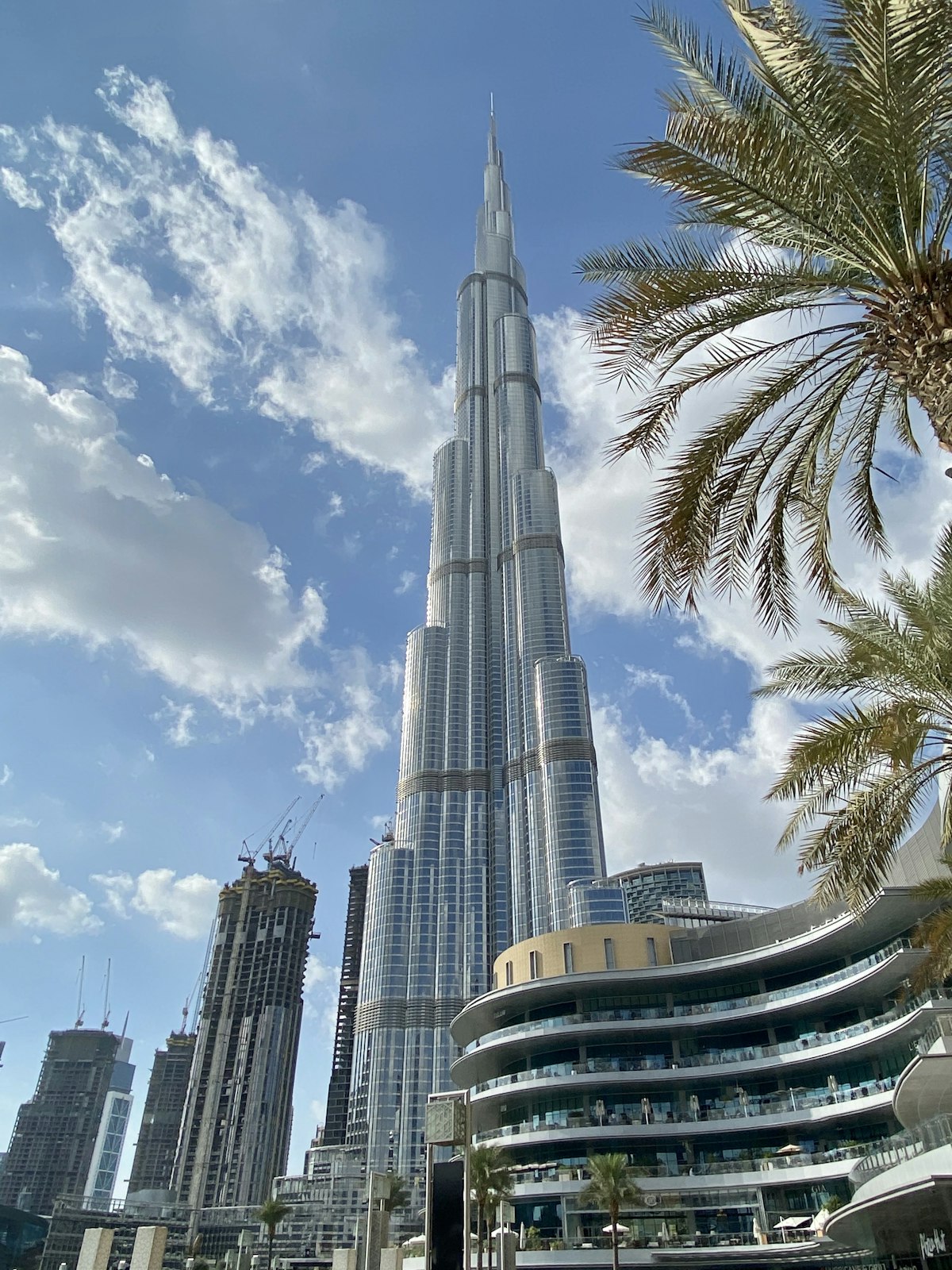
There is a particular kind of ambition that only Dubai can sustain — the conviction that an empty stretch of desert, positioned with geometric precision between the world's tallest building and the world's most advanced racecourse, can be transformed into a self-contained city within a city. Mohammed Bin Rashid City, named for the ruler whose vision has reshaped the emirate's skyline and self-image over three decades, represents perhaps the most comprehensive expression of this ambition: a 45-million-square-foot master plan that seeks not merely to provide luxury housing, but to create an entirely new paradigm for how ultra-high-net-worth families live, work, educate their children, and define their relationship with urban space.
The Scale of Intention
MBR City's footprint is best understood through comparison. At approximately 4.2 square kilometres of developable land, it exceeds the total area of Monaco's sovereign territory. Its master plan accommodates more than 28,000 residential units, from studio apartments in mixed-use towers to sprawling estate villas on plots exceeding 50,000 square feet. The development's internal road network spans 72 kilometres. Its parks and green corridors — a critical amenity in a climate where outdoor comfort is a six-month luxury — cover more than 14 million square feet. This is not a gated community in any conventional sense. It is an alternative proposition for urban living itself, one that asks whether a city built from scratch, with unlimited capital and no legacy infrastructure constraints, might outperform the organic cities that evolved over centuries.
Hartland: The Education District
Sobha Hartland, occupying the northwestern quadrant of MBR City with direct frontage onto the Dubai Water Canal, has established itself as the development's intellectual anchor. The district's residential offerings — predominantly mid-rise apartments and townhouses in the AED 3–15M range — are architecturally competent but not exceptional. What distinguishes Hartland is its educational infrastructure: three international schools (British, IB, and American curricula), a dedicated sports academy, and a performing arts centre that would be considered generous for a European city ten times its population. For the expatriate families who constitute Dubai's primary luxury demographic, this educational density transforms a real estate purchase from a lifestyle choice into a logistical solution. The morning school run, which in sprawling Dubai can consume ninety minutes of a driver's morning, becomes a five-minute walk.
The second phase of Hartland — Hartland II, launched in 2024 — pushed the proposition upmarket with Sobha One, a 60-storey tower whose penthouse apartments command AED 30M+ and offer unobstructed views across the canal to Downtown's iconic skyline. The demographic shift is instructive: where Hartland I attracted young professional families, Hartland II draws established ultra-high-net-worth residents seeking the educational convenience without the townhouse compromise.
District One: The Lagoon Estates
If Hartland represents MBR City's rational argument, District One embodies its emotional one. The development's centrepiece — a seven-hectare crystal lagoon, engineered to maintain Caribbean-blue transparency despite Dubai's extreme temperatures — has created a beachfront lifestyle in the middle of the desert. The surrounding villas, which start at AED 30M for a four-bedroom contemporary and exceed AED 120M for the largest estate plots, are designed around this improbable body of water with the same reverence that Mediterranean architecture reserves for the sea.
District One's architectural language is deliberately restrained. Where other Dubai developments compete for attention through formal extravagance — cantilevered volumes, curved glass facades, rooftop infinity pools visible from orbit — District One's villas adopt a modernist vocabulary of clean lines, natural stone cladding, and floor-to-ceiling glazing that frames the lagoon views without competing with them. The effect is closer to a Palm Springs mid-century compound than to the Italianate palazzo fantasies that have dominated Dubai's villa market for two decades.
The Crystal Lagoon Technology
The lagoon technology itself merits attention, because it represents a category of infrastructure that is quietly reshaping luxury real estate markets in arid climates. Developed by Crystal Lagoons S.A., the Chilean engineering firm that has installed similar systems from Egypt to China, the technology uses a combination of ultrasonic pulse generators, UV treatment, and chemical-free filtration to maintain water clarity across bodies of water up to 100 hectares. The operating cost — approximately AED 5 per square metre per month — is negligible at the scale of a development where individual villa plots sell for AED 4,000 per square foot. But the lifestyle premium is transformative: residents of District One can kayak, paddleboard, and swim in crystalline water without the 90-minute drive to the nearest natural beach, and without the crowds, parking challenges, and public-private boundary tensions that characterise Dubai's coastal lifestyle.
The Connectivity Thesis
MBR City's location — bounded by Al Khail Road to the west, Ras Al Khor Road to the north, and the Dubai–Al Ain highway to the east — positions it within a 12-minute drive of Downtown Dubai, 18 minutes from DIFC, and 25 minutes from both DXB and DWC airports. The planned extension of Dubai Metro's Green Line, which will add two stations within MBR City by 2028, promises to further compress these commute times. For a development that could be dismissed as suburban, MBR City's connectivity metrics compare favourably with established luxury districts like Emirates Hills, which sits deeper in the urban fabric but suffers from chronic congestion on Sheikh Zayed Road.
The development's internal mobility strategy is equally considered. A dedicated cycling and jogging network — 42 kilometres of separated paths, shaded at intervals by solar-powered canopy structures — connects every residential district to the central lagoon, the retail spine, and the planned metro stations. Electric buggy services operate on demand for residents who prefer not to walk. The cumulative effect is a car-optional lifestyle within a city built almost entirely around the automobile — a paradox that MBR City resolves not through ideology but through infrastructure.
The Retail Ecosystem
MBR City's retail strategy represents a conscious departure from Dubai's mall-centric model. While a major retail component — The Mall of the World concept, since rescoped — was part of early master plans, the current iteration distributes commercial space across neighbourhood-scale retail clusters rather than concentrating it in a single destination mall. Each residential district has its own F&B strip, convenience retail, and service amenities. The approach sacrifices the spectacle value of a mega-mall but delivers something arguably more valuable to ultra-luxury residents: the ability to buy coffee, collect dry cleaning, and dine at a competent restaurant without entering a car or navigating a 10,000-space parking structure.
Investment Dynamics
MBR City's investment case rests on three structural advantages. First, plot scarcity: unlike Dubai's freehold zones that continue to release new land, MBR City's master plan is fixed, and the most desirable lagoon-frontage plots are fully allocated. Second, infrastructure maturity: with roads, utilities, landscaping, and community facilities substantially complete, buyers face minimal completion risk. Third, demographic gravity: the educational infrastructure attracts a resident profile — affluent families with school-age children — that is both high-spending and long-tenured, reducing the transience that depresses community formation in other Dubai developments.
Capital appreciation since launch supports the thesis. District One villas that traded at AED 35M in 2020 now command AED 80–100M, a compound annual growth rate that exceeds every other luxury sub-market in Dubai except the ultra-prime Palm Jumeirah custom builds. Rental yields, at 4.8–5.5% gross for apartments and 3.2–3.8% for villas, are competitive with global luxury benchmarks and substantially above Monaco, London, or Hong Kong equivalents.
The Lifestyle Proposition
What ultimately distinguishes MBR City from Dubai's other mega-developments is its lifestyle coherence. Emirates Hills offers exclusivity. Palm Jumeirah offers iconography. Downtown offers density and spectacle. MBR City offers something more prosaic but perhaps more durably valuable: a complete living environment where every daily need — school, sport, leisure, retail, healthcare, socialising — is addressed within a single, walkable, coherently designed community. For the global ultra-high-net-worth family seeking not just a Dubai address but a Dubai life, MBR City's proposition is increasingly difficult to match.
The development's maturation timeline suggests that its defining chapter is still being written. As the metro extension connects MBR City to the broader urban network, as the final villa phases complete and the community reaches critical social mass, and as the lagoon infrastructure proves its durability across multiple summer cycles, the development will either validate its extraordinary ambitions or reveal the limits of master-planned perfection. The early evidence — occupancy rates above 90%, resale premiums exceeding 15% annually, and a waiting list for District One plots that stretches to 2027 — suggests the former.