Dubai Marina: How the World's Largest Artificial Canal City Became the Gulf's Definitive Waterfront Luxury Address
March 31, 2026 · 11 min read
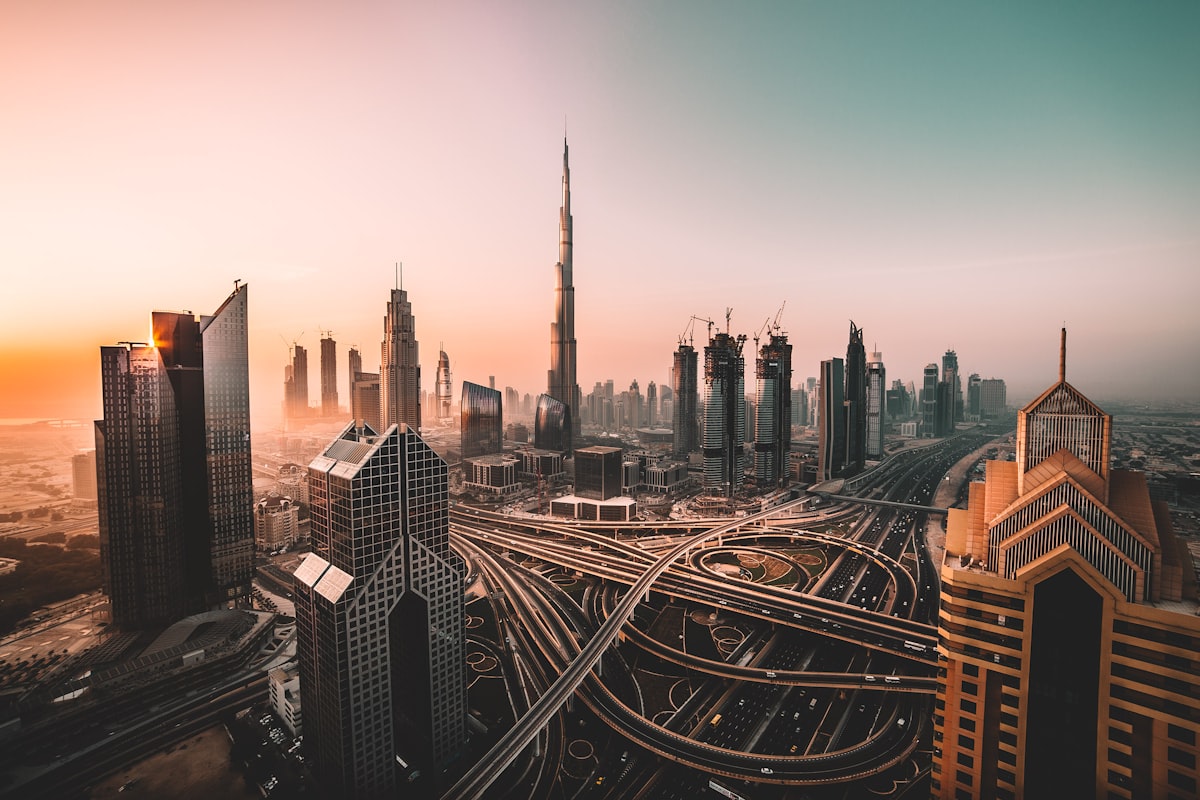
In 2003, the site of what would become Dubai Marina was a stretch of undeveloped desert between Sheikh Zayed Road and the Arabian Gulf coast. There was no canal. There was no water. There were no towers, no promenade, no restaurants, no marina berths. Two decades later, Dubai Marina is a three-kilometre artificial waterway lined with over 200 residential and commercial towers, home to approximately 50,000 residents, and recognised as the world's largest man-made canal city by volume of enclosed water. Its creation represents perhaps the single most ambitious exercise in waterfront urban engineering since the construction of Venice — with the critical difference that Venice evolved over centuries and Dubai Marina was delivered in under fifteen years.
The Engineering Proposition
The canal itself was excavated from desert sand to a depth of approximately eight metres and filled with seawater pumped from the Gulf through a channel at the canal's western end. The engineering challenge was not merely hydraulic — it involved constructing a stable, navigable waterway through reclaimed and natural sand substrata, then building tower foundations along its banks that could support structures exceeding 400 metres in height while accounting for the water table's proximity and the soil's variable load-bearing capacity.
Emaar Properties, the master developer, solved these challenges through a combination of deep piling (some tower foundations extend 70 metres below ground level), soil stabilisation techniques, and a canal lining system that prevents water seepage while allowing controlled drainage. The result is a body of water that behaves like a natural harbour — boats navigate it, fish inhabit it, tidal fluctuations are managed through the Gulf connection — but is entirely engineered, controlled and maintained.
The Vertical Waterfront
Dubai Marina's most distinctive urban characteristic is its verticality. Where historic waterfront cities — Amsterdam, Stockholm, Hamburg — line their canals with four- to six-storey buildings, creating intimate, human-scaled streetscapes, Dubai Marina stacks its waterfront 40 to 100 storeys high. The visual effect is unprecedented: standing on the Marina Walk promenade at twilight, the canal is framed by luminous walls of glass and steel that rise 300 metres on either side, creating a canyon of light reflected in the water below.
This vertical density generates a population concentration that makes the Marina self-sustaining as an urban neighbourhood. The 50,000 residents support 120 restaurants and cafés along the Marina Walk and JBR Boardwalk, a Waitrose supermarket, multiple gyms and sports facilities, medical clinics, and a tram system that connects the district to the Dubai Metro's Red Line. Unlike many Dubai developments, which require a car for every errand, the Marina is genuinely walkable — a rarity in a city designed around automotive movement.
The Property Spectrum
Dubai Marina's residential market spans a range that accommodates both entry-level investors and ultra-high-net-worth buyers, which is part of its resilience as a real estate market. Studio apartments in mid-tier towers start from approximately AED 700,000 (USD 190,000). Two-bedroom apartments with marina views in premium towers — Cayan Tower's twisted geometry, the Address Dubai Marina's branded residences, Marina Gate's sweeping curves — range from AED 2 million to AED 5 million (USD 545,000 to USD 1.36 million). Full-floor penthouses in the district's most exclusive addresses command AED 15 million to AED 40 million (USD 4 million to USD 10.9 million).
Rental yields remain among the strongest in Dubai's mature districts: 6% to 8% gross for standard apartments, reflecting the Marina's perennial appeal to the city's large expatriate professional population. The district's tenant demographic — predominantly European, South Asian and British professionals aged 25 to 45 — creates stable, year-round occupancy that insulates the market from seasonal tourism fluctuations affecting less established communities.
Dubai Harbour: The Superyacht Extension
Dubai Harbour, completed in 2023 adjacent to the Marina's western entrance, extended the district's maritime capabilities to a scale commensurate with the city's ambitions. The harbour accommodates 700 berths, including facilities for superyachts up to 160 metres in length — making it one of the largest superyacht marinas in the Middle East. The development includes a cruise terminal (capacity: two mega-cruise ships simultaneously), a lighthouse observation tower, and the Dubai Harbour Residences, a collection of branded towers overlooking the harbour basin.
The superyacht infrastructure connects Dubai Marina to a global circuit of luxury maritime destinations. Yacht owners wintering in the Gulf — a season that runs approximately from October to April, coinciding with the region's temperate months — now have a purpose-built facility that rivals Port Hercules in Monaco, Marina Port Vell in Barcelona, and One Ocean Port Vell. The critical advantage is Dubai's tax environment: no income tax, no capital gains tax, no mooring tax, and customs-free provisioning that makes operating a superyacht from Dubai significantly less expensive than equivalent Mediterranean bases.
The Marina at Twenty
Dubai Marina's maturation from construction site to established neighbourhood has produced something the city's critics did not anticipate: community. The Marina Walk on weekend evenings pulses with a Mediterranean-style passeggiata — families, couples, groups of friends walking along the waterfront, stopping at outdoor restaurants, watching the boats. The JBR beach, a 1.7-kilometre public shoreline with free access, fills with joggers at dawn and swimmers at sunset. Children learn to sail in the calm canal waters. Fishermen cast lines from the waterfront at midnight.
These are not programmed activities. They are organic behaviours that emerge when urban design provides the right spatial conditions: water, walkability, density, mixed use, and a public realm generous enough to accommodate spontaneity. Dubai Marina, for all its engineering artifice, has generated authentic urban life — which is, ultimately, the only metric by which any waterfront district deserves to be judged.
For buyers and investors seeking Dubai's most liquid, most established, and most genuinely urban waterfront address, the Marina remains the benchmark against which all subsequent developments are measured. It is no longer a project. It is a place.