Dubai Marina & JBR: How a Man-Made Canal Became the Gulf's Most Vibrant Ultra-Luxury Address
March 16, 2026 · 11 min read
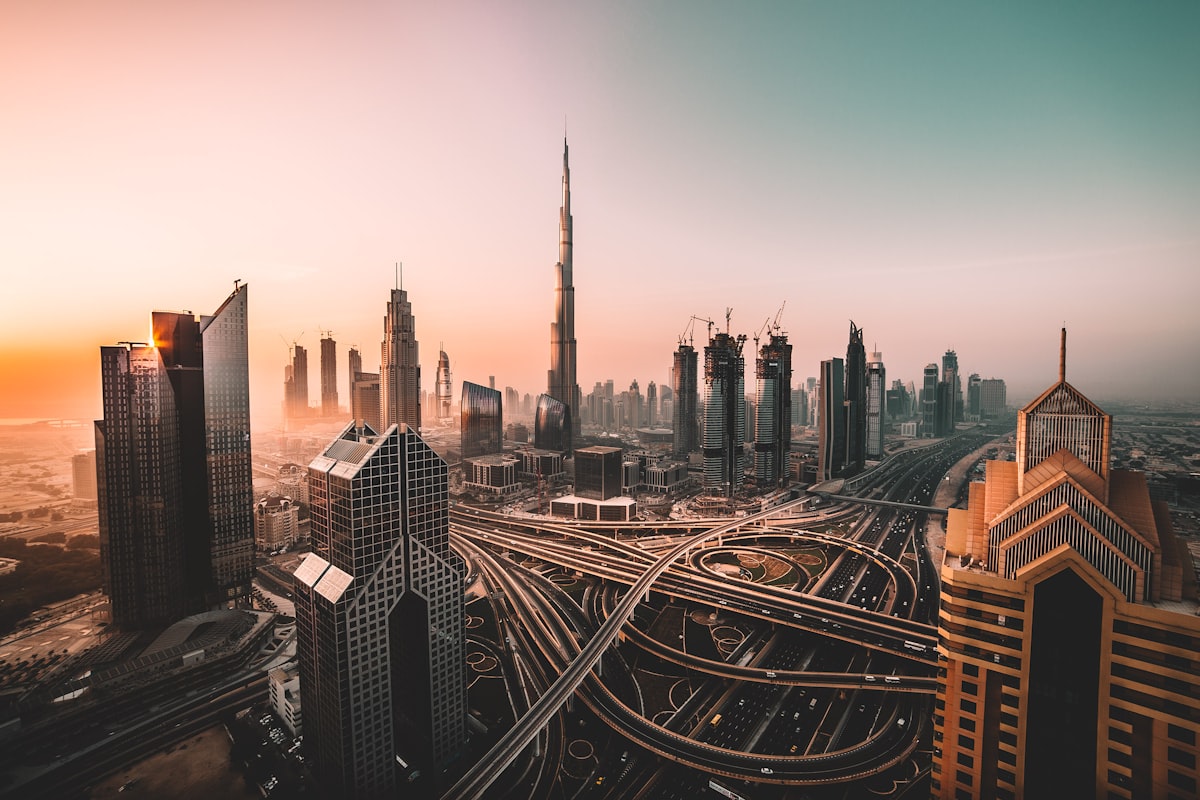
In 2003, Dubai Marina was a construction site — a three-kilometre canal dug into the desert sand, surrounded by cranes and the skeletal frameworks of towers that most international analysts predicted would never fill. Two decades later, it is the Middle East's most densely populated residential district, home to over 120,000 people from 180 nationalities, and the anchor of a waterfront corridor that generates more real estate transaction volume than any other postcode in the UAE. The canal that was carved from nothing has become, improbably and undeniably, the most vibrant urban waterfront between Barcelona and Singapore.
The Three-Kilometre Promenade
The Marina Walk — a continuous pedestrian promenade that follows the canal from its northern entrance to its southern junction with JBR — is Dubai's closest equivalent to a European passeggiata. Between 5 p.m. and midnight on any evening from October to April, the walkway sustains a continuous flow of residents, tourists and superyacht crews that transforms a piece of urban infrastructure into social theatre. The ground-floor retail units that line the promenade — over 300 restaurants, cafés and boutiques — generate estimated annual revenues of AED 2.8 billion, making Marina Walk one of the most commercially productive pedestrian strips in the Gulf.
JBR — Jumeirah Beach Residence — extends this promenade onto the beach itself. The Walk at JBR, a 1.7-kilometre beachfront boulevard completed in 2014, added a second social axis perpendicular to the Marina canal. Where Marina Walk is waterfront-canal, JBR is waterfront-ocean: a three-kilometre public beach, wide and maintained to a standard that rivals any resort, with Ain Dubai (the world's largest observation wheel) as its visual anchor and Bluewaters Island as its offshore counterpart. Together, the two promenades create an L-shaped public realm that no master-planned community in the Middle East has replicated.
The Penthouse Market
Dubai Marina's residential market stratifies sharply by altitude. Studio and one-bedroom apartments on lower floors — the district's entry point — trade between AED 800,000 and AED 1.5 million, serving a young professional demographic drawn to the district's walkability, nightlife and metro connectivity. From the 50th floor upward, the market transitions to a different category entirely.
The top-floor penthouses in towers like Cayan (the twisted tower), Princess Tower (formerly the world's tallest residential building) and 23 Marina command AED 15 to 40 million, with per-square-foot prices that approach Palm Jumeirah levels. These units offer unobstructed views in two directions — the Arabian Gulf to the west, the Sheikh Zayed Road skyline to the east — and a sense of elevation that Palm villas, for all their exclusivity, cannot match. The penthouse buyer in Dubai Marina is typically a different profile from the Palm buyer: younger, more urban, more likely to be active in the district's restaurant and nightlife scene rather than seeking seclusion.
The newest entrants to the ultra-luxury segment are the branded residences. Emaar's Address Residences Dubai Marina and Select Group's Six Senses Residences The Palm (directly adjacent, but socially connected to the Marina ecosystem) have introduced hotel-service living to the district. Concierge, valet, housekeeping, spa access and priority restaurant reservations — the full apparatus of five-star hospitality — are bundled into the service charge, creating a lifestyle proposition that appeals to international buyers who split their time between Dubai and two or three other global bases.
The Superyacht Corridor
Dubai Marina's canal accommodates vessels up to 55 metres — modest by Port Hercule or Antibes standards, but sufficient to host a fleet of 400+ yachts and motor cruisers that create the visual spectacle essential to the district's identity. The marina berths, managed by Dubai International Marine Club, are among the most sought-after in the Gulf, with waiting lists for premium positions exceeding three years.
The yacht community sustains a secondary economy of charter operators, marine services and waterfront dining that contributes an estimated AED 500 million annually to the district. Weekend brunch cruises — a distinctly Dubai phenomenon where restaurant-quality dining is served aboard vessels circling the canal — have become the district's signature social event, with prices ranging from AED 350 for a standard passage to AED 5,000 for a private upper-deck table on a 25-metre yacht.
The Metro Effect
Dubai Marina is one of the few ultra-luxury districts in the Gulf with direct metro access. The Red Line's DMCC and JLT stations, connected to the Marina via a ten-minute tram ride, link the district to Dubai International Airport, Downtown Dubai and DIFC without requiring a car. This connectivity — unremarkable in London or Tokyo but revolutionary in a city built around the automobile — has fundamentally altered the district's appeal for a new generation of residents who view car-dependence as incompatible with the urban lifestyle they seek.
The tram, which runs along Al Sufouh Road before turning into the Marina district itself, has also catalysed a micro-economy of transit-oriented retail and F&B. The stations function as gathering points, their immediate surroundings dense with coffee shops, co-working spaces and quick-service restaurants that serve a commuter population estimated at 45,000 daily trips. For developers, metro proximity has become the single most valuable amenity after sea views — more sought-after than swimming pools, gyms or concierge services.
2026 and Beyond
Dubai Marina's maturation from speculative development to established neighbourhood is now complete. The district has entered what urbanists call the "second-generation" phase: original owners are selling to a new cohort of buyers, the retail mix is evolving from chain outlets to independent concepts, and the physical infrastructure is undergoing its first major renovation cycle. Emaar's Marina Promenade refurbishment, completed in late 2025, upgraded lighting, landscaping and seating along the canal's eastern bank, while several older towers have begun lobby and amenity renovations that signal the district's transition from new to mature luxury.
The next frontier is vertical integration. Several proposed developments aim to create mixed-use towers that combine residences, co-working spaces, wellness centres and F&B within a single structure — the "15-minute building" concept that extends the 15-minute city idea to a vertical axis. For a district that pioneered urban waterfront living in the Gulf, this evolution feels natural: Dubai Marina's greatest asset was never its architecture or its canal, but the density of human interaction that both enable. Twenty years after the first towers rose from the sand, the canal is not just full — it is alive.
Published by Dubai Latitudes · Part of the Latitudes Media network. Explore more: Monaco · Riviera · Italy