Dubai Marina: How the World's Largest Man-Made Marina Became the Gulf's Most Cosmopolitan Waterfront Luxury Address
March 24, 2026 · 16 min read
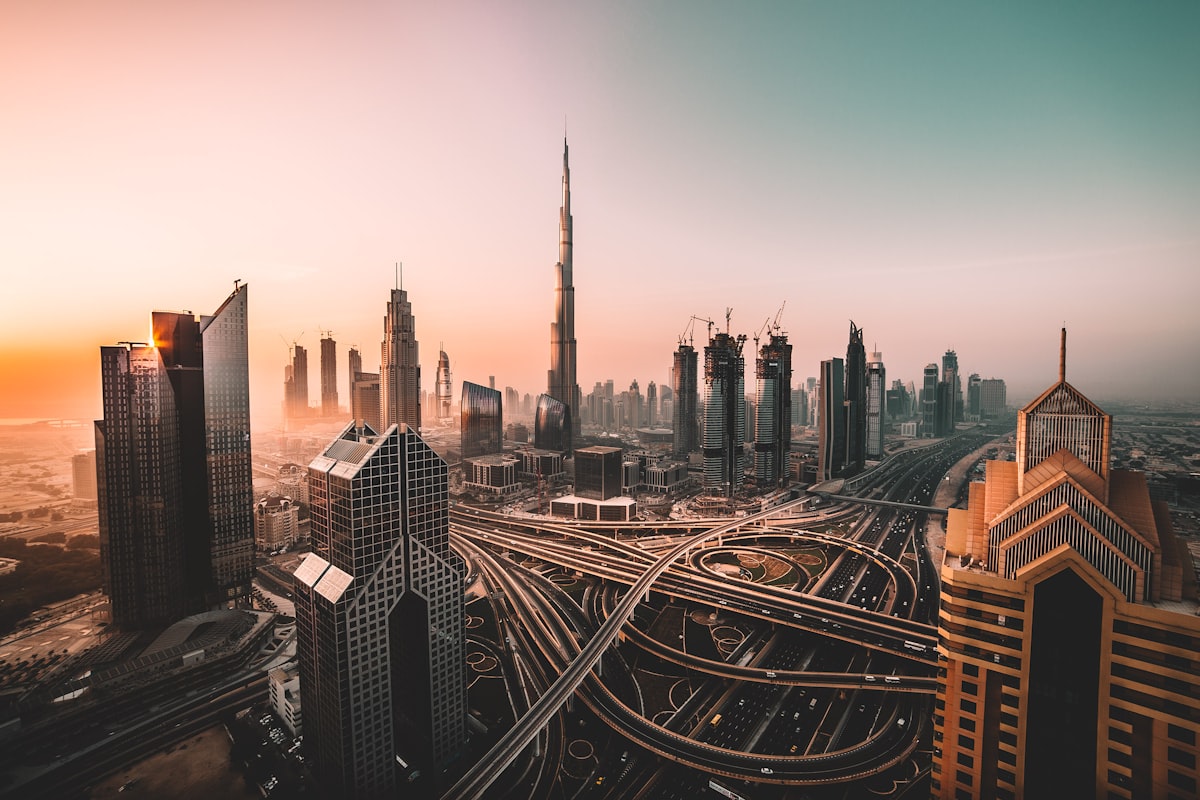
There is something fundamentally audacious about Dubai Marina that statistics alone cannot convey. The numbers are impressive enough — a 3.5-kilometre canal dredged from the desert, lined with over 200 towers, home to approximately 120,000 residents from more than 150 nationalities, serviced by a promenade that stretches seven kilometres along the waterfront. But numbers describe a place the way a blueprint describes a cathedral. What they cannot capture is the particular energy of a neighbourhood that was, less than twenty-five years ago, an empty stretch of coastline beyond the city's southern boundary, and that now functions as arguably the most cosmopolitan residential district in the Middle East.
To understand Dubai Marina is to understand the emirate's singular relationship with time. Cities like Venice or Amsterdam developed their canal districts over centuries, the architecture accumulating in geological layers that tell the story of mercantile wealth, engineering innovation, and aesthetic evolution. Dubai Marina accomplished in fifteen years what those cities required five hundred to achieve — and the result is not, as critics predicted, a soulless simulation of waterfront living, but something genuinely unprecedented: a vertical city-within-a-city where the density of human interaction creates the kind of street-level vitality that urban planners in London and New York spend careers trying to engineer.
The Engineering of a Neighbourhood
The master plan, developed by HOK (now merged into what remains one of the world's largest architectural practices), was approved in 2000 and construction began in 2003. The concept was deceptively simple: excavate a canal from the Gulf, line it with mixed-use towers on a pedestrian-friendly grid, connect it to the existing road network and the metro system, and let the density create its own gravitational pull. What made it radical was the scale — the canal alone required the removal of over 50 million cubic metres of sand and rock — and the speed. By 2010, the first residents had moved in. By 2015, the district was substantially complete.
The architectural quality varies, as it does in any district built at speed. Some towers — the Cayan Tower (formerly Infinity Tower) with its 90-degree twist, the Princess Tower that held the title of world's tallest residential building from 2012 to 2015, the sleek minimalism of the Address Dubai Marina — represent genuine architectural achievement. Others are competent but unremarkable residential towers that serve their purpose without inspiring admiration. But the collective effect transcends the individual buildings. Seen from the water at dusk, the Marina's skyline creates a wall of light that is, in its way, as visually commanding as Manhattan's — and considerably more uniform in its modernity.
The Promenade Economy
The Marina Walk — the pedestrian promenade that traces the canal's edge — is where the district's character reveals itself most clearly. On any given evening, the promenade hosts a density of nationalities, languages, and culinary traditions that would be remarkable in London or Singapore and is nothing short of extraordinary in a district that did not exist twenty years ago. Russian families promenade alongside Emirati couples. Indian entrepreneurs discuss deals over shawarma at one of the dozens of casual restaurants. British expats occupy the terrace bars. Filipino workers gather on the benches. French tourists photograph the superyachts moored along the canal.
This cosmopolitanism is not curated or branded — it emerges organically from the district's demographics. Dubai Marina attracts a particular type of resident: young professionals (average age approximately 32), internationally mobile, comfortable with density, willing to trade square footage for location and lifestyle. The average apartment is smaller than its equivalent in Emirates Hills or Palm Jumeirah, but the trade-off — a walkable neighbourhood with restaurants, shops, a beach, a tram, and a metro station within minutes — attracts residents who value urban convenience over suburban space.
The retail ecosystem reflects this demographic. Unlike the Mall of the Emirates or Dubai Mall, which are destination shopping experiences designed to attract visitors from across the city, the Marina's retail is neighbourhood-serving: supermarkets (Carrefour, Spinneys, Waitrose), pharmacies, dry cleaners, pet shops, nail salons, yoga studios. It is, in short, the infrastructure of daily life — the mundane commercial fabric that distinguishes a neighbourhood from a development.
The Luxury Layer
Within this democratic fabric, a luxury layer operates on its own frequency. The superyachts moored along the canal — rarely fewer than fifty at any given time — represent perhaps AED 3 billion in floating assets. The Address Dubai Marina and the InterContinental provide five-star hospitality infrastructure. The penthouse market — particularly in the Cayan Tower, 23 Marina, and the upcoming Emaar Beachfront towers — commands prices that place Dubai Marina in the top tier of global waterfront residential markets.
A penthouse in the Cayan Tower currently trades at approximately AED 15-20 million ($4-5.5 million) — a fraction of equivalent waterfront properties in Monaco or Hong Kong, but a premium that reflects the district's evolution from speculative development to established luxury address. The price trajectory tells the story: units that sold off-plan in 2004 for AED 800 per square foot now trade at AED 2,200-2,800 — a return that has attracted institutional investors and family offices who once dismissed Dubai as a speculative bubble.
The dining scene has matured correspondingly. Pier 7 — a seven-storey dining tower on the marina — houses restaurants that range from the consistently excellent Atelier M (French-Mediterranean with panoramic marina views) to the more casual but equally accomplished Asia Asia. The new generation of restaurants along the waterfront — particularly those in the Marina Gate development — reflects the broader elevation of Dubai's culinary landscape, with chef-driven concepts that would be credible in any global city.
The Beach Equation
What ultimately distinguishes Dubai Marina from other high-density waterfront districts — from Canary Wharf to Battery Park City to Darling Harbour — is the beach. JBR (Jumeirah Beach Residence), the massive beachfront development that flanks the Marina's western edge, provides direct beach access that transforms the district's lifestyle proposition. In the morning, residents jog along The Beach at JBR. In the afternoon, they swim. In the evening, they walk back to the Marina promenade for dinner. This integration of beach culture with high-density urban living — a combination that existing models (Miami's South Beach, Barcelona's Barceloneta, Sydney's Bondi) achieve with varying degrees of success — represents Dubai Marina's most significant contribution to the vocabulary of contemporary luxury urbanism.
The Bluewaters Island development, connected to JBR by a pedestrian bridge, has extended this beach-to-marina ecosystem further, adding the Ain Dubai observation wheel, Caesars Palace resort, and a collection of boutique retail and dining concepts that complement rather than compete with the Marina's existing offer.
The Next Chapter
Dubai Marina's next evolution is already visible in the Emaar Beachfront development — a series of towers on a reclaimed island between the Marina and Palm Jumeirah that promises to add a new stratum of ultra-luxury to the district. The Beach Mansion and Grand Bleu Tower, both designed by Elie Saab, represent a new typology for the Marina: branded, design-led residences that target a buyer willing to pay a 30-40% premium for a designer address. Whether this premiumisation enhances or erodes the Marina's democratic character remains to be seen.
What is certain is that Dubai Marina has accomplished something that urban theorists once believed required centuries: the creation of a genuinely functioning neighbourhood — one with its own identity, its own rhythms, its own community — from a tabula rasa of sand. The district's success has implications far beyond Dubai. It demonstrates that density, properly executed, can create the kind of street-level vitality and human interaction that suburban planning destroys. It proves that cosmopolitan communities can be built, not merely inherited. And it suggests that the waterfront luxury districts currently under development in cities from Riyadh to Mumbai to Lagos might, if they study the Marina's lessons carefully, achieve something similar.
The lesson, ultimately, is one that Dubai teaches repeatedly: that cities are not artefacts to be preserved but organisms to be grown — and that the speed of that growth, properly managed, can be an advantage rather than a liability.
Published by Dubai Latitudes · Part of the Latitudes Media network