La Mer: How Dubai's First True Urban Beach District Became the City's Most Experiential Waterfront Address
March 21, 2026 · 14 min read
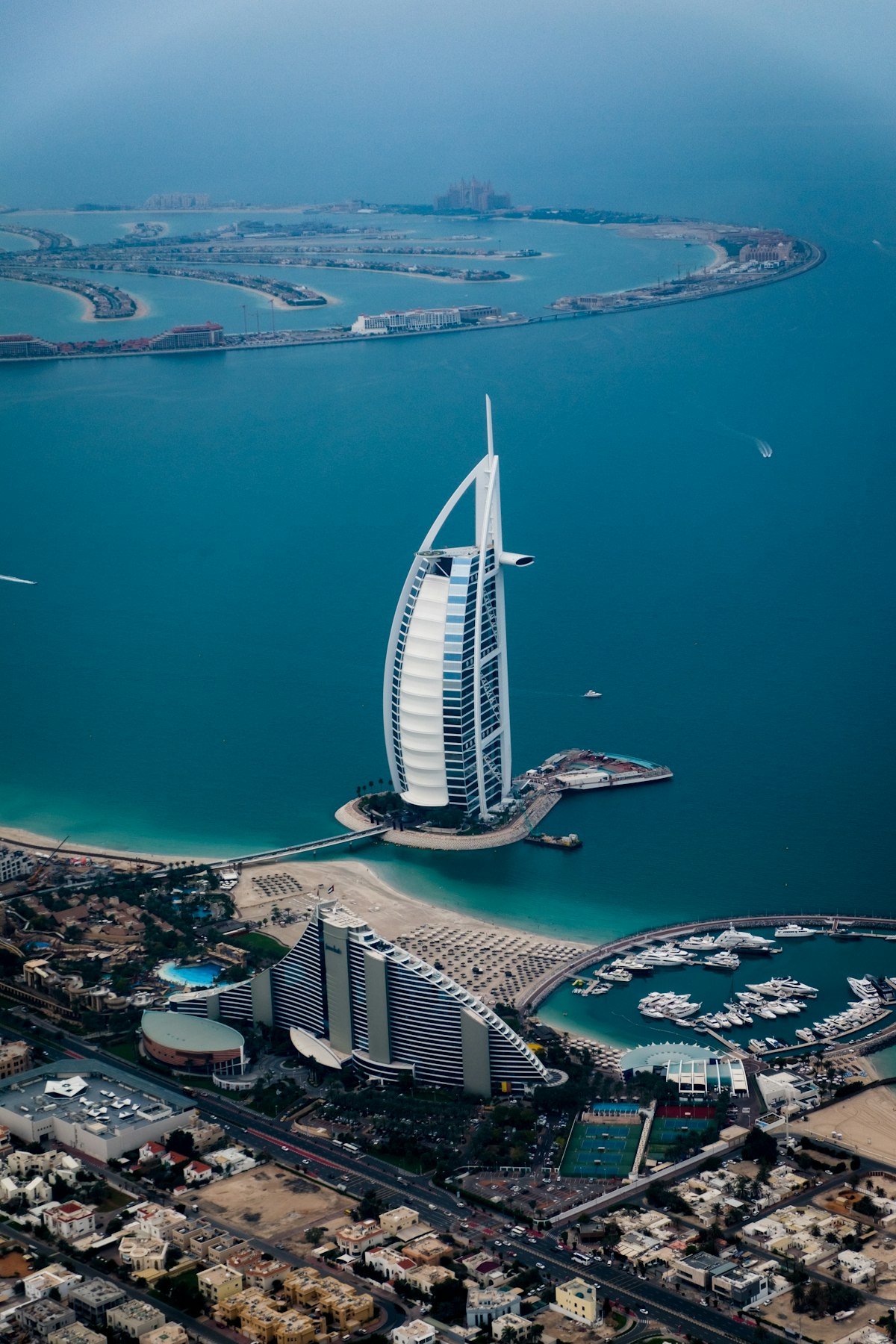
For decades, Dubai's relationship with its coastline was mediated by hotels. To touch the Arabian Gulf, you needed a resort keycard, a beach club membership, or a day pass purchased at reception. The city had built the world's most ambitious artificial islands, engineered the planet's tallest tower within sight of the sea, and constructed marinas that could berth superyachts the size of apartment buildings — yet for ordinary residents, the simple pleasure of walking from a city street to the ocean remained, paradoxically, an experience gated behind hospitality infrastructure. La Mer changed that equation, and in doing so, changed something fundamental about what Dubai means as a place to live rather than merely to visit.
The Meraas Vision: Building a Neighbourhood, Not a Mall
When Meraas, the Dubai-based holding company with a portfolio that spans hospitality, retail, and urban development, unveiled La Mer in 2017, the project's ambition was easy to underestimate. The 1.24-million-square-foot development, occupying a strip of reclaimed coastline between Pearl Jumeirah and Jumeirah Bay, appeared at first glance to be another of Dubai's themed retail destinations — a beachfront cousin to the company's existing City Walk and Boxpark developments. The colourful shipping containers, the Instagram-friendly murals, the curated mix of international and local F&B brands: all the familiar elements of what real estate marketers call a "lifestyle destination."
But Meraas's ambition extended beyond retail footfall. La Mer was conceived as a proof of concept for a new model of Dubai waterfront development — one that prioritised accessibility, walkability, and community over the traditional Gulf formula of gated compounds and exclusive beach clubs. The development's masterplan divided the project into four interconnected zones — La Mer North, La Mer South, The Wharf, and the residential Port de La Mer — each calibrated to serve a different function while maintaining a coherent pedestrian circulation that made the entire development navigable on foot. In a city where the car is sovereign, this commitment to walkability was itself a radical act.
Port de La Mer: The Residential Proposition
Port de La Mer, the residential component of the broader La Mer development, represents one of the most compelling waterfront residential propositions in Dubai's current market. The development comprises approximately 3,300 apartments distributed across low-rise buildings — nothing exceeds six storeys — arranged around a 190-berth marina and a network of pedestrian promenades that connect residents to the beach, the retail district, and the marina facilities. The architectural language is deliberately Mediterranean: white facades, natural stone accents, generous terraces oriented toward the water, and a palette that owes more to Portofino or Mykonos than to the glass-and-steel vocabulary that dominates most of Dubai's waterfront developments.
This Mediterranean inflection is not merely aesthetic. The development's density, building heights, and spatial organisation create an urban condition that feels fundamentally different from the tower-dominated waterfronts of Dubai Marina or Jumeirah Beach Residence. At Port de La Mer, the relationship between building and water is intimate: most residences are within a two-minute walk of either the marina or the beach, and the human scale of the architecture means that the views are not the vertiginous panoramas of a 50th-floor apartment but the textured, immediate experience of boats at their moorings, swimmers in the bay, and the particular quality of light that the Gulf produces at the intersection of water and white stone.
The Lagoon Beach: Engineering Intimacy
La Mer's most significant physical asset — and the amenity that ultimately distinguishes it from every other waterfront development in the emirate — is its beach. Not a private beach accessible only to hotel guests or club members, but a public beach that extends along the development's entire waterfront, maintained to the standards of a luxury resort but available to anyone who walks through the entrance. The beach itself is a masterwork of coastal engineering: a shallow, protected lagoon created by a series of submerged breakwaters that calm the Gulf's gentle but persistent swell, producing water conditions safe enough for small children and clear enough for snorkelling.
The decision to make the beach public — and to invest in its maintenance at a level that ensures it remains genuinely attractive rather than degrading into the littered, under-maintained state that befalls many public beaches in rapidly growing cities — was La Mer's most consequential design choice. It attracted a demographic that Dubai's traditional luxury developments had struggled to reach: young professionals and families who valued experience over exclusivity, who would choose a well-designed public beach over a private club precisely because the public setting created a more dynamic, diverse, and interesting social environment. This demographic, in turn, attracted the F&B operators, fitness concepts, and cultural programming that transformed La Mer from a development into a destination.
The Culinary Geography
La Mer's food and beverage landscape has evolved, since the development's opening, into one of Dubai's most diverse and genuinely interesting dining ecosystems. The initial tenant mix — heavy on international franchises and proven concepts — has progressively given way to a more adventurous roster that includes chef-driven independent restaurants, speciality coffee roasters, artisan bakeries, and the kind of casual-but-excellent beachfront dining that cities like Barcelona, Tel Aviv, and Sydney have long perfected but that Dubai had struggled to produce. The development's beachfront promenade, lined with restaurants whose terraces extend almost to the sand, creates a dining experience that is fundamentally different from the mall-based or hotel-based gastronomy that dominates most of the city.
What makes La Mer's culinary scene distinctive is not the quality of any individual restaurant — though several operate at levels that would earn recognition in any global city — but the density and variety of the offering within a walkable, pedestrian-scaled environment. Within a ten-minute stroll, a resident or visitor can move from a third-wave coffee shop to a Lebanese shawarma counter to a Japanese izakaya to an Italian trattoria, all while maintaining a visual and auditory relationship with the beach. This casual, ambulatory approach to dining — eating as part of a broader experience of place rather than as a discrete event requiring a car journey and a reservation — is something La Mer has achieved more successfully than any other location in Dubai.
Investment Dynamics: The Premiumisation of Accessible Luxury
Port de La Mer's property values have followed a trajectory that reflects the development's evolution from a speculative new-build project to an established neighbourhood with a demonstrated lifestyle proposition. Launch prices in 2018-2019 ranged from AED 1,300-1,800 per square foot — competitive with comparable waterfront developments but hardly premium. By early 2026, resale prices for completed units with marina or sea views have reached AED 2,400-3,200 per square foot, representing capital appreciation of 60-80% for early buyers. The appreciation has been driven not primarily by the speculative momentum that powers much of Dubai's residential market, but by the genuine rental demand from tenants attracted to the development's lifestyle proposition — demand that has pushed rental yields to 7-8%, among the highest for any waterfront development in the emirate.
The penthouse and townhouse segments have performed even more dramatically. La Mer's limited inventory of waterfront townhouses — approximately 50 units, each with direct marina access and private gardens — has become one of Dubai's most tightly held residential assets. Turnover is minimal: owners who acquired these units at launch have little incentive to sell, given that the combination of townhouse format, waterfront location, and pedestrian-scaled neighbourhood that La Mer offers is essentially irreplicable in the current Dubai market. When units do trade, they do so at premiums that reflect this scarcity: AED 8-12 million for a three-bedroom townhouse, levels that would have seemed inconceivable at launch but that now represent fair value for a product category with no comparable substitute.
The La Mer Effect
La Mer's most enduring contribution to Dubai's urban development may not be the development itself but the model it has established. The idea that a waterfront can be simultaneously public and premium, accessible and aspirational, experiential and residential — that these qualities are complementary rather than contradictory — has influenced a generation of subsequent Dubai developments. The city's increasing commitment to public beaches, pedestrian promenades, and mixed-use waterfront districts owes something to La Mer's demonstration that this approach is not only socially desirable but commercially viable.
For residents of Port de La Mer, the development's success has produced a particular quality of daily life that remains rare in Dubai: the ability to live within walking distance of a beach, a marina, dozens of restaurants, a waterpark, and a cinema without ever needing to start a car. It is a small thing, this pedestrian proximity — unremarkable in older cities where centuries of organic development have produced exactly this kind of mixed-use density. But in Dubai, where the car has been the unchallenged instrument of urban circulation for half a century, La Mer's walkability feels less like a convenience than a quiet revolution.
In a city that mastered the art of building for spectacle, La Mer proved that the Gulf's most compelling waterfront is the one designed for the radical luxury of walking barefoot from your front door to the sea.