Dubai Islands: How the World's Largest Waterfront Transformation Is Redefining Coastal Ultra-Luxury
March 2026 · 11 min read
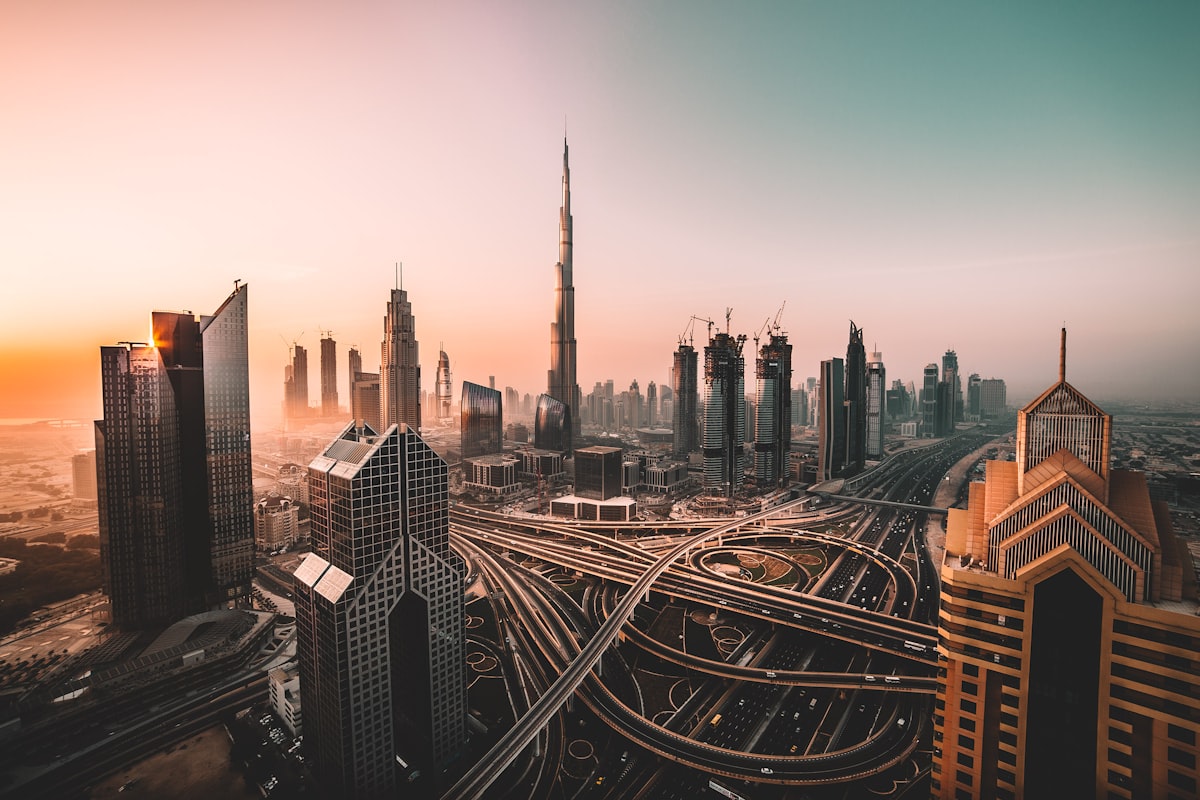
Off the coast of Deira, where Dubai Creek meets the Persian Gulf, a new geography is materialising. Dubai Islands — formerly known as Deira Islands, rebranded and reimagined under Nakheel's latest masterplan — is a 17-square-kilometre archipelago of five interconnected islands that, when complete, will add 21 kilometres of beachfront to Dubai's coastline. It is, by any measure, the most ambitious waterfront development currently under construction anywhere in the world.
And unlike the Palm Jumeirah, which was conceived in the early 2000s as a feat of engineering spectacle, Dubai Islands is being designed from inception as a residential ecosystem — a city within a city, calibrated for permanent living rather than investment tourism.
The Scale of Ambition
The numbers are staggering. Five islands. 80 resorts and hotel properties planned. Over 20,000 residential units across the full spectrum from waterfront apartments to private-beach villas. A 2.4-kilometre night market. Two marinas. A beach club district. A retail circuit designed by the architects behind Dubai Mall's most successful expansions.
But the numbers matter less than the philosophy. Dubai Islands represents Nakheel's matured understanding of what creates lasting value in waterfront real estate. Palm Jumeirah proved that audacity sells — its frond villas became the world's most recognisable luxury real estate. What Palm Jumeirah also revealed, over two decades of habitation, is that audacity alone does not create community. The Palm's infrastructure was designed for visual impact, not for daily life. Traffic, retail gaps, and the distance between neighbours on artificially elongated fronds created practical friction that even the most spectacular villa address cannot fully compensate.
Lessons Applied
Dubai Islands internalises every lesson the Palm taught. The island layout prioritises connectivity: bridges, water taxis, a dedicated tram network that connects residential clusters to retail, dining and marina districts within minutes. The street grid is pedestrian-scaled, with ground-floor retail mandated along primary routes — a Mediterranean urbanism that Dubai's earlier mega-projects rarely attempted.
The residential architecture moves beyond the Palm's signature Mediterranean-pastiche villas toward a contemporary design language: clean-lined, floor-to-ceiling glass, engineered for the Gulf's climate with deep overhangs, cross-ventilation pathways, and high-performance glazing that reduces solar gain without sacrificing views. The best units — beachfront villas on Islands 1 and 2 — offer 200–500 square metres of interior space with private beach access and unobstructed Gulf views.
The Ultra-Luxury Tier: AED 25–80M
At the top of the market, Dubai Islands is positioning a collection of approximately 200 beachfront villas across three distinct communities: Beach Villas (contemporary minimalism, AED 25–40M), Grand Estates (architectural statements of 600+ square metres, AED 40–60M), and a limited collection of Peninsula Villas — tip-of-island positions with 270-degree water views — that are expected to command AED 60–80M when released.
These prices place Dubai Islands firmly in competition with Jumeirah Bay Island and Emirates Hills at the top of Dubai's residential hierarchy. The differentiator is beach access. Unlike Jumeirah Bay's harbour-front positioning or Emirates Hills' golf-course setting, Dubai Islands offers direct, private beach frontage — the single most valued amenity in Gulf residential real estate, and the one in shortest supply.
The Hospitality Anchor
Dubai has learned that ultra-luxury residential succeeds when anchored by ultra-luxury hospitality. Dubai Islands will be home to the Gulf's largest concentration of five-star beach resorts: confirmed operators include Marriott (Edition and W brands), Accor (Raffles and Fairmont), and several independent boutique hotel groups. The hospitality layer provides residents with access to restaurant, spa, and beach-club infrastructure from day one — solving the "ghost town" problem that plagues many large-scale developments in their early years.
The night market — a 2.4-kilometre waterfront promenade designed to operate from sunset to midnight — addresses another gap in Dubai's residential fabric. The emirate has world-class malls and world-class restaurants, but relatively few public spaces that combine commerce, culture, and social life in an outdoor, walkable format. The night market, timed to the Gulf's evening climate, aims to create exactly this.
The Location Advantage
Dubai Islands' position at the mouth of Dubai Creek gives it something no other island development in the emirate possesses: proximity to old Dubai. The Gold Souk, the spice markets of Deira, the heritage quarter of Al Fahidi, the cultural institutions of Dubai Creek Harbour — all are within a 15-minute drive. This matters because it positions Dubai Islands not as an enclave disconnected from the city (the criticism levelled at every island development), but as an extension of Dubai's most historically layered district.
For international buyers — particularly European and Asian families considering permanent relocation — this combination of beach living and urban access is significantly more appealing than the splendid isolation of the Palm's outer fronds or the desert-edge positioning of Tilal Al Ghaf.
Investment Dynamics
Off-plan pricing on Dubai Islands suggests the market is betting heavily on the project's success. Beach-facing apartments have appreciated 30–40% since initial launch, with villa plots appreciating faster. The comparison with Palm Jumeirah's trajectory is instructive: early Palm buyers who purchased at 2003–2005 off-plan prices saw values multiply five to eight times by 2024, even accounting for the 2009–2012 correction.
Dubai Islands benefits from a more mature regulatory environment — escrow protections, RERA oversight, and construction milestones tied to payment schedules — that reduces the off-plan risk that characterised earlier Dubai cycles. It also benefits from Dubai's post-2020 population boom: the emirate's population has grown by over a million residents since the pandemic, creating genuine demand for quality waterfront living at all price points.
The Outlook
Dubai Islands will take a decade to fully mature. The first residential handovers began in 2025, with the full resort and retail infrastructure expected to reach critical mass by 2028–2029. For buyers comfortable with the development timeline, it represents arguably the most compelling entry point in Dubai's waterfront ultra-luxury market — offering Palm Jumeirah-class beach living with the benefit of two decades of Dubai's hard-won lessons in what makes island communities actually work.
For the broader Latitudes network, Dubai Islands confirms the emirate's undiminished capacity to reimagine the possible — not through spectacle alone, but through the more difficult discipline of turning spectacle into liveable, lasting community.
Dubai Latitudes — Your guide to the Gulf's most dynamic luxury market. Request private access →