The Dubai Frame: How the World's Largest Picture Frame Became the Gulf's Most Audaciously Symbolic Luxury Landmark
March 29, 2026 · 12 min read
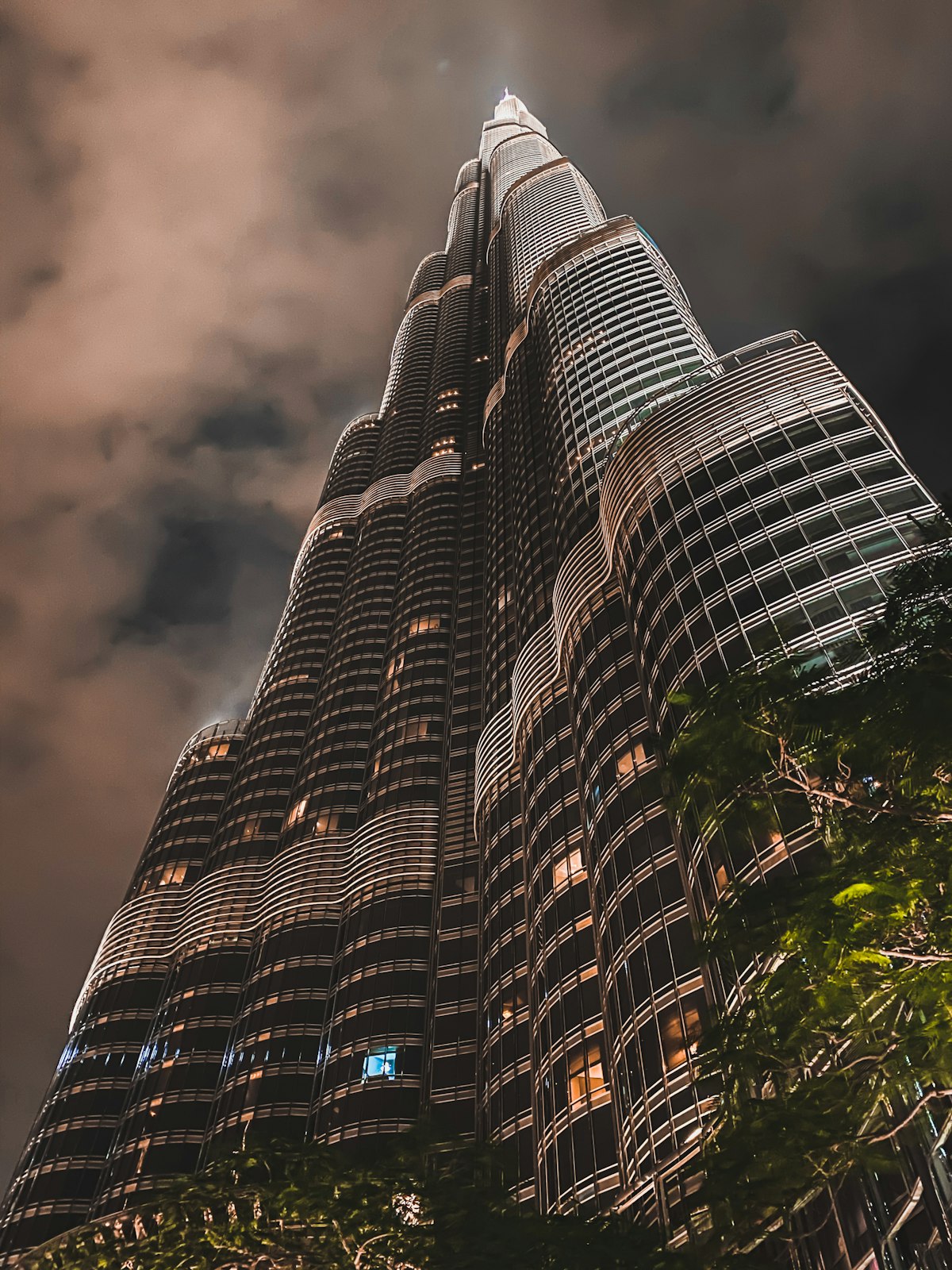
There is a moment, standing on the glass-floored Sky Deck of the Dubai Frame at 150 metres above sea level, when the city's entire philosophical proposition crystallises into a single visual gesture. Look north through the golden frame and you see old Dubai — Deira's wind-tower houses, the Creek's dhow wharves, the minarets of Al Fahidi. Look south and the future unfolds in glass and steel — the Burj Khalifa piercing the sky, Downtown's crystalline towers cascading toward the desert horizon. The Frame doesn't merely connect two views. It argues that both are the same city, the same ambition, the same story told across different centuries.
The Architecture of a Metaphor
Designed by Mexican architect Fernando Donis and completed in 2018, the Dubai Frame is precisely 150 metres tall and 93 metres wide — dimensions that weren't chosen for structural convenience but for symbolic proportion. The structure's golden cladding, composed of 2,900 panels finished in a shade the architect describes as "desert sunrise gold," catches the light differently at every hour. At dawn, it glows rose-copper. At midday, it blazes with an intensity that makes it visible from 20 kilometres away. At sunset, it deepens to amber, then bronze, before the LED lighting system transforms it into a beacon against the indigo Gulf sky.
The Frame sits within Zabeel Park, a 47-hectare green space that functions as the border between historic and modern Dubai. This placement was deliberate: the park is the city's geographic and temporal midpoint, the precise latitude where the old city's organic growth meets the new city's master-planned grid. To build the world's largest picture frame here — essentially creating a permanent viewport between past and future — is an act of urban design so literal it becomes profound.
The Journey: Past, Present, Future
The Dubai Frame experience begins on the ground floor with a multimedia exhibition that condenses 5,000 years of Creek-side settlement into a 20-minute immersion. The technology is impressive — holographic projections, spatial audio, interactive floor maps — but the narrative architecture is more sophisticated than the hardware. Rather than presenting Dubai's transformation as a rupture (fishing village to megacity), the exhibition traces continuity: the pearl-diving industry's risk-taking culture became the real estate industry's speculative ambition; the Creek's function as a trading gateway became the airport's role as a global hub; the Bedouin tradition of radical hospitality became the tourism sector's five-star obsession.
The high-speed elevator ascent — 75 metres in 75 seconds — delivers visitors to the Sky Deck, where the glass floor panels create a moment of vertiginous theatre. Below, Zabeel Park's gardens appear as an emerald geometric abstraction. But the real drama is lateral: the 93-metre-wide bridge offers panoramic views through floor-to-ceiling glass on both sides, creating the picture-frame effect that gives the structure its name and its meaning. On clear days, visibility extends to the Hajar Mountains. On hazy afternoons, the city dissolves into a golden mirage that makes the Frame seem to float above the earth.
Zabeel Park: The Green Anchor
The Frame has transformed Zabeel Park from a pleasant municipal amenity into one of Dubai's most visited cultural destinations. The park's recent AED 200 million renovation has added botanical gardens curated by a team from Kew, a contemporary sculpture trail, and dining pavilions that attract the city's most ambitious chefs away from the hotel circuit. On Friday mornings, the park's running track fills with a community of ultra-high-net-worth residents who have discovered that the most exclusive workout in Dubai isn't in a private gym — it's a 5K loop under the Frame's golden shadow.
The surrounding Zabeel district has responded to the Frame's gravitational pull with a luxury residential renaissance. Properties within walking distance of the park have appreciated 34% since the Frame's opening, outpacing even the waterfront premiums that traditionally dominate Dubai's market. Developers have taken notice: three new ultra-luxury residential projects are under construction within a 1-kilometre radius, each positioning the Frame view as their primary selling proposition. In Dubai's relentless competition for iconic proximity — Burj view, Marina view, Palm view — Frame view has emerged as the most intellectually satisfying option.
The Golden Hour Economy
The Dubai Frame has created its own micro-economy. The structure attracts over 2.5 million visitors annually, generating a tourism footprint that extends well beyond the AED 50 admission fee. The Frame's gift shop — a curated space designed by a Dubai-based studio that specializes in architectural merchandise — sells limited-edition gold-plated miniatures that have become collector's items in the Gulf's luxury souvenir market. The on-site café, positioned at ground level with the Frame towering overhead, has become a social media phenomenon: the "Frame coffee shot" is reportedly the most geotagged image in Zabeel.
But the Frame's most significant economic contribution is conceptual. It has demonstrated that Dubai can create landmarks that are intellectually resonant, not merely physically imposing. The Burj Khalifa is tall. The Palm is large. The Frame is meaningful — a structure whose value lies not in superlatives but in the story it tells about a city that refuses to choose between heritage and ambition. In a market where attention is the ultimate currency, the Dubai Frame has proven that the most powerful architectural gesture isn't the tallest or the widest. It's the one that frames — quite literally — the question every visitor asks: how did this place become what it is?
Living in the Frame's Shadow
For the discerning buyer, the Zabeel corridor represents Dubai's most undervalued luxury proposition. While attention and capital flow toward the waterfront — Palm Jumeirah, Dubai Marina, Bluewaters Island — the Frame district offers something the coastline cannot: centrality, green space, and cultural gravity. The area's proximity to DIFC (seven minutes), Downtown (ten minutes), and Jumeirah Beach (fifteen minutes) creates a geographic sweet spot that only improves as Dubai's metro expansion connects Zabeel to every corner of the emirate.
The Frame itself has become something rare in Dubai: a landmark that locals love as much as tourists. On any evening, you'll find Emirati families picnicking beneath it, expat couples photographing it, and children running through the fountains at its base. It has achieved what the best architecture always achieves — it has become invisible through familiarity, woven so thoroughly into daily life that it no longer needs to announce itself. The golden rectangle simply stands there, framing the city's two chapters, inviting anyone who cares to look through it and see the whole story at once.