Dubai Design District: How d3 Became the Gulf's Most Creatively Concentrated Luxury Address
April 2, 2026 · 14 min read
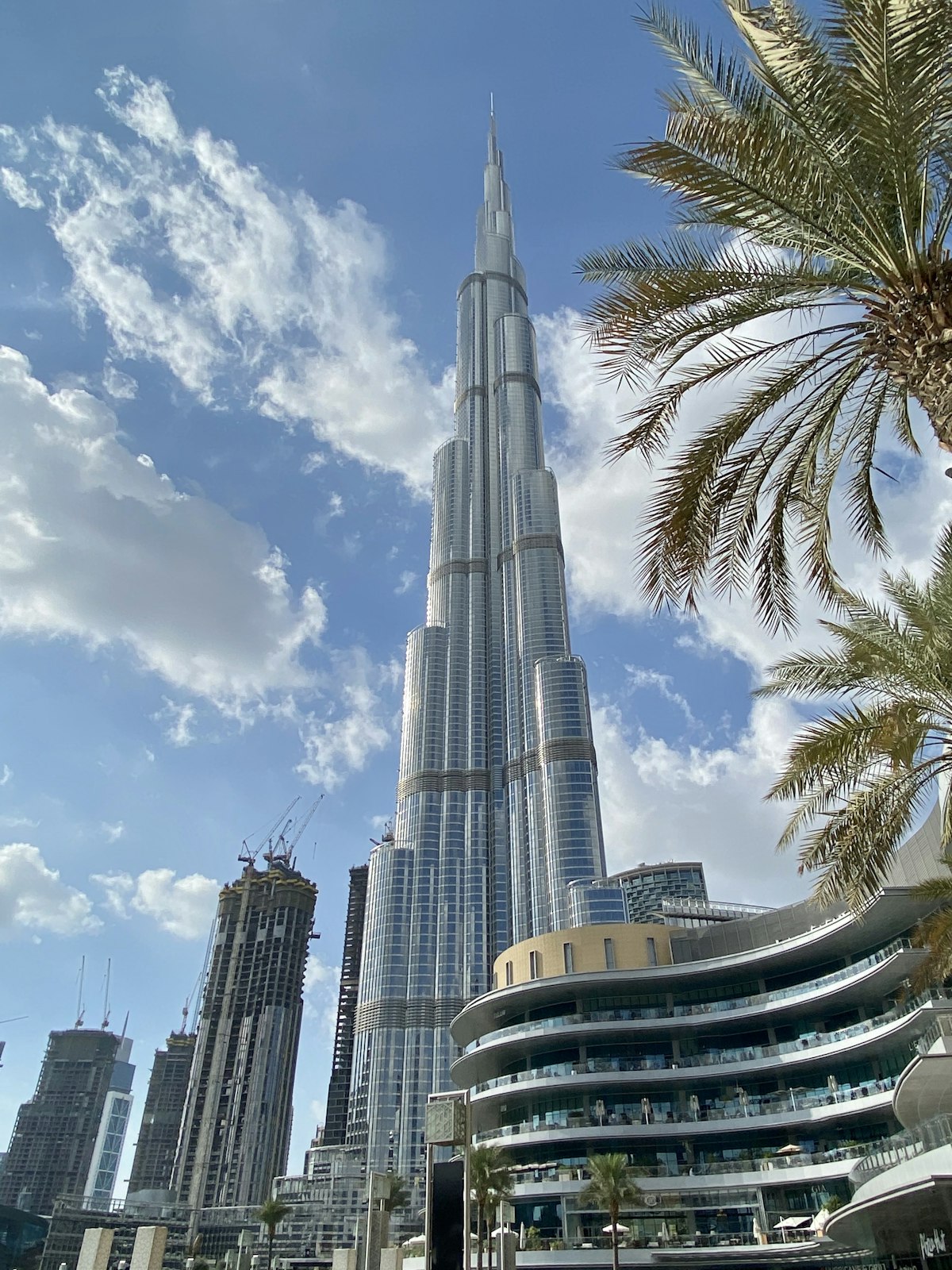
The conventional narrative of Dubai luxury centres on verticality and scale — the world's tallest tower, the largest mall, the most expansive artificial island. But in the measured geometries of Dubai Design District, a fundamentally different luxury proposition has been assembling itself since 2015: one built not on superlatives of size but on density of creative talent, curatorial intelligence, and the quiet confidence that comes from knowing that the most valuable real estate in any global city is not the most expensive per square foot, but the most creatively consequential per square metre.
The Architecture of Creative Intent
Dubai Design District — universally known as d3 — occupies a 222,000-square-metre precinct along the Dubai Creek extension in the Business Bay corridor, positioned with deliberate symbolism between the heritage of old Dubai and the ambition of Downtown. The masterplan, developed by Foster + Partners, rejected the hermetic tower-and-podium model that dominates Dubai's commercial landscape in favour of a low-rise, street-level urban fabric that prioritises pedestrian encounter over vehicular efficiency. Buildings of three to seven storeys frame courtyards and covered walkways; ground-floor retail opens directly onto shaded promenades; and the overall effect is less Dubai and more Barcelona's Poblenou or Milan's Tortona — districts where creative industries have colonised industrial-scale spaces and in doing so created a new category of urban luxury.
The architectural vocabulary is deliberately restrained — white and grey facades, floor-to-ceiling glazing, cantilevered volumes that create shade without ornament. This is not the gold-and-marble luxury of Emirates Palace or the Burj Al Arab; it is the luxury of elimination, of spaces where every surface exists to serve the work displayed within it rather than to compete with it. For a city sometimes criticised for aesthetic excess, d3's minimalism feels almost revolutionary — and its commercial success suggests that Dubai's luxury market has matured beyond spectacle into sophistication.
The Tenant Ecology
What distinguishes d3 from comparable creative districts globally is the breadth and seriousness of its tenant roster. The district hosts over 500 companies spanning fashion, architecture, art, media, and technology — from the regional headquarters of LVMH's fashion division and Zaha Hadid Architects' Gulf office to independent Lebanese fashion houses, Emirati jewellery designers, and experimental galleries that would be at home in London's Mayfair or New York's Chelsea. The presence of both luxury conglomerates and independent studios creates an ecosystem where a young Emirati designer can take a meeting with a global buyer without leaving the district, where an architect can walk from their office to a materials library to a fabrication workshop within five minutes.
This density is not accidental. TECOM Group, d3's developer and operator, has pursued a curatorial approach to tenanting that treats the district less as a real estate development and more as a cultural institution. Lease terms include provisions for public programming, collaborative projects, and community engagement that would be unusual in a conventional commercial district. The result is a precinct where the boundary between commerce and culture is deliberately blurred — where a flagship store functions as a gallery, where a design studio hosts public lectures, and where the daily rhythms of creative work become a spectacle accessible to anyone walking the district's streets.
The Art Basel Effect
Dubai's selection as the site for Art Dubai — the Gulf's most significant contemporary art fair — and the proliferation of gallery spaces within and around d3 have accelerated the district's evolution from commercial precinct to cultural destination. During Art Week, which typically falls in March, the district transforms into a nexus of global art-market activity that rivals the established fairs of Basel, Frieze, and FIAC in curatorial ambition if not yet in transactional volume. Satellite events, performance installations, and pop-up exhibitions extend through the surrounding streets, and the international collectors, curators, and critics who descend on the district encounter a creative infrastructure that challenges preconceptions about Gulf cultural production.
The year-round gallery programme within d3 maintains this momentum beyond the fair season. Spaces like Custot Gallery — the Gulf outpost of the Paris-based operation — and emerging Emirati-led galleries present programming that engages seriously with regional and international contemporary art, creating a market infrastructure that has begun to attract the kind of blue-chip collectors who previously limited their Gulf engagement to auction houses and hotel art fairs.
Fashion as Cultural Production
The fashion ecosystem within d3 represents perhaps the district's most commercially significant achievement. The co-location of international luxury brands — Dior, Chanel, and Valentino maintain regional offices here — with emerging Arab designers has created a fashion economy that extends well beyond retail. The d3 Fashion Forward initiative has been instrumental in launching regional designers onto international platforms, and the district's annual fashion week has evolved from an industry exercise into a cultural event that generates the kind of media attention and social-media engagement that traditional advertising cannot replicate.
For luxury consumers, the practical implication is the ability to encounter, within a single walkable precinct, both the established houses of European fashion and the most promising voices of Arab design — to move from a Givenchy showroom to a studio where a Saudi designer is reinventing the abaya as a vehicle for contemporary art, to discover that the most interesting fashion in the Gulf is not imported but indigenous, and that d3 has become the physical space where that discovery is most efficiently made.
The Residential Proposition
The emergence of residential developments within and adjacent to d3 has created a new category of Dubai luxury living — one defined not by the view from the 80th floor but by the cultural ecosystem at street level. Properties within the district command premiums of 15-25% over comparable Business Bay inventory, and the buyer profile is notably different from the investor-dominated towers nearby. Residents tend to be creative professionals, design-industry executives, and culturally motivated international buyers who have chosen d3 specifically because it offers something that Dubai's more conventional luxury addresses do not: a walkable, culturally rich daily environment that rewards pedestrian engagement rather than automotive display.
Studio and loft spaces within the district's mixed-use buildings — typically 80-150 square metres with double-height ceilings and industrial finishes — trade between AED 1.5M and AED 3.5M, while the new residential towers on the district's periphery offer one-to-three-bedroom apartments at AED 2M-8M with direct access to d3's creative infrastructure. For international buyers accustomed to the valuations of London's Shoreditch, Paris's Marais, or New York's West Village — districts where cultural proximity commands astronomical premiums — d3 represents a compelling value proposition in which creative-economy density is available at a fraction of the price demanded by comparable global addresses.
The Gastronomy of Design
The dining scene within d3 has evolved in parallel with the district's creative tenant base, producing a restaurant and café culture that prioritises design consciousness alongside culinary quality. Establishments like Wild & The Moon — the Parisian plant-based concept that chose d3 for its Gulf debut — and locally conceived spaces where the interior design is as carefully curated as the menu have established d3 as Dubai's most design-forward dining precinct. The emphasis is on all-day destinations where creative professionals can work, meet, and eat within spaces that feel less like restaurants and more like extensions of the studios and galleries nearby.
This integration of food and design culture extends to the retail sphere, where concept stores combine fashion, homeware, and artisanal food products in curated environments that challenge the department-store model. The result is a commercial ecosystem where the act of consumption becomes an aesthetic experience — where buying a cup of coffee, a piece of furniture, or a work of art all participate in the same vocabulary of design intelligence that defines the district as a whole.
The Verdict
Dubai Design District represents the most convincing evidence that Dubai's luxury proposition has evolved beyond the spectacular into the substantive. In a city where luxury has historically been defined by scale, exclusivity, and material opulence, d3 proposes an alternative: that the most valuable luxury is proximity to creative intelligence, that the best address is not the highest but the most culturally dense, and that the future of Gulf luxury lies not in building taller but in thinking deeper. For the discerning buyer, investor, or visitor who has outgrown the tower-and-mall paradigm, d3 is not merely a district. It is an argument — and an increasingly persuasive one — for what Dubai luxury can become when it sets aside spectacle and embraces substance.
Published by Dubai Latitudes · Part of the Latitudes Media network