Dubai's Cultural Season: How the Emirate's October-to-April Calendar Became the Gulf's Most Strategically Curated Luxury Ecosystem
March 23, 2026 · 15 min read
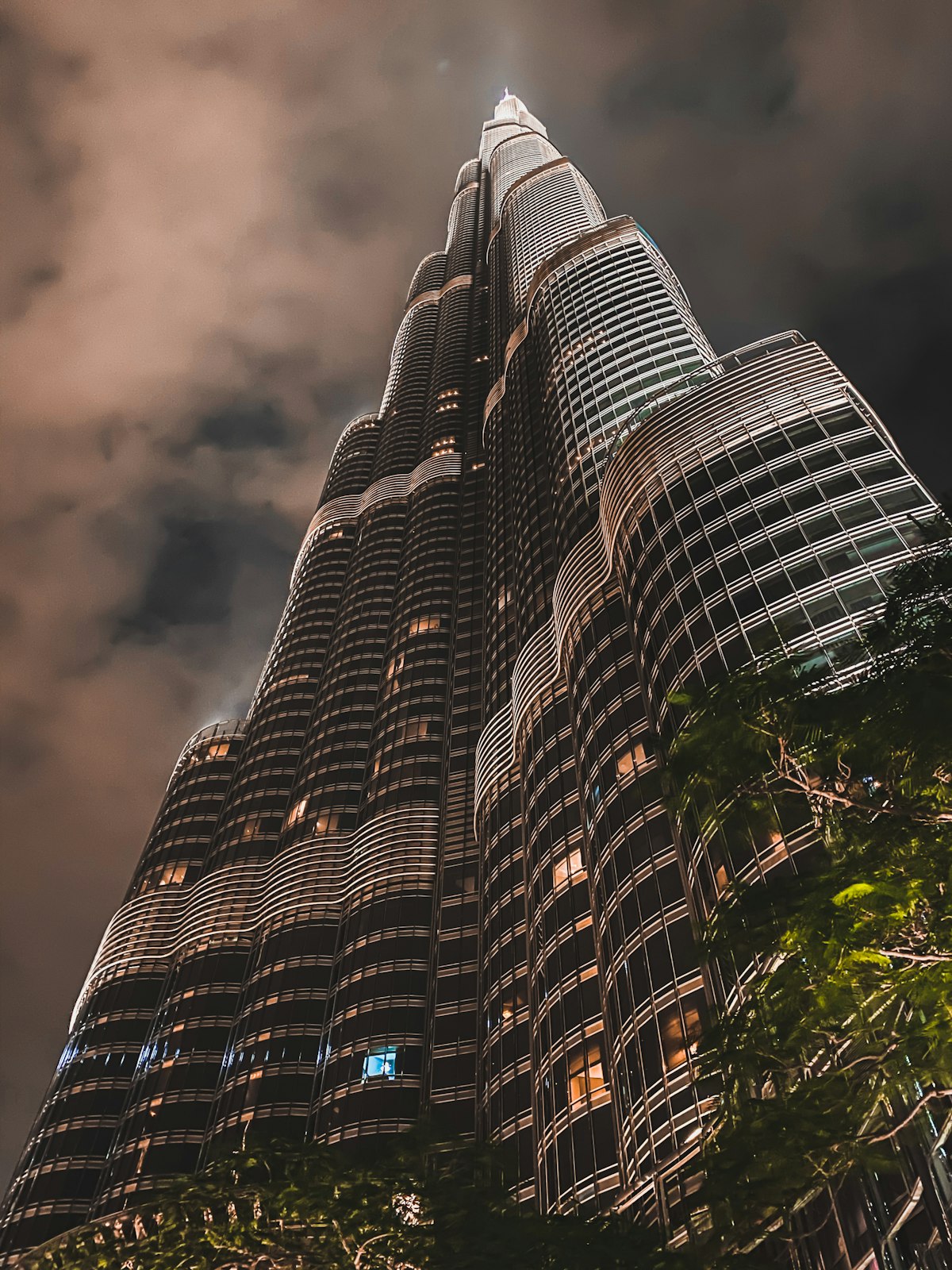
Every city has a season. London has its summer — that brief, feverish window between Wimbledon and the Serpentine Pavilion opening when the parks fill with picnickers and the auction houses stage their marquee evening sales. New York has its autumn, when the galleries reopen after Labor Day and the Met Gala's afterglow still lingers in the fashion district. Paris has its spring, eternally. But no city on earth has engineered its cultural calendar with the strategic precision that Dubai brings to its winter season — that seven-month corridor from October to April when the desert climate becomes the most pleasant on the Arabian Peninsula, and the emirate transforms into a stage set designed to attract, retain, and monetize the world's most mobile wealth.
This is not accidental. Dubai's cultural season is perhaps the purest expression of the city's governing philosophy: that every amenity, every experience, every institution serves a purpose within the larger economic architecture. Where London's cultural institutions evolved organically over centuries, Dubai's have been purpose-built within two decades — and the precision of that construction is, in its own way, more impressive than the haphazard accumulation that defines older cultural capitals.
The Architecture of the Calendar
The season opens in October with Dubai Design Week, which has grown from a modest showcase at d3 (Dubai Design District) into the region's most significant design event — a week-long programme that in 2025 attracted over 300 exhibitors from 45 countries. The timing is deliberate: early enough in the season to capture European designers still energised from Milan's Salone del Mobile, late enough that the summer heat has broken sufficiently to allow outdoor installations.
November brings Art Dubai — the fair that has done more than any single institution to position the emirate as a serious participant in the global contemporary art market. Founded in 2007, it has evolved from a regional curiosity into one of the world's most internationally diverse art fairs, with its "Global Art Forum" programme providing the intellectual heft that art-world professionals require before they'll commit to regular attendance. The 2025 edition featured 130 galleries from 45 countries, with a deliberate emphasis on South Asian, African, and Middle Eastern artists whose work the Western biennial circuit has only recently begun to acknowledge.
Between these anchors, the calendar fills with events calibrated to different segments of the luxury market: the Dubai International Film Festival (repositioned as a platform for Arab and South Asian cinema), the Dubai World Cup in March (still the world's richest horse race), and the Emirates Airline Festival of Literature — an event whose existence would have seemed absurd in 2000 but which now attracts Booker Prize winners and Nobel laureates to panel discussions in the InterContinental's ballroom.
The Hospitality Infrastructure
What distinguishes Dubai's cultural season from, say, Abu Dhabi's Louvre-anchored cultural strategy or Doha's museum-centric approach is the degree to which the cultural calendar has been integrated with the hospitality infrastructure. During Art Dubai, the Mandarin Oriental Jumeira offers a curated art programme within the hotel; the Royal Atlantis opens its Skyblaze rooftop for collector dinners; the Bulgari Resort hosts private viewings. These aren't sponsorships in the traditional sense — they're symbiotic relationships in which the hotels gain cultural credibility and the art events gain access to the audiences that actually purchase work.
The numbers tell a compelling story. During the 2025 season (October-April), Dubai's luxury hotels reported average occupancy rates of 89% — compared to 72% for the May-September summer period. The average nightly rate at a five-star property during season exceeds AED 2,500 ($680), and the branded residences that have proliferated along the Jumeirah coastline and in Downtown command seasonal rental premiums of 40-60% above their off-season rates.
For the ultra-high-net-worth individuals who constitute Dubai's core demographic — the estimated 92,000 UHNWI residents and seasonal visitors who call the emirate home for at least part of the year — the season provides a social infrastructure that is, paradoxically, more accessible than its equivalents in London or New York. In those cities, cultural access requires decades of relationship-building with institutions: trustee positions, committee memberships, the slow accumulation of social capital that money alone cannot purchase. In Dubai, the cultural season is open to anyone with sufficient resources and genuine interest. The barriers are financial, not social — and for a certain type of global citizen, that transparency is precisely the point.
The Gallery Ecosystem
The season has catalysed something that Dubai's critics once insisted would never materialise: a genuine year-round gallery ecosystem. Alserkal Avenue in Al Quoz — the converted warehouse complex that opened its first galleries in 2007 — now houses over 70 cultural spaces, and the success of that district has spawned satellite gallery clusters in DIFC (where the Gate Village complex hosts blue-chip dealers like Custot and Lawrie Shabibi) and in Jumeirah, where a new generation of project spaces caters to emerging collectors.
The secondary market has followed. Christie's has maintained a Dubai saleroom since 2006, and Sotheby's opened a permanent space in DIFC in 2017. Both houses now stage dedicated Middle Eastern art sales during the season — events that have evolved from curiosities for regional collectors into internationally significant auctions where works by Ibrahim El-Salahi, Monir Shahroudy Farmanfarmaian, and Mohammed Kazem achieve prices that would have been unimaginable a decade ago.
This gallery infrastructure has, in turn, attracted a permanent community of artists and curators — people who came for the season and stayed for the studio rents (a fraction of London or New York), the absence of income tax, and the proximity to the South Asian and African markets that represent contemporary art's most significant growth opportunity.
The Residential Calculus
For the luxury residential market, the cultural season has created a demand pattern that fundamentally shapes investment strategy. The most sought-after properties — the beachfront villas on Palm Jumeirah, the penthouses in the Bulgari Lighthouse Tower, the estates in Emirates Hills — command their highest valuations not simply because of their physical attributes, but because of their proximity to the season's social infrastructure.
A villa in Emirates Hills is, from May to September, a beautiful house in a hot desert. From October to April, it is a base of operations for a social calendar that includes Art Dubai openings, Design Week installations, polo matches at the Desert Palm, and the kind of collector dinners where a handshake can lead to a joint venture worth eight figures. The season transforms the property from a residence into a platform — and the premium that buyers pay for season-optimal locations reflects that transformation.
The newer developments — particularly the branded residences from Aman, Dorchester Collection, and Six Senses — have been designed explicitly around the seasonal calendar. They offer residents not just luxury finishes and hotel-grade services, but curated access to the season's cultural programme: private viewings, artist studio visits, reserved seating at the opera. In this sense, they're selling not apartments but membership in a cultural ecosystem that did not exist two decades ago and that now rivals any city's in its density, diversity, and strategic coherence.
The Future Calendar
The next phase of Dubai's cultural season strategy is, characteristically, already in development. The Museum of the Future — that stunning torus-shaped building on Sheikh Zayed Road — has expanded its programming to include artist residencies and technology-art collaborations that bridge the gap between Dubai's cultural and innovation ambitions. The Jameel Arts Centre on Jaddaf Waterfront continues to commission work that positions Dubai within the broader discourse of contemporary Islamic art. And the forthcoming Dubai Cultural District — a master-planned arts precinct on the Creek — promises to consolidate the city's cultural infrastructure into a walkable, institution-dense neighbourhood modelled on London's South Bank or New York's Museum Mile.
Whether this cultural infrastructure represents genuine cultural depth or sophisticated staging is a question that Dubai's critics enjoy debating. But the question itself may be outdated. In a globalised art market where galleries maintain spaces in six cities, where artists produce work in studios on three continents, and where collectors build collections that are stored in freeports in Geneva and Singapore, the distinction between "authentic" and "engineered" culture has become meaningless. What matters is whether the ecosystem functions — whether it attracts serious artists, produces significant exhibitions, sustains a viable gallery market, and provides the intellectual stimulation that the world's most mobile citizens demand from their places of residence.
By that measure, Dubai's cultural season is not merely successful. It is, in its strategic precision and rapid maturation, a model that every aspiring cultural capital — from Riyadh to Lagos to Jakarta — is now attempting to replicate.
Published by Dubai Latitudes · Part of the Latitudes Media network