Alserkal Avenue: How a Warehouse District Became Dubai's Cultural Soul
March 16, 2026 · 12 min read
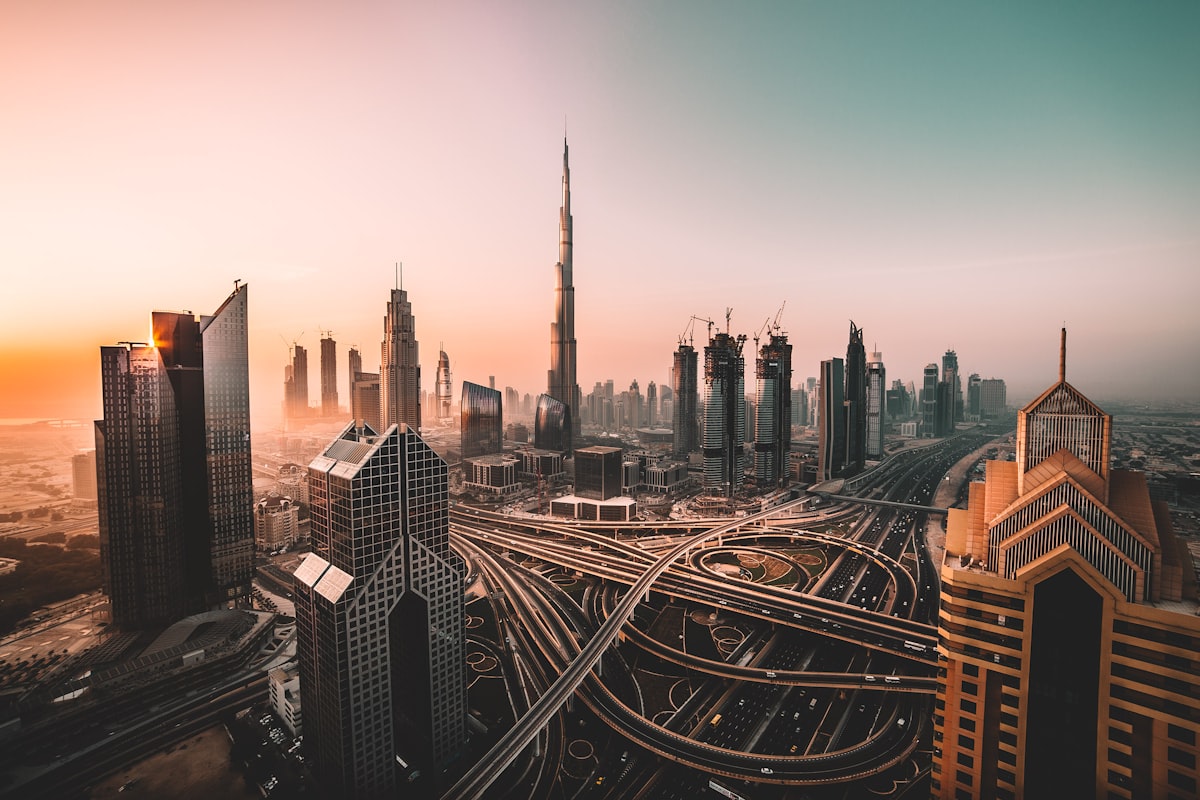
Dubai's most meaningful cultural address has no sea view, no branded residences and no valet parking. Alserkal Avenue occupies a cluster of converted industrial warehouses in Al Quoz, a low-rise district wedged between Sheikh Zayed Road and the Al Khail arterial, surrounded by marble workshops, auto repair shops and furniture showrooms. It is, by conventional Dubai standards, the wrong side of everything. And yet, since its founding in 2007 by Emirati businessman Abdelmonem Bin Eisa Alserkal, this 500,000-square-foot campus has become the Gulf's most important hub for contemporary art — a gravitational centre that has reshaped Dubai's cultural economy and, increasingly, its luxury real estate market.
The Genesis
Abdelmonem Alserkal's family has been in the marble and building materials business since the 1970s. The Al Quoz warehouses were originally part of the family's industrial portfolio — functional structures designed for storage and wholesale distribution. In the early 2000s, as Dubai's economy pivoted from trade to services, several of the warehouses fell vacant. Rather than demolish and redevelop — the default Dubai response to underperforming real estate — Alserkal made a counterintuitive bet: he offered the spaces to artists and gallerists at subsidised rents, asking only that they commit to exhibiting serious contemporary art.
The first tenants arrived in 2007: a handful of galleries specialising in art from the Middle East, South Asia and Africa — regions drastically underrepresented in the global art market. The Third Line, founded by two Emirati women, showed Iranian and Emirati contemporary artists. Green Art Gallery focused on modern and contemporary art from the Arab world. Carbon 12 brought European and American artists into dialogue with regional practitioners. The galleries shared not just a postcode but a mission: to prove that Dubai could be a site of cultural production, not merely consumption.
The Expansion
By 2015, Alserkal Avenue had outgrown its original footprint. A AED 100 million expansion, designed by Office for Future Architecture, doubled the campus to its current 500,000 square feet and introduced purpose-built cultural spaces: a 10,000-square-foot exhibition hall (A4 Space) for experimental performances and installations; a cinema (Cinema Akil) dedicated to independent, arthouse and classic film; a children's art centre; and a cluster of studios, residency spaces and co-working areas for artists, designers and writers.
The architectural approach was deliberately anti-Dubai. Where the city's cultural institutions — the Louvre Abu Dhabi, the Museum of the Future, the Dubai Opera — are signature buildings designed to photograph spectacularly, Alserkal Avenue retained the industrial aesthetic of its warehouse origins. Concrete floors, exposed steel trusses, rolling metal doors, minimal signage. The message was clear: this is a place where art is made and shown, not a backdrop for Instagram. The strategy worked. Artists and curators who had dismissed Dubai as culturally superficial began to take Alserkal seriously, and the venue's programming — which has included solo exhibitions by Shirin Neshat, Ibrahim El-Salahi and Hassan Hajjaj — now rivals any contemporary art space in the Middle East.
The Art Market Effect
Alserkal Avenue's most consequential achievement has been its impact on Dubai's position in the global art market. When Art Dubai — the region's premier art fair — launched in 2007, it coincided with Alserkal's early expansion. The symbiosis between the fair (held annually at Madinat Jumeirah) and the avenue (which hosts parallel programming, gallery openings and studio visits during Art Dubai week) created a critical mass that attracted international collectors, curators and art advisors.
Today, Art Dubai Week generates an estimated AED 500 million in economic activity, of which a significant portion flows through Alserkal Avenue's galleries. Christie's opened its first Middle East office nearby. Sotheby's followed. International galleries — including Gagosian, Perrotin and Lisson — have either opened Dubai outposts or established permanent partnerships with Alserkal-based galleries. The UAE's art market, valued at approximately $600 million annually, has grown at 18% compound annually since 2018 — faster than any other region globally.
The Neighbourhood Renaissance
Alserkal Avenue's cultural gravity has begun reshaping the real estate dynamics of surrounding districts. Al Quoz itself remains largely industrial, but the adjacent neighbourhoods of Jumeirah and Al Safa — traditionally quiet residential areas of low-rise villas — have experienced a surge of interest from buyers who value proximity to culture over proximity to the beach.
Villa prices in Al Safa 2 and Jumeirah 1, within a ten-minute drive of Alserkal, have appreciated 25-30% since 2023, outpacing the wider Dubai market. A new cohort of buyer has emerged: creative professionals, tech entrepreneurs and family offices with art collections who want residences that can accommodate gallery-scale walls and natural-light exhibition spaces. Several recent villa renovations in the area have included purpose-built art storage rooms with climate control — a specification that would have been inconceivable in Dubai a decade ago.
The phenomenon mirrors what happened in London's East End around White Cube and the Whitechapel Gallery, in New York's Chelsea around the gallery district, and in Berlin's Mitte around KW Institute. Art creates culture; culture attracts a specific demographic; that demographic transforms the real estate market. The difference in Dubai is the speed: what took Chelsea thirty years, Alserkal has accomplished in fifteen.
Beyond the Gallery
Alserkal Avenue has evolved beyond visual art into a broader cultural ecosystem. Quoz Arts Fest, an annual three-day event, brings together visual artists, musicians, performers, designers and chefs in a programme that transforms the entire campus into a living arts festival. Alserkal Residency invites international artists for three-month stays, providing studio space, accommodation and a monthly stipend. The Writing Prize, launched in 2023, awards AED 100,000 to an emerging writer from the Global South — a programme that positions Dubai as a literary patron, not merely a business hub.
Perhaps most significantly, Alserkal Avenue has incubated a generation of Emirati and UAE-based creative entrepreneurs. Several fashion brands, design studios and creative agencies that began as Alserkal tenants have grown into regional businesses. The avenue functions as both gallery and greenhouse — showing established international art while nurturing the local creative economy that will define Dubai's cultural identity for the next generation.
What Alserkal Means for Dubai's Future
Dubai has spent three decades building superlatives: the tallest tower, the largest mall, the most expensive hotel, the most ambitious artificial island. These achievements are genuine and impressive. But they are, by nature, replicable — another city, given sufficient capital, could build taller, larger, more expensive. What cannot be replicated is culture. Culture requires time, community, iteration, failure, argument and the slow accumulation of reputation that comes from showing important art, year after year, to an audience that learns to see.
Alserkal Avenue has given Dubai something that no amount of sovereign wealth could have purchased: cultural credibility. The warehouses of Al Quoz, with their concrete floors and rolling doors, have produced more lasting value than many of the city's most expensive developments. For investors and residents who understand this — who recognise that the cities which thrive in the long term are those that create culture, not just consume it — Alserkal Avenue is not merely a weekend destination. It is a thesis about what Dubai is becoming.
Published by Dubai Latitudes · Part of the Latitudes Media network. Explore more: Monaco · Riviera · Italy