Al Wasl: How Dubai's Original Mercantile Heart Became the Emirate's Most Culturally Layered Luxury Address
March 23, 2026 · 14 min read
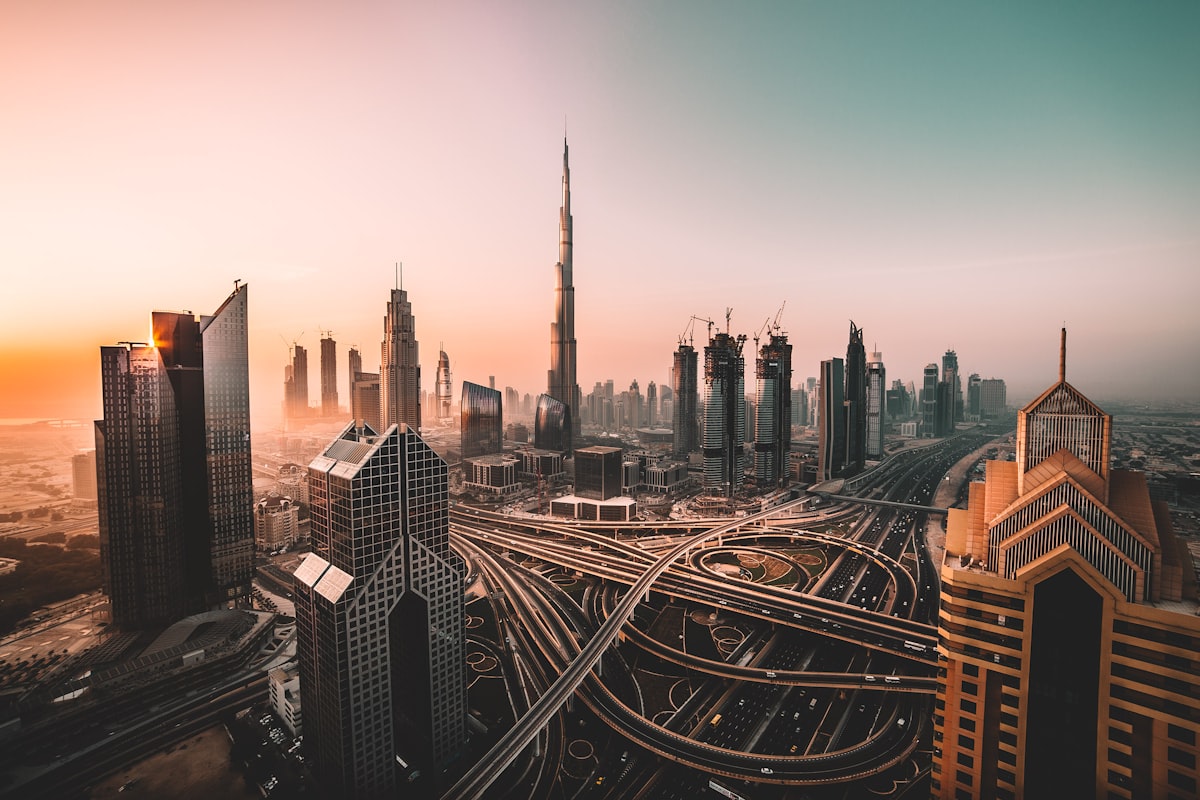
Before Dubai was a skyline, it was a souk. Before the branded residences and artificial archipelagos, before DIFC's glass canyons and Downtown's choreographed grandeur, there was Al Wasl — a neighbourhood whose very name, meaning "connection" in Arabic, described its function as the link between the creek's trading wharves and the interior desert routes that carried goods to Abu Dhabi, Al Ain, and beyond. Today, Al Wasl occupies the geographic and cultural centre of old Dubai, bounded by Jumeirah to the west, Satwa to the south, and the ascending towers of Sheikh Zayed Road to the east. It is a neighbourhood in profound transition, and the nature of that transition reveals something essential about where Dubai's luxury market is heading.
The Merchant's Quarter Reimagined
Al Wasl's residential stock tells the story of Dubai's evolution in architectural miniature. The oldest surviving villas — modest two-storey structures with interior courtyards, built in the 1970s and 1980s for Emirati merchant families — sit alongside contemporary renovations that preserve heritage facades while inserting modern interiors of extraordinary sophistication. A growing contingent of architects, many trained at the Architectural Association or ETH Zurich, have established practices in Al Wasl specifically because of the neighbourhood's unique challenge: how to honour a vernacular building tradition while meeting the spatial and technological expectations of ultra-high-net-worth clients accustomed to Bofill penthouses and Foster-designed towers.
The results are some of Dubai's most intellectually compelling residential properties. A recently completed renovation on Street 10B — a 12,000 sq ft villa originally built in 1978 for a textile trader — retained the external coral-block walls and wooden wind towers while creating a triple-height internal atrium flooded with zenithal light. The basement houses a 200-bottle climate-controlled wine room and a private screening room. The rooftop, invisible from the street, contains a 15-metre lap pool oriented toward the Burj Khalifa. The property transacted in late 2025 for AED 45 million — a price per square foot that exceeds most tower residences in Business Bay.
The Gallery Corridor
Al Wasl's cultural infrastructure has undergone a transformation as significant as its residential stock. Alserkal Avenue, the converted industrial warehouse district on the neighbourhood's southern boundary, established the template in 2007. But by 2025, the gallery ecosystem had expanded well beyond Alserkal's curated compound. Independent spaces now dot Al Wasl Road and its side streets: Carbon 12, which represents emerging Middle Eastern and South Asian artists; Grey Noise, which programmes conceptual and performance-based work; and The Third Line, which has become one of the region's most internationally respected commercial galleries, placing artists in the Venice Biennale, Documenta, and the collections of the Guggenheim Abu Dhabi.
For collectors — and Al Wasl increasingly attracts them — the proximity of gallery infrastructure to residential property creates a lifestyle circuit that is more Marais than Marina. Morning studio visits give way to afternoon acquisitions; evening openings transition to dinners at the neighbourhood's growing constellation of chef-driven restaurants. This cultural density is precisely what Dubai's more manufactured districts lack. You cannot programme serendipity into a master plan. Al Wasl's organic evolution has generated it naturally.
The Expo Legacy
The 2020 World Expo — which ran from October 2021 to March 2022 — left Al Wasl its most spectacular piece of permanent infrastructure: the Al Wasl Plaza dome, a 130-metre-wide steel trellis structure that served as the centrepiece of the Expo site and now anchors the District 2071 development on the neighbourhood's western edge. The dome — designed by Adrian Smith + Gordon Gill, the architects responsible for the Jeddah Tower — functions as a 360-degree projection surface, creating immersive visual experiences visible from across the district. Its retention as permanent infrastructure, rather than the demolition that typically follows world expositions, signalled a strategic decision: Al Wasl would inherit the Expo's ambition.
District 2071, the mixed-use development rising on the former Expo site, will add 65,000 residents and 150,000 daily visitors to the Al Wasl catchment by 2030. The masterplan includes the Museum of the Future's satellite research facilities, the headquarters of the Mohammed bin Rashid Centre for Government Innovation, and a residential component that developers describe as "knowledge worker housing" — a euphemism for the kind of premium apartment stock that attracts the creatively accomplished professionals who define a neighbourhood's cultural character. For existing Al Wasl villa owners, District 2071 represents an amenity injection of historic proportions: world-class cultural, educational, and commercial facilities, delivered at the taxpayer's expense, on their doorstep.
The Culinary Renaissance
Al Wasl's dining scene has evolved from a scattered collection of neighbourhood cafés and shawarma joints into one of Dubai's most gastronomically serious corridors. The catalyst was Orfali Bros, the Syrian-Colombian bistro that won MENA's 50 Best Restaurants' top spot in 2023 and 2024, operating from a converted Al Wasl villa that seats barely forty covers. Orfali's success demonstrated that culinary excellence in Dubai did not require a hotel lobby, a celebrity chef's franchise, or a view of the creek. It required a neighbourhood with character, a landlord willing to support a non-conventional tenant, and a clientele sophisticated enough to seek out quality without the reassurance of a five-star brand.
In Orfali's wake, a generation of independent restaurants has colonised Al Wasl's villa stock. 3 Fils, the Japanese-fusion counter that operates from a Dubai Creek harbour location, opened a second venue on Al Wasl Road. Reif Othman's eponymous Japanese-Emirati concept launched in a former family compound. And Tasca by José Avillez — the Michelin-starred Portuguese chef — chose an Al Wasl address for his first standalone Dubai venue, converting a 1980s villa into a dining room that channels the warmth of a Lisbon tasca with the precision of a two-star kitchen. These establishments share a common thesis: that Dubai's next chapter of culinary distinction will be written in neighbourhoods, not hotels.
The Investment Calculus
Al Wasl's investment dynamics are shaped by a fundamental scarcity: no new land is being created. Unlike Dubai's coastal and desert frontiers, where reclamation and masterplanning generate endless supply, Al Wasl's plot inventory is fixed. The neighbourhood is fully built out, bounded on all sides by established districts, and subject to heritage-sensitive planning guidelines that prevent the demolition-and-tower cycle that has transformed adjacent areas like Satwa. This supply constraint, combined with intensifying demand from cultural-sector professionals, gallery operators, and HNWI collectors seeking alternatives to Dubai's branded-residence monoculture, has produced price appreciation that consistently outpaces the broader market.
Between 2021 and 2025, Al Wasl villa prices per square foot rose 89%, according to Property Finder data — the highest appreciation rate of any established villa neighbourhood in Dubai. Critically, this appreciation has been driven by end-user demand rather than speculative investment. The typical Al Wasl buyer is a long-term Dubai resident — often a second-generation expatriate or a young Emirati professional — who has made a deliberate lifestyle choice to prioritise neighbourhood character over branded amenities. This buyer profile is structurally resilient: it does not respond to interest-rate fluctuations, visa-policy changes, or the cyclical anxieties that drive volatility in Dubai's more globally marketed sectors.
The Neighbourhood That Chose Itself
Al Wasl's luxury proposition is not the product of a developer's vision statement or a government's strategic plan. It is the emergent result of thousands of individual decisions — by gallery owners who chose affordable warehouses over sterile commercial spaces, by chefs who preferred villa conversions to hotel contracts, by architects who saw creative possibility in heritage constraints, by residents who valued walkability and cultural proximity over pool decks and concierge services. This organic quality is Al Wasl's ultimate luxury: in a city of masterplans, it is the neighbourhood that planned itself.
The implications for Dubai's broader luxury market are significant. As the city matures — demographically, culturally, institutionally — the premium will increasingly attach to places that feel real rather than rendered, evolved rather than engineered. Al Wasl is not Dubai's most expensive address. It is not its most spectacular. But it may be its most important: the proof that a city built on ambition can also build on authenticity. For the buyer who understands this distinction, Al Wasl is not just a neighbourhood. It is a thesis about what Dubai becomes next.
Discover more exceptional Dubai addresses
Explore our collection of in-depth guides to the emirate's most compelling luxury destinations.
Browse all Dubai destinations →