Al Barsha South: How Dubai's Most Strategically Central Residential District Became the Emirates' Most Pragmatically Luxurious Family Address
April 4, 2026 · 11 min read
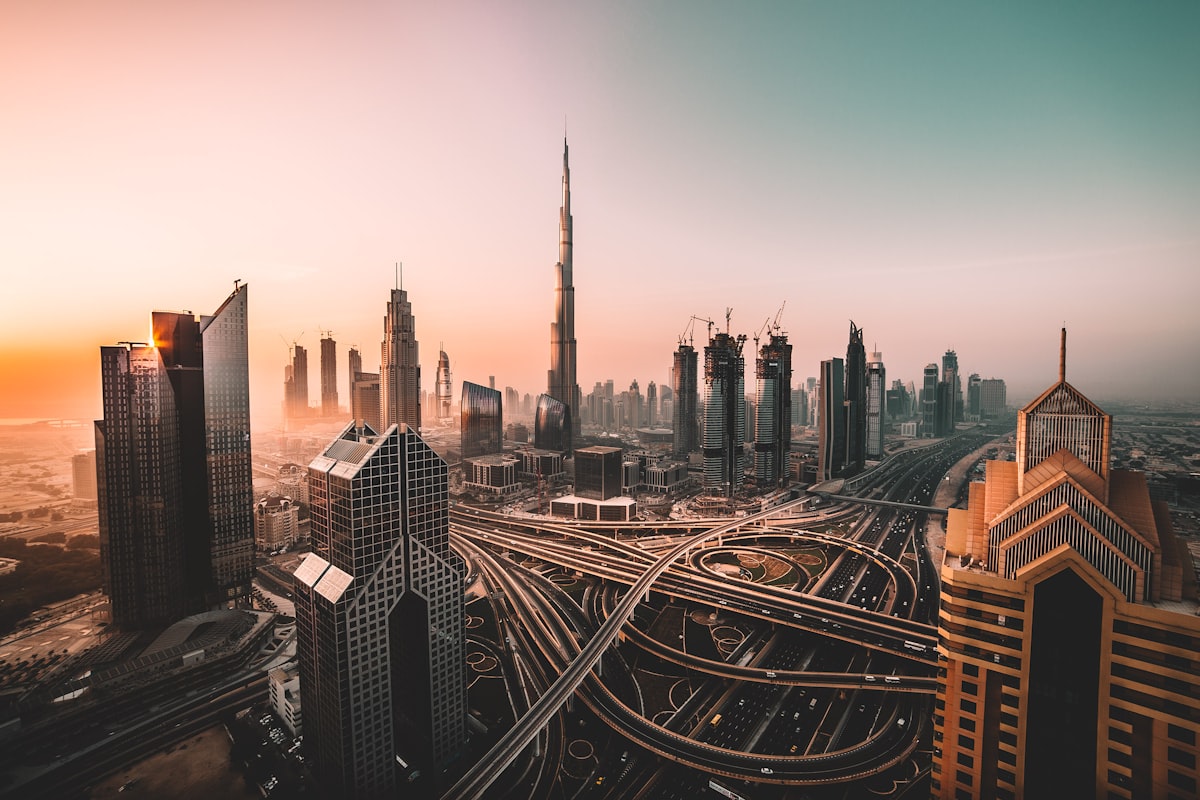
Dubai's luxury real estate narrative is dominated by extremes — the tallest tower, the most expensive penthouse, the most architecturally audacious artificial island. This narrative serves developers and headline writers but obscures a quieter, more substantive category of luxury that has emerged in the districts between Dubai's spectacle zones: residential neighbourhoods where the luxury proposition is not vertical ambition but horizontal coherence, not iconic architecture but strategic positioning. Al Barsha South, a residential district bounded by Sheikh Zayed Road to the north, Umm Suqeim Road to the east, and the emerging Dubai Hills Estate to the south, represents this category at its most refined. Here, luxury is measured not in ceiling height but in commute time, not in marble finishes but in school proximity, not in Instagram geometry but in the daily calculus of a family whose members need to reach different parts of a fifty-kilometre city without spending their lives in transit.
The Geography of Convenience
Al Barsha South's primary luxury asset is invisible on architectural renderings but immediately apparent on a map: it occupies the precise geometric centre of Dubai's urban corridor. Mall of the Emirates — with its 630 retail outlets, Ski Dubai, and the Kempinski Hotel — is a seven-minute drive north. Dubai Marina and JBR beach are twelve minutes west. Downtown Dubai and the Burj Khalifa are fifteen minutes east via Al Khail Road. Dubai International Airport is twenty-five minutes via Business Bay Crossing. Dubai Hills Mall, the newest major retail destination, is literally adjacent to the district's southern boundary. This centrality is not accidental but geological: Al Barsha South sits on a slight elevation — a ridge of consolidated sand and limestone that provided the stable foundation required for villa construction without the land-reclamation costs that burden coastal developments. The result is a district that combines the topographical advantage of natural ground with the locational advantage of metropolitan centrality — a combination that Dubai's planned communities, however architecturally impressive, cannot replicate.
The Villa Communities
Al Barsha South's residential fabric is organised into a series of gated and semi-gated villa communities that offer what Dubai's tower districts cannot: private outdoor space, ground-floor living, and the sensory texture of a neighbourhood — garden walls, street trees, children cycling, the sound of evening barbecues rather than construction cranes. The villas themselves — typically four to six bedrooms, with private pools, maids' quarters, and dedicated parking — were built between 2008 and 2015 in a range of styles from Mediterranean to contemporary, with plot sizes between 5,000 and 15,000 square feet. The architectural quality varies, as in any district developed by multiple builders, but the planning quality is consistently high: streets are wide enough for comfortable driving but narrow enough to discourage speed, landscaping is mature (fifteen-year-old bougainvillea and frangipani provide genuine shade), and the density is low enough that neighbours are visible but not intrusive. For families relocating from European or North American suburbs, the texture is immediately familiar — a recognition that no high-rise apartment, however luxurious, can provide.
The School Corridor
The single most powerful driver of Al Barsha South's residential demand is its proximity to Dubai's densest concentration of premium international schools — a cluster that education consultants informally call the Al Barsha–Al Quoz school corridor. Within a ten-minute drive of the district: GEMS Wellington International (rated Outstanding by Dubai's KHDA), Repton School Dubai, Nord Anglia International School, Kings' School Al Barsha, and the American School of Dubai. This concentration is not coincidental; it reflects a planning decision by Dubai's education authorities to zone international school land in the Al Barsha–Al Quoz belt, creating an educational infrastructure that draws affluent families from across the city. For these families, Al Barsha South's villa communities offer something that no amount of design innovation can substitute: the ability for children to attend a world-class school without enduring a forty-minute school bus ride each way — a daily quality-of-life calculation that, compounded over a twelve-year school career, represents the most consequential luxury decision a family can make.
The Mudon and Villanova Extensions
South of Al Barsha South's original villa communities, the district has extended into the newer master-planned developments of Mudon and Villanova — communities developed by Dubai Properties and Dubailand respectively, which translate the villa-and-garden model into a more contemporary architectural language. Mudon's townhouses and semi-detached villas, arranged around a central park with cycling tracks, a community centre, and a mosque, offer three-to-five-bedroom residences from AED 2.5 million to AED 5 million — pricing that represents exceptional value relative to equivalent properties in Arabian Ranches or Jumeirah Golf Estates. Villanova, completed in 2021, pushes the aesthetic further toward Mediterranean-contemporary, with white-rendered façades, terracotta accents, and a layout that prioritises pedestrian circulation over vehicular access. Both communities are connected to Al Barsha South's road network via Umm Suqeim Road, maintaining the centrality advantage that distinguishes the broader district from Dubai's more distant suburban developments in Dubailand, DAMAC Hills, or Arabian Ranches 3.
The Dubai Hills Integration
Al Barsha South's most transformative adjacency is Dubai Hills Estate — the 11-million-square-foot master development by Emaar and Meraas that includes Dubai Hills Mall (opened 2022, 650 retail units, a two-acre indoor park, and the city's first Galeries Lafayette department store), an 18-hole championship golf course designed by European Golf Design, and a residential mix of villas, townhouses, and apartments that has become Dubai's fastest-selling community. For Al Barsha South residents, Dubai Hills functions as an extension of their own neighbourhood — accessible via a five-minute drive or a fifteen-minute walk through connected pathways — providing the retail, dining, and recreational infrastructure that the older residential district was originally planned without. The relationship is symbiotic: Dubai Hills provides amenities; Al Barsha South provides the established, mature residential fabric that a newly built community, however well designed, requires years to develop. Property analysts note that Al Barsha South villas have appreciated 35-45% since Dubai Hills Mall's opening, a premium driven entirely by adjacency to infrastructure that the original developers could not have anticipated.
The Market Position
Al Barsha South's current villa market operates in the AED 3 million to AED 12 million range, with pricing determined primarily by plot size, pool presence, and renovation quality. A four-bedroom villa with a private pool on a 7,000-square-foot plot — the district's most common typology — currently trades at approximately AED 4.5 million to AED 6 million, representing a per-square-foot cost roughly 40% below Emirates Hills and 25% below Jumeirah Golf Estates for equivalent living space. The rental market is equally robust: identical villas command AED 250,000 to AED 400,000 per annum, generating gross yields of 5.5-7.5% — among the highest villa yields in Dubai's established residential districts. The tenant profile is predominantly corporate-relocated families on three-to-five-year assignments, typically European, British, or South Asian professionals in senior management or entrepreneurial roles who prioritise school proximity and commute efficiency over waterfront views or architectural prestige.
The Luxury of the Ordinary
Al Barsha South will never feature in architectural magazines or luxury travel supplements. Its villas are handsome but not iconic; its streets are pleasant but not photogenic; its amenities are excellent but not experiential. And this, precisely, is its luxury proposition. In a city that has elevated spectacle to an urban planning philosophy, Al Barsha South offers something rarer and, for its residents, more valuable: normalcy executed at a very high level. Children walk to the community pool. Parents drive seven minutes to the office. Groceries are purchased at a Carrefour that is genuinely convenient rather than a gourmet market that is performatively curated. The evening routine involves garden time, not lobby-crossing. This is the luxury that Dubai's marketing rarely acknowledges but that its most established, most contented residents consistently choose: the luxury of a life where logistics disappear and living begins.