DIFC: How Dubai's Financial Heart Became a €20 Billion Luxury Lifestyle District
March 16, 2026 · 12 min read
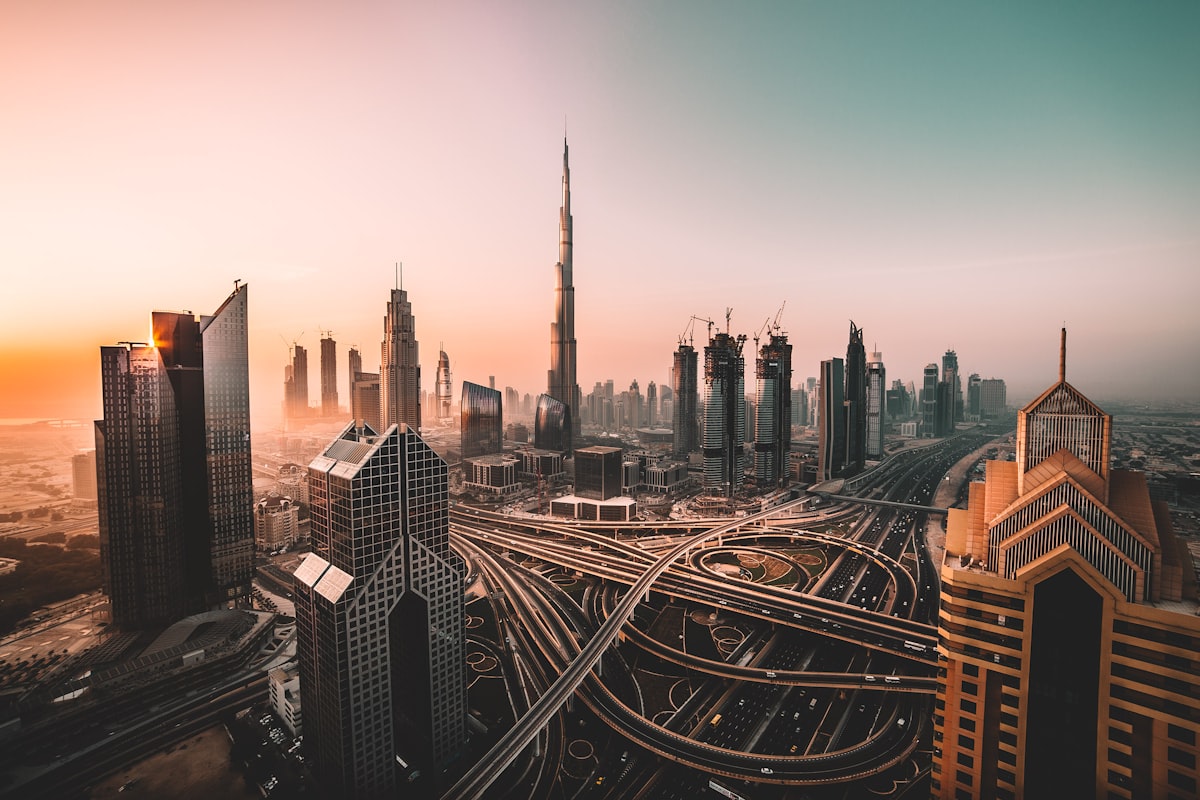
When the Dubai International Financial Centre opened in 2004, it was conceived as a regulatory enclave — a common-law island within the UAE's civil-law framework, designed to attract the world's banks, asset managers and insurance companies to a purpose-built district between Sheikh Zayed Road and the Emirates Towers. The architecture was deliberately institutional: glass towers, marble lobbies, conference-grade finishing. The message was competence, not charisma.
Twenty-two years later, DIFC has become something its founders never anticipated: the most culturally sophisticated square kilometre in the Gulf. The financial infrastructure remains — over 4,200 registered companies, US$5.8 trillion in assets under management, offices for 37 of the world's 50 largest banks — but layered on top is a lifestyle ecosystem that now rivals Mayfair, the Marais and Ginza for density of fine dining, contemporary art, curated retail and luxury residential living.
The Gate Village Revolution
The transformation began with Gate Village, a cluster of low-rise buildings around landscaped courtyards at the district's southern edge. Originally intended as supplementary office space, Gate Village was reimagined in the early 2010s as a gallery and dining district. Today it houses over 20 contemporary art galleries — including branches of Opera Gallery, Ayyam Gallery and Tabari Artspace — making it the largest concentration of art spaces in the Middle East outside museum districts.
The galleries attract a footfall that the financial offices alone never could: collectors, curators, cultural tourists and Dubai's growing creative class. Around them, a restaurant scene has developed that ranks among the world's most competitive per square metre. Zuma Dubai — the original outpost of Rainer Becker's Japanese-contemporary empire — remains the district's anchor tenant and one of the highest-grossing restaurants in the world. La Petite Maison brought Niçois cuisine to a clientele that splits its year between Dubai, London and Monaco. Roberto's established Italian dining as a permanent fixture. And in the last three years, a second wave of openings — including Avatara (two Michelin stars), Tresind Studio (two stars) and BOCA — has elevated DIFC from a business-lunch district to a genuine gastronomic destination.
The Residential Shift
For its first fifteen years, DIFC was a place people worked but didn't live. The district's masterplan included residential components, but development focused on commercial towers. That changed with the completion of several luxury residential projects that recognised a fundamental shift in how Dubai's elite wanted to live: within walking distance of their offices, restaurants and cultural institutions, rather than in gated compounds accessible only by car.
Sky Gardens, DIFC's flagship residential tower, offers apartments from AED 8 million to AED 45 million for penthouses with wraparound terraces overlooking the entire district. The building's design integrates vertical gardens on every fourth floor — genuine planted terraces rather than decorative panels — creating a residential experience that combines urban density with the greenery that Dubai's villa communities traditionally monopolised.
The pricing tells the story of DIFC's transformation. In 2020, residential prices in the district averaged AED 1,800 per square foot. By early 2026, they had reached AED 3,200 — an increase that outpaced even Palm Jumeirah and Downtown Dubai. The premium reflects not just the quality of the buildings but the value of the lifestyle: residents walk to Michelin-starred restaurants, browse contemporary art before breakfast, and reach their offices in an elevator ride rather than a highway commute.
Innovation One: The Next Chapter
DIFC's expansion plans, centred on the Innovation Hub district immediately east of the existing precinct, represent a AED 10 billion bet that the convergence of finance, technology, art and luxury living can be scaled without dilution. Innovation One — the district's new landmark tower — combines Grade A office space, a 120-key ultra-luxury hotel operated by Dorchester Collection, branded residences, and a 30,000-square-foot art foundation with a permanent collection and rotating exhibitions.
The project's most significant innovation may be its street level. Where the original DIFC was designed around car access — lobbies faced parking structures, pedestrian connections were afterthoughts — Innovation Hub is designed as a walkable neighbourhood with ground-floor retail, outdoor dining terraces, public art installations and shaded pedestrian boulevards. The masterplanners studied the Roppongi Hills model in Tokyo and Hudson Yards in New York, but also acknowledged these projects' failures: too much corporate polish, not enough organic life. DIFC's answer is to lease ground-floor spaces to independent operators — small galleries, specialty coffee roasters, artisan bakeries — alongside the global brands, creating the variety and unpredictability that makes a neighbourhood feel alive.
The Investment Case
DIFC's real estate narrative intersects with a broader story about Dubai's evolution from a transactional city to a permanent home for global wealth. The district's common-law framework — which extends to property transactions, tenancy disputes and commercial contracts — provides a legal comfort level that Dubai's broader real estate market, governed by UAE civil law, cannot match. For buyers from London, Hong Kong and Singapore, purchasing within DIFC feels familiar in ways that matter when committing AED 20 million or more to a residential asset.
Rental yields remain robust at 5.5–7% for premium apartments, supported by the district's corporate tenant base. Unlike Palm Jumeirah or Downtown, where seasonal tourism creates occupancy fluctuations, DIFC's rental demand is driven by professionals on multi-year contracts — consistent, predictable and relatively recession-proof. The district's 0% income tax environment (guaranteed under DIFC's independent regulatory framework until at least 2070) adds a layer of fiscal certainty that few global financial centres can match.
A New Kind of Urban Luxury
DIFC's evolution reflects a global trend among ultra-high-net-worth individuals: the preference for curated urban density over sprawling suburban isolation. The district's residents — a mix of fund managers, family office principals, tech entrepreneurs and creative directors — share a lifestyle orientation that values proximity to culture and commerce over square footage. A 3,000-square-foot apartment in DIFC, with Zuma downstairs and an art gallery across the courtyard, represents a different proposition to a 15,000-square-foot Emirates Hills villa with a thirty-minute drive to anywhere interesting.
This is not a replacement for the villa lifestyle but an alternative — often a second Dubai address for families who keep a primary residence on the Palm or in Jumeirah and use a DIFC apartment for weeknight living and entertaining. The district's dining scene makes it Dubai's default venue for business dinners that blur into social occasions, and its art ecosystem provides the intellectual stimulation that its residents — many educated at the world's top universities — expect from their environment.
Two decades in, DIFC has achieved something rare in the Gulf: it has created a neighbourhood that feels genuinely urban in the European sense — walkable, layered, surprising — while maintaining the safety, cleanliness and infrastructural perfection that define Dubai's built environment. For investors and residents seeking the intersection of financial sophistication and lifestyle luxury, there is no comparable address between Singapore and London.
Latitudes Intelligence
For private access to DIFC residential listings and off-market investment opportunities, request membership to the Latitudes Circle.