Deira: How Dubai's Historic Souk District Became the Gulf's Most Authentically Sensory Luxury Address
March 27, 2026 · 13 min read
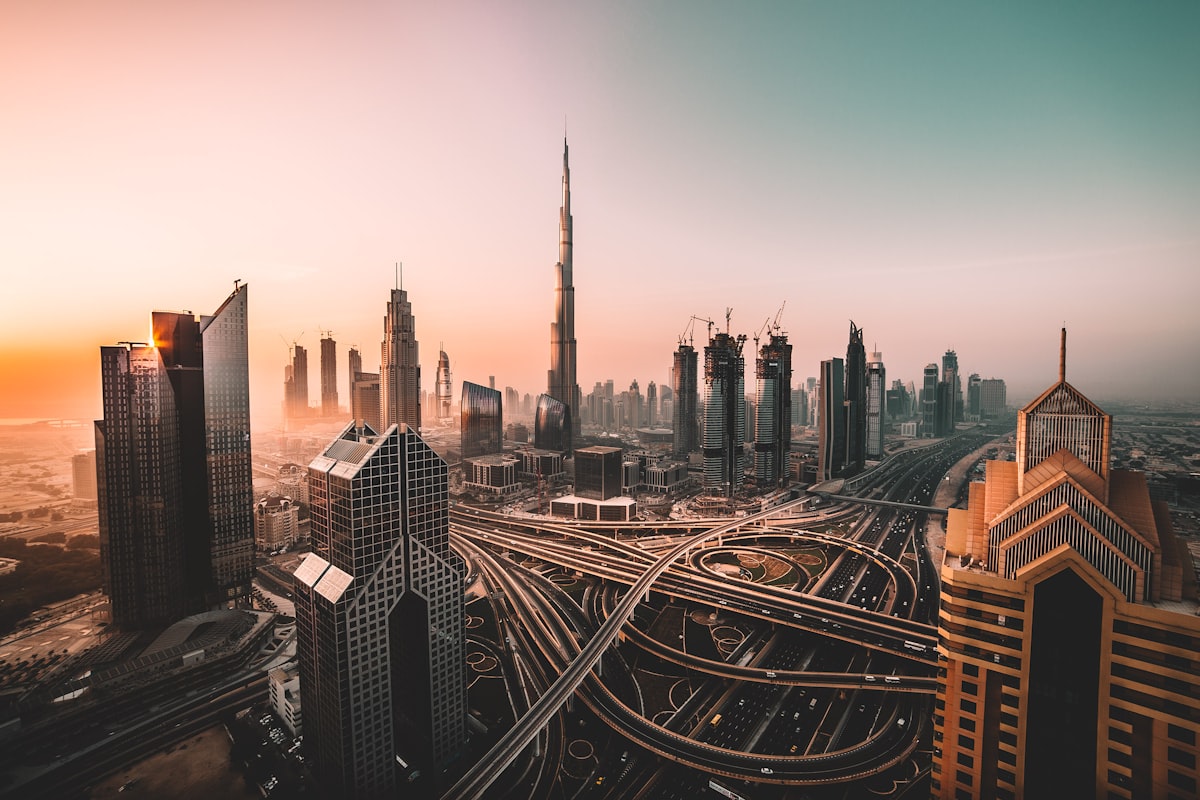
Before there was the Burj Khalifa, before there was the Palm Jumeirah, before there was the Dubai Mall or the Marina or any of the glass-and-steel monuments to twenty-first-century ambition that define the city's global image, there was Deira. On the northern bank of Dubai Creek, in a labyrinth of narrow alleyways roofed with timber and corrugated metal, the original Dubai — the trading port, the pearl-diving settlement, the entrepôt that connected the Indian subcontinent to the Arabian interior — continues to operate with a vitality and sensory intensity that the newer city, for all its spectacular engineering, has never attempted to replicate. To walk through Deira's souks is to understand that Dubai's luxury credentials are not a recent invention but the latest expression of a commercial culture that has been trading in precious goods for centuries.
The Gold Souk: The World's Largest Open Jewellery Market
The Deira Gold Souk — approximately 380 retailers concentrated along a covered pedestrian street and its tributaries — constitutes what is by most estimates the largest gold and jewellery market in the world. The quantity of gold on display at any given moment is difficult to calculate but has been estimated at approximately ten tonnes — a figure that, when translated into visual terms, produces an experience of concentrated opulence that overwhelms the senses as effectively as the Louvre overwhelms the art lover: you cannot take it all in, and the attempt to do so produces a kind of gilded stupor.
The shops range from small family-owned operations that have occupied the same premises for three generations to showrooms of international jewellery houses, but the character of the souk is defined by the independent dealers — many of them Indian, Iranian, or Emirati — whose expertise in gold, diamonds, and precious stones has been refined over lifetimes. Prices are competitive (Dubai's zero-percent import duty on gold ensures that the souk's prices are among the lowest in the world for equivalent quality), and the tradition of negotiation — the ritualized exchange of offers and counter-offers over small cups of cardamom-scented karak chai — transforms the transaction from mere commerce into social encounter.
The souk's most distinctive feature is its relationship to the Indian subcontinent. The majority of the gold jewellery on display is crafted in the elaborate styles favoured by South Asian wedding traditions: heavy necklace sets, ornate bangles, headpieces of extraordinary intricacy — pieces that represent the apex of a goldsmithing tradition thousands of years old. For the luxury buyer accustomed to the restrained aesthetics of European jewellery houses, the Gold Souk offers an alternative paradigm: maximalism as art form, ornamentation as cultural expression, the belief that more is not merely more but a legitimate philosophical position.
The Spice Souk: Aromatics as Architecture
Adjacent to the Gold Souk, connected by a tangle of alleyways that reward aimless exploration, the Spice Souk occupies a series of narrow streets where the merchandise is displayed not in glass cases but in open sacks, baskets, and mounds that line both sides of the passage and fill the air with a fragrance of such complexity — saffron, cardamom, dried rose, frankincense, turmeric, clove, star anise — that breathing becomes a form of connoisseurship. The merchants, many of them Iranian or from the Indian state of Kerala, sit among their wares with the proprietary calm of men who understand that what they sell is not merely flavouring but the material basis of culinary traditions spanning from Morocco to Malaysia.
Saffron is the souk's prestige commodity: Iranian saffron, harvested from the crocus fields of Khorasan Province and graded with an exactitude that rivals the gemological standards applied in the Gold Souk next door. The finest grade — negin, composed exclusively of the red tips of the stigma, with no yellow style attached — can command prices approaching those of gold per gram, and the ability to distinguish genuine negin from inferior grades or adulterations is a skill that the best merchants cultivate with the seriousness of wine négociants in Burgundy.
Frankincense — the resin of the Boswellia sacra tree, harvested in Oman and the Dhofar region — occupies a special place in the Spice Souk's hierarchy. Graded by colour (the pale, translucent "silver" grade being the most prized), frankincense connects the modern souk to the most ancient of Arabian trading traditions: the incense routes that linked the Dhofar coast to the Mediterranean world two thousand years before the discovery of petroleum transformed the Gulf's economic geography.
The Perfume Souk: Oud and Attar
The Perfume Souk, a less clearly demarcated area that overlaps with the Spice Souk's western reaches, specialises in the olfactory traditions of the Arab world — and in particular in oud, the dark, resinous heartwood of the Aquilaria tree, infected by a specific mould that triggers the production of the intensely fragrant oleoresin that has been the foundation of Arabian perfumery for millennia. Pure oud oil — distilled from wood that may take decades to develop sufficient resin — is among the most expensive raw materials in the fragrance world, with the finest Cambodian and Indian grades commanding prices that exceed those of equivalent weights of gold.
The oud merchants of Deira operate in a parallel universe to the air-conditioned boutiques of Niche perfumery in European capitals. Here, the product is presented raw: chunks of resinous wood displayed in glass-fronted cases, oils in small crystal vials, bakhoor (oud-infused wood chips designed for burning) in ornate boxes. The experience of selecting and purchasing oud in the souk — the ritualized process of sampling, discussing provenance, comparing grades — constitutes a luxury experience as refined and as culturally specific as selecting a barrel of Burgundy in the cellars of Beaune.
The Creek: Dubai's Liquid History
Dubai Creek — the natural saltwater inlet that divides Deira from the Bur Dubai district to the south — is the geographical feature around which the entire city was originally organised, and it remains, despite the development of the newer districts along Sheikh Zayed Road and the coast, the most historically resonant waterway in the Gulf. The creek was dredged and expanded in the 1960s under the direction of Sheikh Rashid bin Saeed Al Maktoum, whose vision for Dubai as a modern trading port began with the pragmatic recognition that the creek — the city's natural harbour — needed to accommodate larger vessels if Dubai was to compete with Sharjah and other Gulf ports for the region's burgeoning trade.
Today, the creek's Deira waterfront is lined with wooden dhows — traditional Arabian cargo vessels, some of them remarkably large — that continue to ply trade routes connecting Dubai to ports in Iran, Pakistan, India, and East Africa. The sight of these vessels, laden with goods and crewed by men whose seamanship belongs to a tradition predating motorised navigation, moored against the backdrop of Deira's modernising skyline, produces one of the most visually compelling juxtapositions in the contemporary Gulf: ancient commerce and modern ambition sharing the same waterfront, neither diminished by the other's presence.
The abra — the small, motorised water taxi that ferries passengers across the creek for one dirham (approximately 25 US cents) — is Dubai's most democratic and most charming form of transport. The two-minute crossing, which departs when the boat is full (capacity approximately twenty passengers), offers views up and down the creek that compress the city's entire history into a single panorama: the wind towers of the heritage district, the minarets of the Grand Mosque, the commercial bustle of the souk waterfront, and beyond it all, the distant spires of the new city rising in the desert haze.
The Deira Enrichment: New Luxury Meets Old Soul
Deira is undergoing a transformation that seeks to honour its heritage while introducing the standards of comfort and design that contemporary luxury travellers expect. The Deira Waterfront development, which is reimagining sections of the creek-side district with pedestrianised promenades, restored heritage buildings, and carefully curated hospitality offerings, represents a model of urban renewal that learns from the mistakes of other Gulf cities — where heritage districts were too often demolished in the name of modernisation — and from the successes of restoration projects in cities like Jeddah (Al-Balad) and Muscat (Muttrah).
Several boutique hotels and concept restaurants have opened in the district, occupying restored merchants' houses and trading warehouses. These establishments — characterised by their respect for the existing architecture, their use of local materials and craft traditions, and their determination to embed contemporary luxury within historical context rather than imposing it upon a sanitised backdrop — suggest that Deira's next chapter will be one in which the district's extraordinary character is enhanced rather than erased.
Getting There & Practical Intelligence
Deira is located on the northern bank of Dubai Creek, approximately fifteen minutes by taxi from Dubai International Airport (DXB) — which is, in fact, situated within the Deira district. The Dubai Metro's Green Line serves several stations in the area, including Al Ras (for the Gold Souk) and Baniyas Square. The most atmospheric approach, however, is by abra from the Bur Dubai side of the creek — a crossing that costs one dirham and deposits you at the heart of the souk district.
The optimal visiting time is morning (8am–12pm), when the souks are fully active and the temperature, particularly in the cooler months from November to March, is comfortable for extended exploration. The Gold Souk and Spice Souk are within easy walking distance of each other; allow at least two hours for a thorough exploration of both. Serious gold buyers should research current international gold prices before visiting, and remember that negotiation is expected and respected — the first price quoted is invariably a starting position, not a conclusion.
Published by Dubai Latitudes · Part of the Latitudes Media network