City Walk: How Dubai's First Genuinely Pedestrian Quarter Became the Gulf's Most Urbane Luxury Address
March 23, 2026 · 15 min read
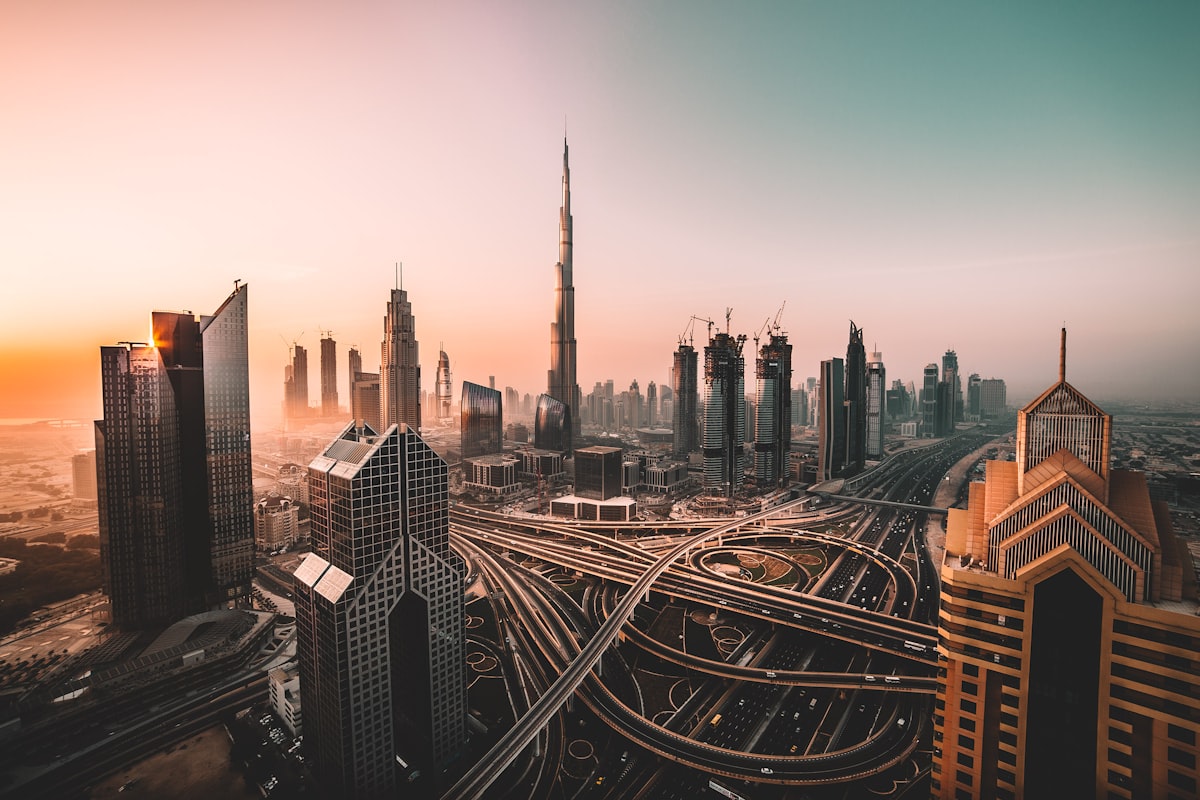
Dubai has always built for scale. Its skyline is a monument to vertical ambition, its infrastructure engineered for the automobile, its neighbourhoods conceived as self-contained mega-projects separated by multi-lane highways. For decades, this was the city's defining proposition: a place where everything was bigger, taller, further — where luxury was measured in square footage and addressed by GPS coordinates rather than street names. Then Meraas built City Walk, and something subtle but consequential shifted in the city's understanding of what an exceptional address could look like.
City Walk occupies a peculiar position in Dubai's urban geography. Located in the Jumeirah district, between the old wealth of Jumeirah Beach Road and the new density of Business Bay, it is emphatically not a mall, not a resort, and not a gated compound. It is, improbably for a city built around the automobile, a walkable urban quarter — a network of outdoor boulevards, shaded arcades and public plazas lined with restaurants, galleries, concept stores and residential towers, all designed to be navigated on foot.
The Architecture of the Boulevard
The architectural language of City Walk is deliberately cosmopolitan, borrowing from the open-air shopping districts of Los Angeles, the café terraces of Milan, and the landscaped promenades of Singapore, but filtering everything through a Gulf sensibility that prioritises climate management without sacrificing the illusion of effortless outdoor life. The buildings are low-rise by Dubai standards — rarely exceeding ten storeys — with generous setbacks, mature landscaping, and a street-level retail frontage that encourages the kind of browsing, pausing and people-watching that Dubai's enclosed malls make impossible.
The retail curation is deliberate and distinctly non-generic. Alongside the expected luxury flagships — Hermès, Cartier, Balenciaga — City Walk hosts a carefully selected roster of concept stores, independent galleries, and lifestyle boutiques that give the district a personality absent from the franchise-heavy corridors of the Dubai Mall. The Green Planet, a bio-dome housing a tropical forest ecosystem, sits alongside Hub Zero, an immersive gaming complex, creating the kind of programmatic variety that makes the district functional for residents across age groups and mood states.
The Residential Proposition
City Walk's residential towers — primarily the Vida Residences and the Building series by Meraas — represent some of Dubai's most architecturally considered apartment living. The units are not the largest in the city, nor the most lavishly specified; what they offer is something more valuable and harder to replicate: a genuine relationship with the street below. Balconies overlook active pedestrian life rather than empty plazas or parking structures. The lobby experience transitions seamlessly into the retail promenade. Residents can walk — literally walk, without entering a car — to seventy restaurants, a cinema, a supermarket, a fitness studio, and a park.
This sounds unremarkable by European or East Asian standards, but in Dubai it constitutes a genuine lifestyle innovation. The city's most expensive addresses — Emirates Hills, Palm Jumeirah, Mohammed Bin Rashid City — are all car-dependent in ways that their marketing materials carefully avoid mentioning. City Walk's walkability is not an amenity; it is a structural advantage, one that becomes more valuable as Dubai's traffic worsens and its residents, many of them relocating from London, Paris or Singapore, increasingly expect the pedestrian convenience they left behind.
The Culinary District
If the retail offering gives City Walk its commercial identity, the restaurant scene gives it soul. The district has become, almost by accident, Dubai's most concentrated outdoor dining quarter — a status that might seem obvious given the number of restaurants, but that actually reflects something subtler about the relationship between urban design and culinary culture.
Restaurants at City Walk do not face inward, toward atria and food courts, as they do in malls. They face outward, toward pavements and public spaces, with terraces that spill onto wide pedestrian boulevards in the cooler months and retract behind climate-controlled glass walls during summer. This bidirectional architecture — inside-out in winter, outside-in in summer — allows the district's F&B offering to function year-round without the seasonal dead zones that plague Dubai's purely outdoor dining concepts.
The roster reads like a curated guide to contemporary Gulf dining: Operation Falafel and Salt for the street-food-elevated-to-obsession category; Roberto's for Italian formality in a Gulf context; Clinton Street Baking Company and Urth Caffé for the American brunch culture that Dubai's millennial residents have adopted with particular enthusiasm. The effect is cumulative — no single restaurant justifies a trip, but the concentration creates a dining ecosystem that rewards repeated exploration.
The Cultural Layer
City Walk's cultural ambitions have solidified with the development of its arts programming and its physical integration with the Coca-Cola Arena, Dubai's first multipurpose indoor arena, which anchors the district's southern edge. The arena's 17,000-seat capacity brings a regular influx of concert-goers, sports fans and event attendees through City Walk's streets, generating the kind of periodic intensity that purely residential districts lack and that purely commercial ones cannot sustain.
The art galleries and creative studios scattered through the district's upper floors add a quieter cultural layer — one that positions City Walk not as a competitor to Alserkal Avenue's gallery scene but as its commercial complement, a place where art functions as lifestyle enhancement rather than curatorial statement. This is not a criticism; it is a recognition of City Walk's fundamental identity as a place where culture serves urbanism rather than the reverse.
The Investment Logic
City Walk's property market has matured into one of Dubai's most predictable and defensible investment plays. Prices per square foot sit in the premium-but-not-trophy range — above JBR and Dubai Marina, below DIFC and the Burj Khalifa district — reflecting the development's positioning as luxury-accessible rather than ultra-exclusive. Rental yields remain strong, typically 6-7 per cent net, driven by demand from young professionals and small families who prioritise walkability and lifestyle over raw space.
The deeper investment thesis, however, is about scarcity. City Walk occupies a unique position in Dubai's luxury landscape: it is the city's only genuinely walkable, mixed-use, outdoor-oriented residential district of scale. There is no competing development that offers the same proposition, and the land constraints of the Jumeirah corridor make replication difficult. For investors who understand that the most durable real estate premiums are generated by formats rather than finishes — by the way a neighbourhood functions rather than the marble grade in its lobbies — City Walk represents one of the most structurally protected positions in the Dubai market.
What City Walk Teaches Dubai
The significance of City Walk extends well beyond its boundaries. It has demonstrated, to a city that was not entirely sure it wanted the lesson, that walkable urbanism can work in Dubai — that residents will choose a smaller apartment with a pedestrian address over a larger one in a car-dependent compound, that outdoor retail can function in a subtropical climate with the right architectural interventions, and that urban life at the human scale is not an exclusively European or Asian phenomenon.
For the luxury market, the implications are profound. The next generation of high-net-worth residents relocating to Dubai — younger, more international, shaped by the walkable cities of Europe and East Asia — will increasingly evaluate addresses not by their proximity to highways but by their proximity to streets. City Walk was the prototype. The city is still learning what it proved.
Explore More from Dubai Latitudes
From the historic Creek to the engineering marvels of Palm Jumeirah and Dubai Water Canal, discover the addresses that define Gulf luxury. Browse all destinations →