Bluewaters Island: How Dubai's Purpose-Built Entertainment Peninsula Became the Gulf's Most Experientially Complete Luxury Address
March 23, 2026 · 14 min read
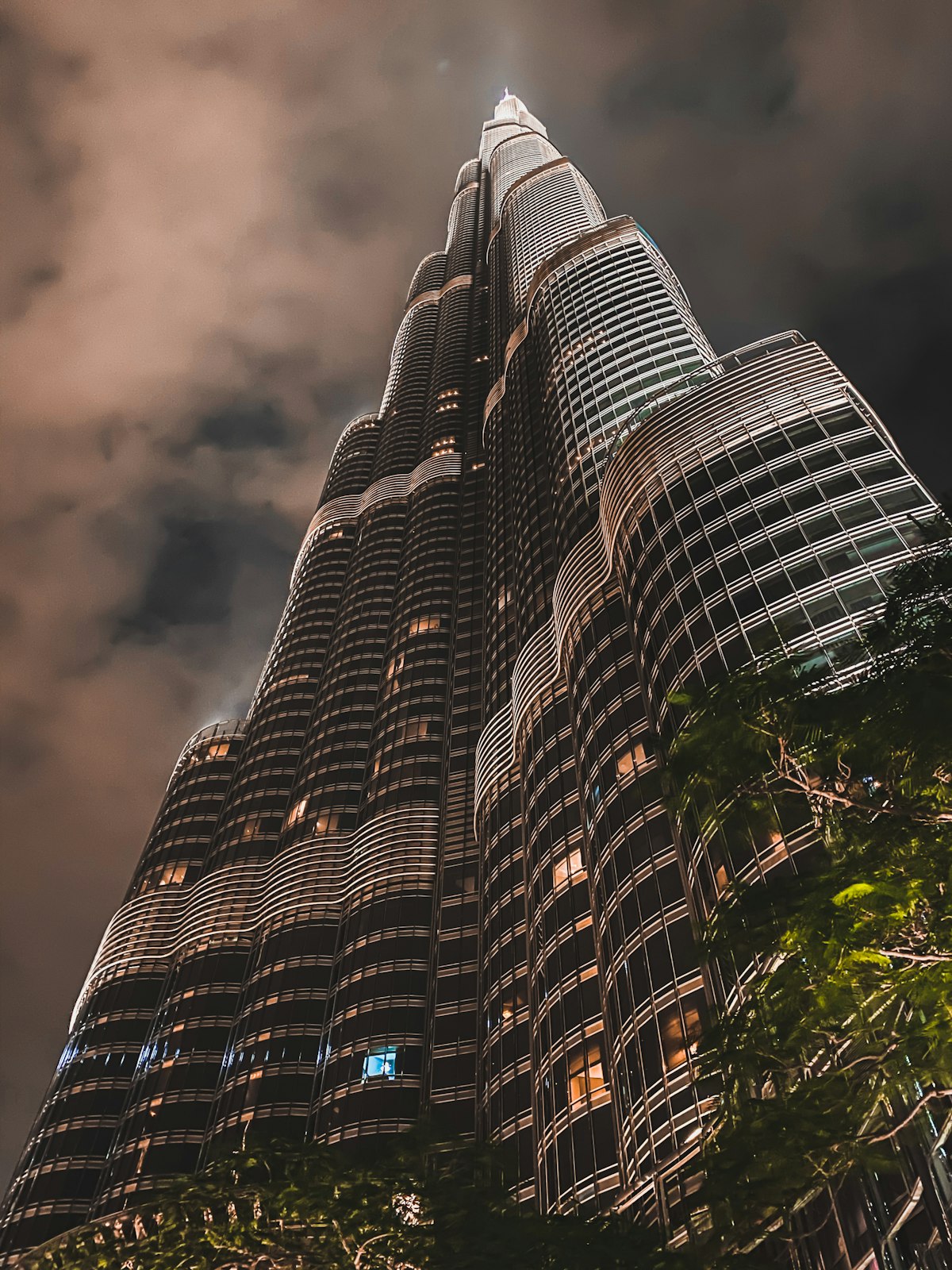
There is a particular category of luxury address that exists only in Dubai — the purpose-built island that arrives fully formed, its residential towers, restaurants, retail promenades and cultural landmarks all conceived simultaneously, as if an entire Mediterranean riviera had been compressed into a single master-planning session and delivered within five years. Bluewaters Island, the 190,000-square-metre development that sits just off the JBR coastline and serves as the pedestal for Ain Dubai, the world's largest and tallest observation wheel, is perhaps the most accomplished expression of this uniquely Emirati urban typology.
Developed by Meraas and connected to the mainland by a dedicated bridge that deposits residents directly onto the Walk at JBR, Bluewaters occupies an unusual position in Dubai's luxury geography. It is neither the gated exclusivity of Emirates Hills nor the vertical ambition of Downtown, nor the maritime grandeur of Palm Jumeirah. Instead, it offers something the city has historically struggled to produce: walkable, human-scaled urban life at the water's edge, where the residential, the commercial and the experiential coexist within a footprint small enough to navigate on foot in fifteen minutes.
The Architecture of Experience
Bluewaters was conceived not as a residential project with amenities attached, but as an entertainment destination with residences woven into its fabric — a distinction that sounds semantic but proves operationally decisive. The island's ten residential buildings, ranging from one-bedroom apartments to four-bedroom penthouses, are distributed around a central retail and dining promenade that functions as the island's social spine. This is not the privatised opulence of a gated community; it is the Mediterranean passeggiata translated into Gulf Arabic, a deliberate attempt to create the kind of street life that Dubai's climate and automotive culture have historically made difficult.
The architectural language is restrained by Dubai standards — low-rise, predominantly white, with the horizontal lines and recessed balconies of contemporary coastal Mediterranean design rather than the crystalline verticality that dominates the Dubai Marina skyline visible across the water. The effect is intentional: Bluewaters positions itself as a counterpoint to the density it faces, offering its residents the visual drama of the Marina and JBR skylines without participating in their vertical competition.
Ain Dubai: The Landmark as Living Room View
The observation wheel that dominates the island — 250 metres in height, surpassing the London Eye by a factor of nearly two — was conceived as a tourist attraction, but its effect on Bluewaters' residential market has been more nuanced than the simple amenity uplift that landmarks typically provide. Ain Dubai does not merely give residents something to look at; it gives them something to be near, a gravitational centre that draws visitors, creates foot traffic, and generates the kind of ambient urban energy that most island developments, by their nature, lack.
The premium is measurable. Apartments with direct Ain Dubai views command 15-20 per cent more than equivalent units facing the Marina or the open Gulf. But the deeper value is atmospheric: living on Bluewaters means existing within the orbit of an architectural event, a structure so disproportionately large relative to its island that it creates a sense of perpetual spectacle. The wheel's LED illumination, which changes nightly and marks national celebrations with elaborate programmed displays, means that the view from a Bluewaters penthouse is never quite the same twice.
The Culinary Promenade
Dubai's island developments have historically struggled with the F&B problem — the challenge of creating a dining scene compelling enough to draw non-residents across water (or, in Bluewaters' case, across a bridge) and sophisticated enough to retain residents who might otherwise dine on the mainland. Bluewaters has solved this with unusual precision, assembling a collection of restaurants that would constitute a destination dining district even without the residential component.
Coya, the Peruvian-Japanese concept that has become a fixture of Gulf luxury dining, anchors the promenade's high end with its signature ceviche and pisco programme. The Maine, a New England-style brasserie overlooking the marina, provides the casual waterfront dining that Dubai's climate demands but rarely executes at this quality level. And a rotating cast of pop-up concepts and seasonal openings — Meraas has proven unusually willing to refresh the island's F&B roster — ensures that the culinary offering evolves faster than the residential market might typically demand.
The Investment Geometry
Bluewaters' market position has crystallised in a way that makes it one of Dubai's more legible investment propositions. Average prices per square foot sit between JBR (more affordable, more vertical, noisier) and Palm Jumeirah (substantially more expensive, more sprawling, further from the mainland energy that many residents want). This intermediary positioning — what agents call the "sweet spot" between accessibility and exclusivity — has produced consistently strong rental yields, typically 6-8 per cent net, driven by the island's appeal to the short-term luxury rental market and its proximity to Dubai Marina's corporate tenant base.
The supply constraint is structural: Bluewaters is a finite island with a fixed number of units. Unlike mainland developments, where new supply can always be built upward or outward, Bluewaters' residential inventory is permanently capped. For investors who understand that the most durable property premiums are generated by absolute supply limits rather than relative demand shifts, this makes the island one of Dubai's more defensible medium-term holds.
The Connectivity Paradox
Every island development must negotiate the tension between seclusion and access — the desire to feel separated from the city while remaining functionally connected to it. Bluewaters manages this through infrastructure rather than distance. The bridge to JBR is short enough to walk (seven minutes) or cycle (three minutes), and the monorail extension that has been intermittently planned would, if realised, place the island on the same transit network as the Dubai Metro. For now, the bridge functions as a psychological threshold: crossing it produces the sensation of arrival at a distinct place, even though the journey is barely longer than walking from one end of the Mall of the Emirates to the other.
This proximity to the mainland — JBR's restaurants, gyms, and beach clubs are all within walking distance; Dubai Marina Mall is a five-minute drive — means that Bluewaters residents are never dependent on the island's own amenities in the way that Palm Jumeirah residents sometimes find themselves captive to their elongated geography. The island is a choice, not a commitment; a place to live, not a place to be trapped.
What the Island Teaches
Bluewaters' significance extends beyond its own boundaries. It represents Dubai's most successful attempt at creating what European cities produce organically over centuries: a mixed-use urban quarter where residential, commercial, cultural and entertainment functions overlap at pedestrian scale. The fact that this required an artificial island, a purpose-built bridge, and a 250-metre observation wheel as its centrepiece is entirely consistent with Dubai's approach to urbanism — the city has never believed that authenticity requires age, or that character cannot be engineered.
For the luxury market, Bluewaters suggests a direction: away from the hermetic gated community and toward the curated urban island, where exclusivity is maintained not by walls but by water, and where the value proposition is not seclusion but the opposite — a deliberate, designed proximity to spectacle, dining, culture and the kind of ambient urban energy that Dubai, at its best, generates more effectively than any city on earth.
Explore More from Dubai Latitudes
From the historic Creek to the engineering marvels of Palm Jumeirah and Dubai Water Canal, discover the addresses that define Gulf luxury. Browse all destinations →