Alserkal Avenue: How Dubai's Industrial Quarter Became the Gulf's Most Credibly Creative Luxury Address
March 23, 2026 · 16 min read
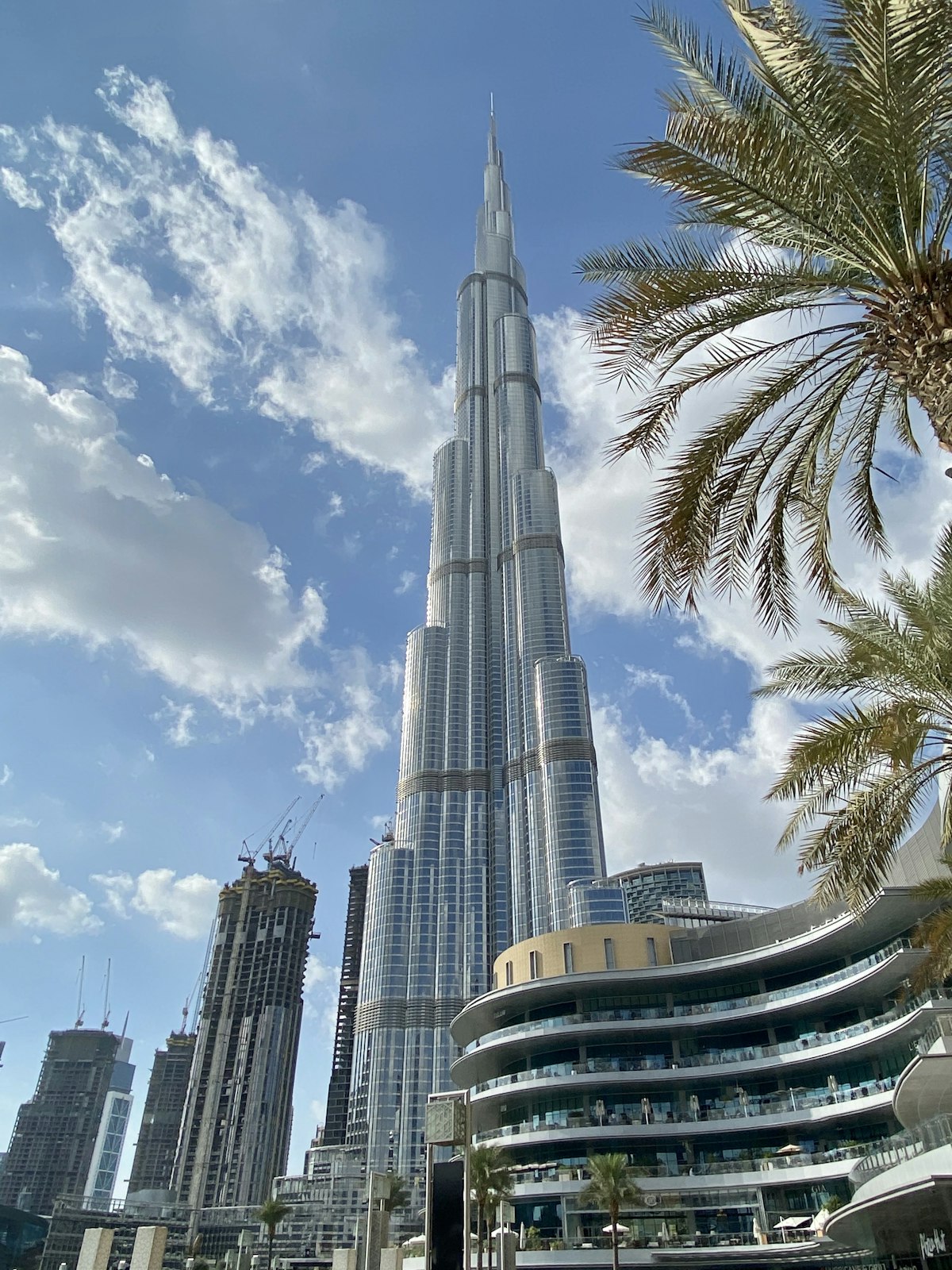
Dubai's relationship with culture has, for most of its modern history, followed the logic of acquisition rather than cultivation. The emirate has purchased masterplans from Pritzker laureates, imported franchise museums from Paris, and commissioned public art installations whose budgets exceed the annual operating costs of mid-size European cultural institutions. These investments have produced results that are, by any quantitative measure, impressive: the Dubai Opera, the Louvre Abu Dhabi (technically a different emirate but functionally part of the same cultural ecosystem), Museum of the Future — institutions that would be considered significant achievements in cities with centuries of cultural infrastructure. But they have not, by themselves, produced the thing that cultural credibility ultimately requires: a scene. Alserkal Avenue has.
The Al Quoz Origin: Why Industrial Geography Matters
Alserkal Avenue occupies a sequence of converted warehouses in Al Quoz, an industrial district that developed in the 1970s and 1980s as Dubai's construction boom required logistical infrastructure — storage facilities, workshops, vehicle depots — positioned between the old city and the emerging developments of Sheikh Zayed Road. The neighbourhood's physical character — low-rise warehouse buildings with generous floor plates, high ceilings, loading bay doors, and the kind of unfinished concrete surfaces that read as "authentic" in contemporary gallery aesthetics — provided the raw material for a transformation that Abdelmonem Bin Eisa Alserkal initiated in 2007 when he invited the first galleries to occupy warehouse units at below-market rents.
The decision to locate a cultural district in an industrial zone rather than a purpose-built development was, in Dubai's context, genuinely radical. The city's dominant development model produces finished environments — communities delivered complete with landscaping, retail, and lifestyle programming — that leave no space for the improvisational, gradual, sometimes messy process through which cultural districts actually form. Al Quoz's warehouses, by contrast, offered exactly the conditions that creative communities require: affordable space, flexible configuration, physical proximity to other practitioners, and the absence of the kind of aesthetic policing that Dubai's master-planned communities typically enforce. The galleries that arrived first — The Third Line, Green Art Gallery, Isabelle van den Eynde — understood that they were not simply renting space but establishing the geographic coordinates of a cultural ecosystem that Dubai had never previously possessed.
The Gallery Ecosystem: Critical Mass and Curatorial Ambition
Alserkal Avenue's gallery concentration — approximately forty visual art spaces operating within a 500-metre radius — now constitutes the most significant contemporary art infrastructure in the Gulf region and arguably in the broader Middle East. The programming ranges from blue-chip international galleries with secondary Dubai locations (Gagosian-adjacent operations, Lehmann Maupin's Gulf presence) to galleries that have built their reputations specifically through their Alserkal positions: The Third Line, which represents a roster of Middle Eastern and South Asian artists whose auction results have validated the gallery's two-decade curatorial thesis; Lawrie Shabibi, whose focus on artists from the MENASA region (Middle East, North Africa, and South Asia) has produced a programme of genuine scholarly depth; and Carbon 12, which represents a younger, more experimental cohort whose work engages with technology, performance, and installation in ways that challenge the region's collecting conventions.
The critical mass effect is tangible. On opening nights — which Alserkal coordinates across multiple galleries on specific evenings, creating what amounts to a district-wide exhibition event — the avenue's corridors fill with a crowd whose composition would be recognisable in Chelsea, Mayfair, or the Marais: collectors, curators, artists, critics, and the category of culturally engaged professionals who serve as the social infrastructure of any functioning art scene. That this crowd exists in Dubai — that it is large enough, informed enough, and regular enough to sustain forty galleries — represents a genuine cultural achievement, one that the purpose-built institutions along Sheikh Zayed Road, for all their architectural ambition, have not independently produced.
Beyond Galleries: The Creative Ecosystem Diversifies
Alserkal Avenue's evolution beyond a gallery cluster into a comprehensive creative district has been the development's most strategically significant phase. Cinema Akil — the UAE's first independent cinema, programming a selection of international arthouse, documentary, and regional films — established that the avenue's audience was interested not merely in visual art but in culture broadly defined. The Yard, a co-working and event space, introduced a professional creative community (architects, designers, content producers) whose daily presence transformed the avenue from an evening destination into a working neighbourhood. A. R. M. Holding's industrial-chic restaurants and cafés — particularly the Tom&Serg and Wild & The Moon concepts — provided the social infrastructure (coffee, lunch, informal meetings) that sustains creative communities between exhibition openings.
Warehouse421 (originally an Abu Dhabi initiative but functionally integrated into the Alserkal ecosystem), Concrete, and the various project spaces that occupy smaller warehouse units have created a tier of non-commercial cultural programming — residencies, workshops, lectures, performances — that provides the experimental foundation upon which commercial gallery activity depends. Every functioning art market requires a non-commercial layer that develops emerging artists, tests curatorial ideas, and maintains the intellectual discourse that prevents commercial activity from collapsing into pure decoration. Alserkal's provision of subsidised space for these non-commercial functions represents an understanding of cultural economics that is notably more sophisticated than Dubai's broader approach to cultural development.
Art Dubai and the Fair Effect
Art Dubai — the annual art fair held each March at Madinat Jumeirah — and Alserkal Avenue exist in a symbiotic relationship that has been transformative for both. The fair brings international collectors, curators, and media to Dubai for a concentrated week of cultural activity; Alserkal provides the permanent infrastructure that demonstrates the fair is not an isolated event but the annual peak of a year-round cultural ecosystem. Galleries time their most ambitious exhibitions to coincide with Art Dubai week, and the collateral programming — studio visits, collection tours, panel discussions — increasingly uses Alserkal rather than the fair venue as its geographic centre.
The economic impact of this symbiosis is measurable. Gallery sales at Alserkal spaces during Art Dubai week typically represent 30-40% of annual revenue — a concentration that creates obvious commercial vulnerability but also generates the visibility and relationship-building that sustains the remaining months. For international collectors making acquisition-focused visits to Dubai, the Alserkal circuit has become as essential as the fair itself, and in some cases more productive: the gallery setting allows the extended conversation, the return visit, the curatorial consultation that the fair's time-compressed format cannot accommodate.
The Real Estate Ripple: Al Quoz's Transformation
Alserkal Avenue's success has initiated a transformation of the broader Al Quoz district that follows a trajectory familiar from Williamsburg, Shoreditch, and the Marais — but compressed, as all Dubai development tends to be, into a fraction of the historical timeline. The blocks adjacent to the avenue have attracted design studios, artisanal food production facilities, fitness concepts (including the region's most ambitious CrossFit and climbing facilities), and the category of retail that positions itself as "curated" rather than commercial. Property values in the immediate vicinity have appreciated 60-80% since 2018, a rate that significantly outperforms both Dubai's residential average and the commercial market in more conventional locations.
The planned expansion of Alserkal — additional warehouse conversions extending the district's footprint and the introduction of residential units designed for the creative professional demographic — suggests that the development's long-term ambition extends beyond cultural programming to the creation of a complete live-work neighbourhood. This model, which cities from Berlin to Taipei have attempted with varying success, requires a balance between affordability (necessary for artists and emerging businesses) and quality (necessary for the collectors and professionals who fund the ecosystem) that is extraordinarily difficult to maintain as property values rise. Alserkal's advantage is governance: as a single-owner development, it can make allocation decisions — cross-subsidising non-commercial tenants with revenue from commercial galleries and hospitality — that fragmented ownership structures cannot coordinate.
The Collection Effect: How Art-Adjacent Luxury Emerged
The most significant consequence of Alserkal Avenue's maturation for Dubai's luxury market is the emergence of a collector class whose cultural engagement is genuine rather than decorative. The first generation of Dubai art collectors — primarily acquiring at auction, guided by investment advisors, purchasing established names with reliable secondary market values — has been supplemented by a second generation whose relationship with art is more immersive: they visit studios, attend openings, build relationships with gallerists, sit on advisory committees, and make acquisition decisions based on curatorial conviction rather than price appreciation projections.
This shift has created demand for a category of luxury residence that Dubai's market had not previously needed to supply: the collector's apartment, designed around the display and conservation of significant art collections. Requirements include museum-grade climate control, UV-filtered lighting systems, walls of sufficient depth and structural capacity to support large-scale works, ceiling heights that accommodate installation art, and — increasingly — dedicated viewing rooms where works can be rotated from storage, examined, and shared with guests in conditions of appropriate visual focus. The developers who have recognised this demand — most notably in the D3 (Dubai Design District) and the upcoming Al Quoz residential projects — are producing residences that function as private galleries, and the premium they command (15-25% above equivalent non-collector-configured units) demonstrates that cultural infrastructure creates real estate value through channels that transcend proximity.
Verdict
Alserkal Avenue has accomplished something that Dubai's vastly better-funded institutional projects have not: it has created a cultural community whose activity generates its own momentum, whose participants are connected by genuine shared interest rather than programmatic obligation, and whose growth follows the organic logic of creative ecosystems rather than the delivery schedules of master-planned developments. For the luxury market, Alserkal's significance extends beyond its physical boundaries. It has demonstrated that Dubai can produce culture as well as consume it — that the city's creative economy is capable of generating the original artistic production, critical discourse, and social infrastructure that collectors, cultural tourists, and culturally motivated residents require. In a market where luxury has traditionally been defined by newness, scale, and finish, Alserkal has introduced an alternative definition: luxury as authenticity, as accumulated creative intelligence, as the slow accumulation of a cultural identity that no amount of capital can accelerate beyond a certain rate.